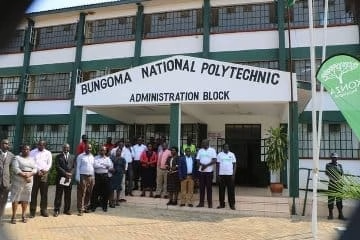
𝐌𝐏𝐒 𝐂𝐀𝐋𝐋 𝐅𝐎𝐑 𝐑𝐄𝐅𝐎𝐑𝐌𝐒 𝐈𝐍 𝐍𝐀𝐓𝐈𝐎𝐍𝐀𝐋 𝐏𝐎𝐋𝐘𝐓𝐄𝐂𝐇𝐍𝐈𝐂𝐒 𝐅𝐎𝐋𝐋𝐎𝐖𝐈𝐍𝐆 𝐎𝐕𝐄𝐑𝐒𝐈𝐆𝐇𝐓 𝐕𝐈𝐒𝐈𝐓𝐒
The National Assembly Committee on Education has called for reforms in the Technical and Vocational Education and Training (TVET) sector following oversight inspection visits to 27 National Polytechnics across the country.
In a meeting with Dr. Esther Muoria, Principal Secretary for the State Department for TVET, Committee Members raised concerns over systemic challenges, lack of infrastructure, land ownership, student welfare, and assessment frameworks.
The Committee questioned the State Department over unresolved land issues that have stalled development in several polytechnics. Notably, Kiambu National Polytechnic, which sits on 196 acres of land donated by the community, has only received a title deed for 70 acres.



“In total, 147 TVET institutions do not have title deeds,” said PS Dr. Muoria. “We have 12 institutions in court cases, 16 pending land adjudication, and 37 with succession-related issues. We are working closely with the Ministry of Lands and county governments to resolve these matters, in line with a presidential directive to secure titles for all state institutions.”
The high cost of assessments administered by the Curriculum Development Assessment and Certification Council (CDACC) was noted with MPs warning that the charges are locking out trainees, especially from underprivileged backgrounds.
“CDACC assessment fees are a real burden. Trainees are struggling to register, and that threatens their ability to complete their training. The government must step in to subsidize these costs,” said Hon. Nabii Nabwera.
Hon. Julius Melly, Committee Chair, was equally critical: “The manner in which these assessments are handled is unacceptable. We need proper training, logistics, and credible exams. Assessment fees must not be prohibitive. We want our TVETs to be as accessible as possible.”
Hon. Rebecca Tonkei echoed the concern, noting, “Many of these students are from humble homes. If we want to promote access to technical education, we must address these barriers.”
The Committee also flagged governance challenges, including delays in appointing Governing Councils and ongoing leadership wrangles in some institutions. Members urged the PS to strengthen oversight and streamline management.
According to documents submitted before the Committee 238 constituencies have at least one TVET institution, with plans to establish TVCs in the remaining 52 constituencies in phases, prioritizing 15 in 2025.
“Donors including the World Bank-funded EASTRIP project is establishing regional centers of excellence in Building Technology (Meru National Polytechnic), Textile and Garment Making (Kisumu National Polytechnic), and Marine and Blue Economy (Kenya Coast National Polytechnic),” said Dr. Muiria
On inclusivity, Committee Vice Chair, Hon. Eve Obara pressed for more action to support learners with disabilities. “What have you done to ensure we have infrastructure for learners with disabilities and assistive devices?”
In response, PS Muoria said: “We have upgraded four special needs institutions—Machakos TTI for the Blind, Karen TTI for the Deaf, St. Joseph’s Nyangoma TTI, and Sikiri TTI. In other institutions, we are setting up assistive and inclusive infrastructure.”
Legislators further decried the lack of modern tools and training equipment, especially in engineering, automotive, and ICT courses. Institutions continue to use outdated or borrowed tools, undermining the quality of training.
The slow rollout of the Competency-Based Education and Training (CBET) curriculum was also raised, with MPs demanding data on implementation progress and institutional readiness.
“Students are being taught with obsolete tools. How do we expect them to compete in the job market?” asked Hon. Rebecca Tonkei.
“Tseikuru National Poytechinic and Garissa National Polytechnic need urgent intervention they are in a dilapidated state. You need to direct funds to those two institutions to address the challenges there,” said Hon. Abdul Haro
The Committee emphasized the need for clear career progression pathways, improved digital infrastructure, better industry linkages, and a comprehensive policy on the establishment of satellite campuses.
“The State Department should develop a policy to ensure the management of TVETS. We cannot allow the sector to grow without proper policy. TVETs are doing well despite budget constraint and should not follow the path of public universities burdened by debt,” warned Hon. Dick Maungu.
Members of the Education Committee also urged the State Department to expedite the establishment of the TVET Trainers Council to regulate trainers’ welfare, remuneration, and professional development.