All Teachers to undergo Sign Language Training and schools funding model revised: Latest Education News

All Teachers to undergo Sign Language Training and schools funding model revised: Latest Education News
Learners enrolled in the Competency Based Curriculum (CBC) will have another opportunity to alter their study preferences in Senior Secondary school within two months after admission.
Simultaneously, the government has disclosed that it will create a new funding model for senior schools, which is scheduled to be implemented in January when the initial CBC cohort transitions from Junior to Senior Secondary school.
The specifics are detailed in the ‘Final County Dialogue Report 2025’.
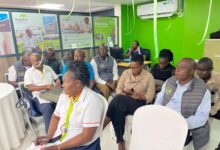
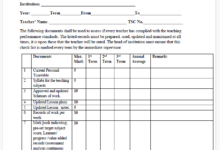
The document offers a thorough overview of the implementation of Competency-Based Education (CBE) in Kenya, incorporating stakeholder feedback from all 47 counties.
Under the proposal, students in senior schools will receive funding based on their choice of studies.
This could imply that schools providing technical and science subjects receive higher funding due to the significant costs associated with teaching these subjects.
“The government is formulating a Senior School Funding Model for Grade 10 to streamline funding per student according to pathway requirements,” the report states.
The ministry will also restrict the number of students from the same junior school entering the same senior boarding school to five.
However, this restriction will not apply to counties with a limited number of senior schools, particularly in marginalized regions.
The Ministry of Education has also revealed intentions to introduce a structured career guidance program in Grade 7.
This initiative aims to assist learners in making more informed choices regarding their studies in Senior Secondary school.
And in what may be a significant advantage for private schools, these institutions will now be included in the selection portal, allowing students to choose to attend them if they wish.
This will resemble the University selection criteria that enables students to decide whether they want to enroll in a private or public university.
However, it remains unclear if students opting for private schools will receive capitation funding similar to their counterparts in public schools.
In a potential significant shift in teacher training, the report has recommended that Kenyan Sign Language be made a requirement in teacher training programs.
This indicates that all teachers will need to learn KSL during their training.
According to the report, this has been prompted by the lack of special needs teachers.
“Include Kenyan Sign Language as a core competency in all teacher training to assist learners with hearing impairments,” the report stipulates.
Stakeholders have also raised concerns regarding the shortage of teachers across various learning disciplines.
They specifically pointed out the need for specialized learning areas such as Music in Creative Arts, Special Needs Education (SNE), and pre-technical studies.
Moreover, subjects that necessitate technical expertise, such as vocational and technical education, were noted to be critically understaffed.
It could also be a significant benefit for private schools as the government now suggests establishing a policy to aid these institutions in accessing government-provided learning materials.
Under this arrangement, private schools are positioned to benefit from significant discounts on textbook acquisitions and lessen the financial strain on parents.
“Establish a policy enabling private schools to access government-provided learning materials via a subsidized system,” the report states.
The decision arises from private school stakeholders feeling “frequently left out of government textbook distribution initiatives. ”
The report has additionally suggested evaluating institutional readiness to support senior school students.
This follows reports from various stakeholders indicating that numerous schools lacked sufficient classrooms, laboratories, teachers, or resources necessary to provide STEM, Arts, and Social Sciences.
The audit would guide pathway specialization, addressing infrastructure shortcomings and facilitating the transition to Senior School.
“Give priority to a national audit of school readiness for pathway implementation, encompassing facilities, staffing, and educational resources,” the report states.
The report further recommends enhancing the career guidance systems.
This recommendation comes after stakeholders noted that learners are often required to select subjects and career paths “too early, particularly at the Senior School level. ”
Parents and teachers advocated for a period of exploration before decisions are made, highlighting the necessity for informed choices.
The report contends that a systematic guidance and counseling approach will assist learners in making informed decisions.
The report has also suggested that the government provide funding and support for digital devices and infrastructure, particularly in underserved and rural schools.
This will comprise solar-powered labs and mobile ICT units.
This follows stakeholders’ observations that the majority of schools lacked internet access, computers, or electricity, particularly in rural or isolated regions.
It will also represent a significant victory for dropouts as the report now advises the creation of a pathway for learners to re-enter the system under CBC.
This implies that those who studied under the 8-4-4 system but did not complete their education now have the opportunity to do so under CBC.
According to the proposal, KICD will formulate a CBC Pathway for adult learners.
“Align adult learning programs with CBC principles and develop structured re-entry pathways for out-of-school youth and adult learners,” the report states.