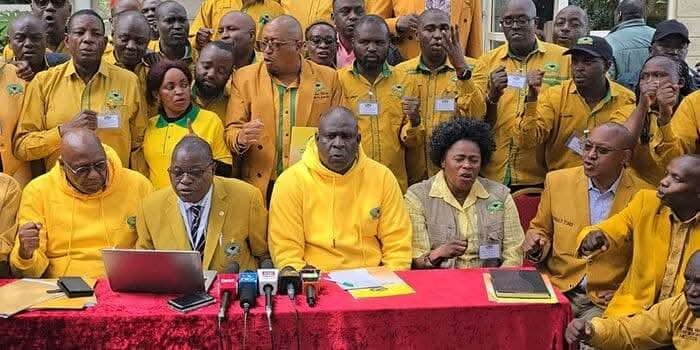
Junior Secondary School teachers are increasingly joining the Kenya Union of Post-Primary Education Teachers (KUPPET) to gain better representation and protection in their profession. This trend follows the union’s decision to create additional positions for them.
KUPPET Secretary-General Moses Nthurima confirmed that Junior Secondary School teachers are part of the post-primary teaching category, making them eligible members of the union. Secretary Akello Misori emphasized that these teachers rightfully belong to KUPPET and deserve improved representation, as the union has grown significantly over the past 25 years.
During a meeting with teachers and union representatives, Nthurima addressed rumors that JSS teachers were being pressured to join KUPPET, asserting that their membership is in accordance with the Constitution, which categorizes schools into pre-primary, primary, and secondary levels. Although JSS institutions are located within primary schools, they fall under the secondary education category, thus classifying their teachers as post-primary educators.
“We have listened to the concerns of JSS teachers and are fully integrating them into KUPPET. The revised constitution, which is now officially registered, will come into effect on January 21, 2026, allowing JSS teachers to run for leadership positions and enjoy full membership rights,” Nthurima explained.


KUPPET has implemented several constitutional amendments to enhance representation within the union. A significant change is the introduction of proportional representation in delegate elections, addressing previous imbalances where smaller branches had the same representation as larger ones. Under this new system, each branch will send delegates based on its membership size.
Moreover, the union has introduced inclusivity measures, including representation for individuals with disabilities, adherence to the two-thirds gender rule, the establishment of regional offices aligned with government structures, and the inclusion of JSS teachers in leadership and decision-making roles.
To ensure equitable representation, KUPPET has established nine trustee positions, with four designated for women and one specifically for individuals with disabilities. Additionally, a new position has been created at the national level exclusively for JSS teachers.
JSS teachers have welcomed these reforms, viewing them as a move toward equitable treatment. Pauline Thamwa, a representative for teachers with disabilities, expressed her appreciation for the union’s decision to include their group in leadership roles.
Furthermore, JSS teachers now have the right to run for any of the 14 available union positions, countering previous claims that their roles would be restricted. The title of “Assistant Secretary for JSS” has also been changed to “Secretary for JSS” to reflect their equal standing within the union.
During the meeting, representatives from the JSS expressed their worries about workplace harassment and administrative problems impacting their members. Omari Omari, a JSS representative, mentioned instances of both physical and verbal abuse directed at tutors by school administrators.
Moreover, JSS teachers raised issues regarding the unequal allocation of responsibilities in co-curricular activities like sports, drama, and music.
Another significant concern was the Sh10,000 training fee imposed on teachers who are preparing to grade Grade 9 exams. Omari urged KUPPET leaders to advocate for government-funded training, stressing that teachers should not have to pay to carry out government responsibilities.
KUPPET reassured its members that discussions about the integration of JSS teachers are ongoing and that further recommendations will be taken into account. Nthurima emphasized that the union’s constitution is a living document that can be amended to address new challenges.
Concerns were also expressed about the potential removal of the mandatory retirement age for union officials. The 2017 Constitution established a retirement age of 65 years, and some members feared this requirement was being eliminated. However, the Labour Relations Office confirmed that although the term “mandatory” was removed, the age limit of 65 years still stands.
Another controversial topic was the significant rise in nomination fees for union elections. According to the amended Constitution, fees for high-ranking positions such as Secretary General, National Chairman, and National Treasurer increased from Sh250,000 to Sh500,000, while other national positions now require Sh300,000.
The Labour Relations Office acknowledged the fee hike but stated that it was within the union’s authority, highlighting that the amendment was intended to discourage unqualified candidates and ensure adequate funding for election logistics. The office found no justification to overturn the changes.