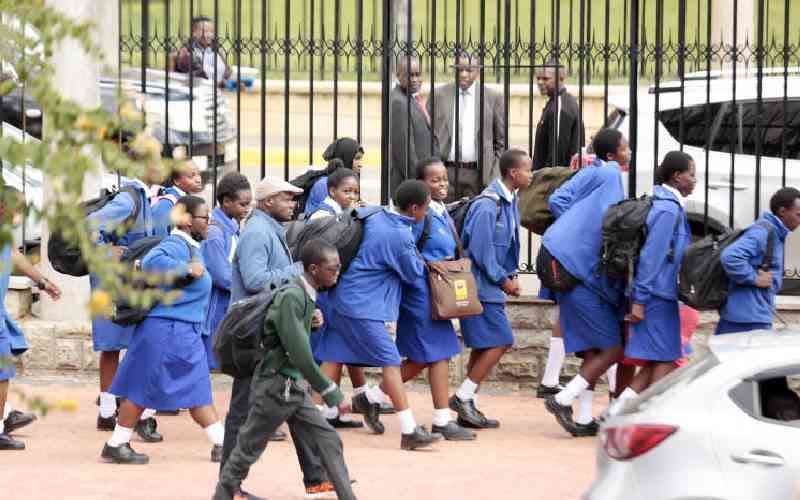
Once again, millions of learners will resume learning in primary, junior, and secondary schools today amid various challenges that have continually plagued Kenya’s basic education sector.
Schools will open without the 50 per cent annual capitation due to them, while some learning centres will not have classrooms to host Grade 9 learners. Additionally, some schools have not received textbooks under the government programme, as bookshops countrywide continue to turn away parents seeking to buy the learning materials.
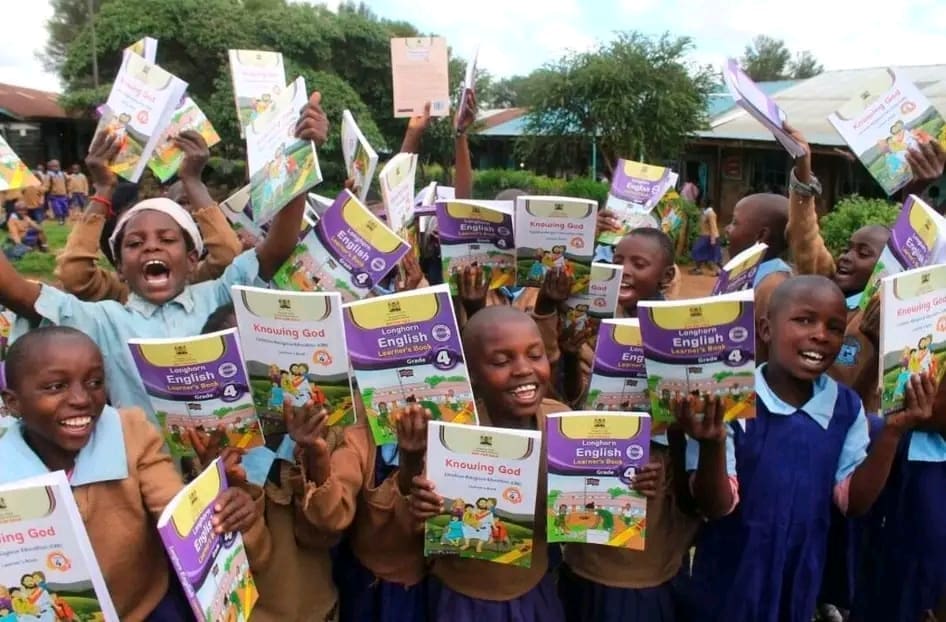
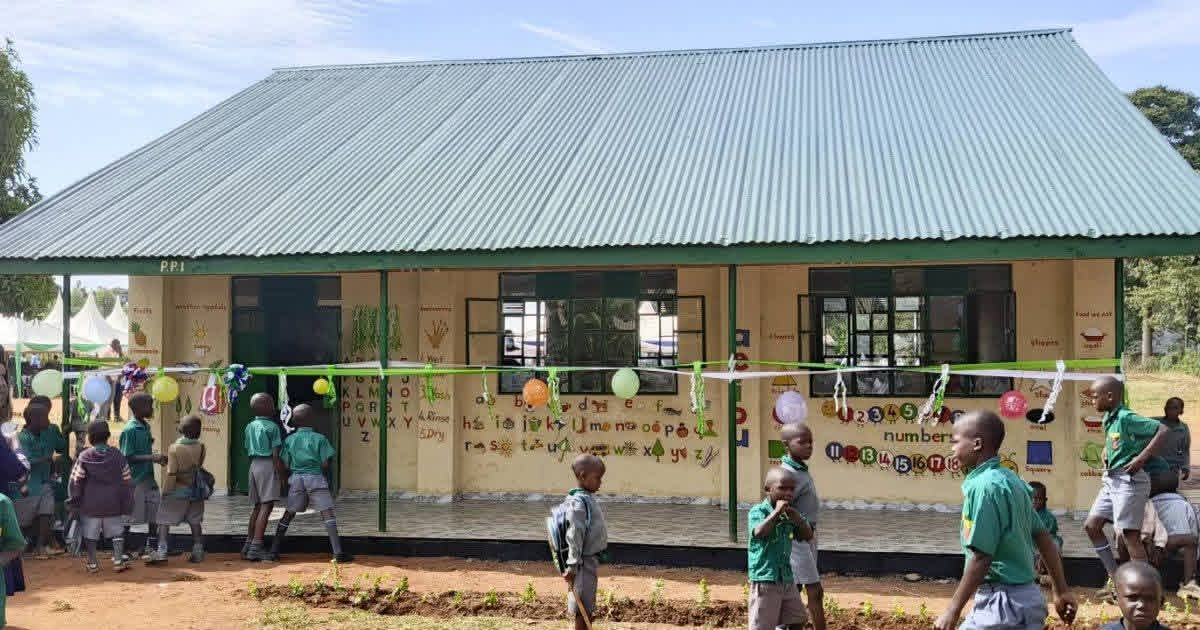
Even as the Ministry of Education exudes confidence that all is set for Monday’s re-opening of schools hundreds of learners will face a rude awakening as they report to find no classrooms ready to accommodate them in most parts of the country.
You may also like; Ministry of Education Issues Statement on the 2025 Academic Year
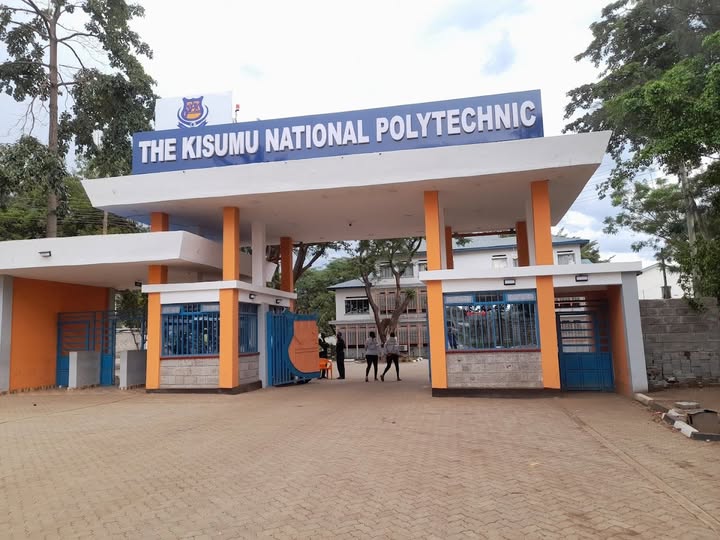
While the Ministry of Education claims to have built 98 per cent of the Grade 9 classes, some schools will have to make do with what’s available including old and abandoned classrooms.
Meanwhile, the Competency-Based Curriculum (CBC) is set for a pivotal moment when schools reopen this January, as the pioneer class prepares to join Grade Nine, the final stage of junior secondary school.
This marks a significant transition for these students, who will soon be closer to joining senior secondary school in January 2026.
As part of the transition, learners will sit for an assessment at the end of Grade Nine, which will determine their placement in senior secondary schools. This assessment is part of a broader process that, for the first time in decades, will not involve Form One admissions.
The current Form Two class is the last cohort to sit the Kenya Certificate of Primary Education (KCPE), and they will also be the last to sit for the Kenya Certificate of Secondary Education (KCSE) in 2027.
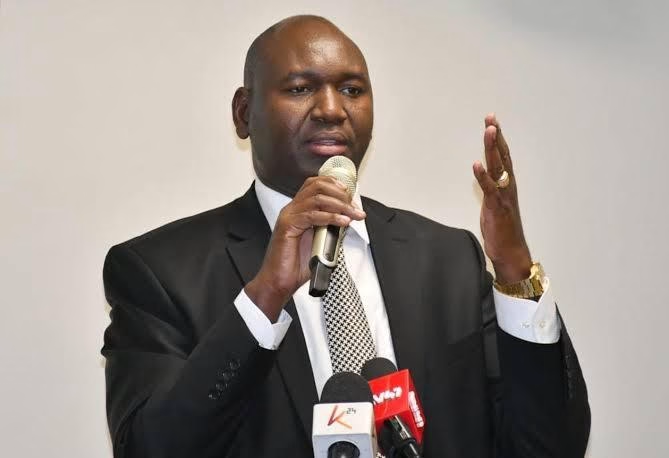
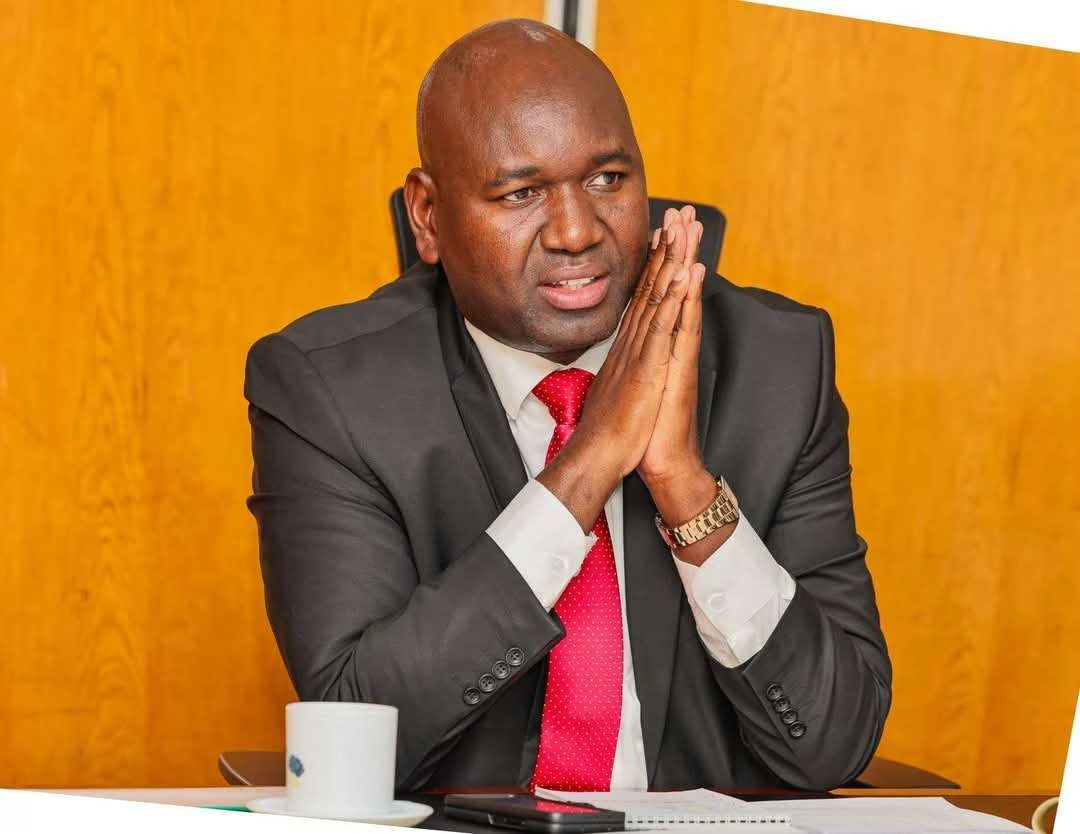
Basic Education Principal Secretary, Dr Belio Kipsang, confirmed that preparations are underway for the final junior school assessment, with the Kenya National Examination Council (KNEC) conducting a pilot of the Grade Nine assessment this year. Dr Kipsang added that the government has developed guidelines for the placement of learners in senior schools, which will be validated by school heads.
Unlike the traditional KCPE exam, the Grade Nine assessment will not be the sole determinant for placement in senior secondary schools.
The process will also incorporate results from Continuous Assessment Tests (CATs) taken in Grades Seven and Eight.
Furthermore, students will have the opportunity to select their pathways for senior secondary education, such as STEM (Science, Technology, Engineering, and Mathematics), Arts and Creatives, or Sports.
This shift represents a move away from the one-size-fits-all approach of the past, allowing learners to specialize based on their strengths and interests.
However, this transition has raised concerns about the readiness of students, teachers, and schools to fully implement the new model.
In response, the government is planning simulations to estimate how many students will opt for each pathway, providing insights into trends, challenges, and opportunities for refining the curriculum.
“This year marks the full cycle of our primary and junior secondary school systems. It’s the year we assess the first nine years under CBC and help our children choose their future pathways in senior school,” Dr Kipsang explained.
The Grade Nine assessment, officially called the Kenya Junior Secondary Education Assessment, will take place in November, and in December, learners will be placed in senior secondary schools for the January 2027 transition.
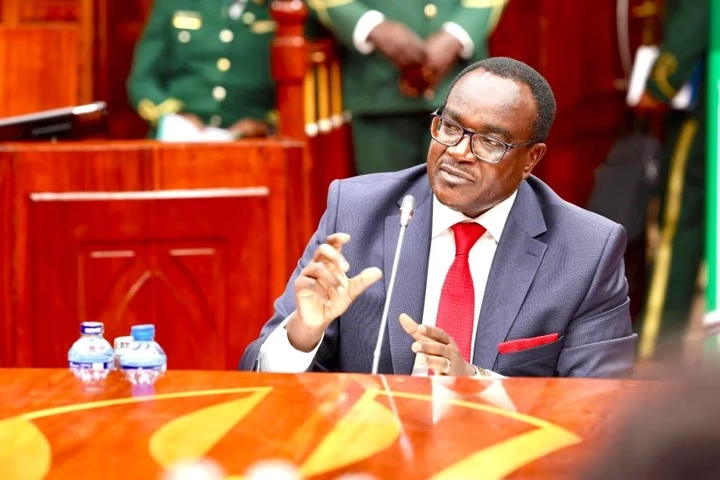
KNEC CEO David Njeng’ere emphasised the success of School-Based Assessments (SBA), introduced in 2019, noting that initial scepticism had given way to trust in teachers’ professionalism.
“Unlike KCPE, where 100 per cent of a child’s placement depended on one exam, the Grade Nine assessment will account for 60 percent, with the rest determined by their SBA performance and personal interests,” he said.