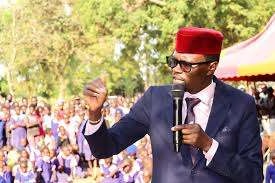
Didmus Barasa Advocates for Direct Teacher Representation in TSC Reform
Kimilili MP Didmus Wekesa Barasa is initiating significant changes in Kenya’s education system with his proposal to amend the Teachers Service Commission (TSC) Act of 2012.
In a letter to the Speaker of the National Assembly, which was obtained by Channel 15 News, Barasa is advocating for reforms that would allow teachers to have direct representation within the Commission and alter its operational framework.
Central to his proposal is the belief that teachers, who are the backbone of the education system, lack a direct voice in the decisions that impact their careers. His amendment aims to include teacher representatives in the Commission, ensuring that primary, secondary, and post-secondary educators each have a role in decision-making processes.
For Barasa, this initiative is not merely about inclusion; it is about making the TSC more attuned to the needs of teachers by enabling them to actively influence policies that affect them directly.
In addition to representation, Barasa is advocating for the Commission to shift from a full-time to a part-time operational model. He argues that maintaining both a fully engaged Commission and a dedicated secretariat simultaneously is inefficient and a misuse of public funds.
He draws parallels with the Judicial Service Commission (JSC) and the Parliamentary Service Commission (PSC), which operate on a part-time basis with a full-time secretariat, suggesting that a similar model could enhance TSC’s efficiency and resource management.
However, this proposal is likely to spark intense debate. The TSC has traditionally functioned as an independent body, and any changes to its governance structure may encounter significant opposition.
The idea of part-time commissioners is particularly controversial, raising concerns about the potential impact on the Commission’s effectiveness.
Teachers’ unions such as KNUT and KUPPET have previously called for teacher representation within the Commission, but it remains unclear if they will support Barasa’s broader reforms.
The outcome of his proposal now lies in the hands of Parliament. If it gains support, it could lead to one of the most significant governance reforms in the education sector in years. Conversely, if it is dismissed, it would represent another unsuccessful effort to restructure the TSC to provide teachers with a stronger voice in their own governance.
As the discussion progresses, it is clear that Barasa has posed a significant challenge to the existing system, and the responses from the political and educational sectors will shape the future of teacher governance in Kenya.
 TSC Circular on Updating of data on registered teachers not currently employed by the Teachers Service Commission
 Mwalimu National Sacco Loans & Repayment Schedule (BOSA Loans)
 Latest TPAD Teacher’s Checklist of TSC Professional Documents
 Official Kuppet BBF Guidelines For All Branches