Education Ministry emphasizes recommendations from education stakeholders during CBE forum

Education Ministry emphasizes recommendations from education stakeholders during CBE forum
The Ministry of Education has received key points from the report on county stakeholder dialogues regarding Competency-Based Education (CBE) conducted in 2025.
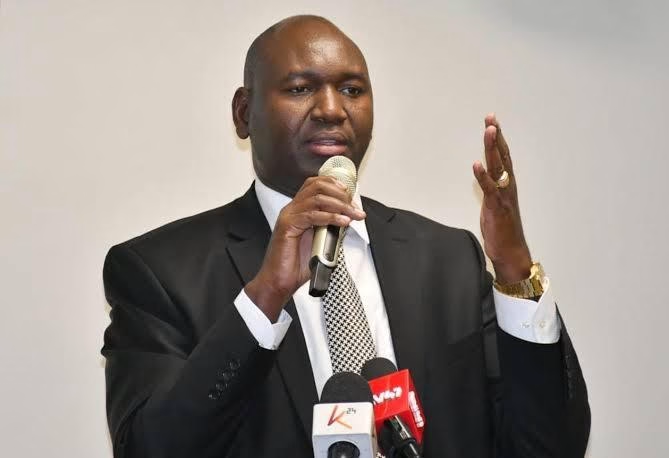
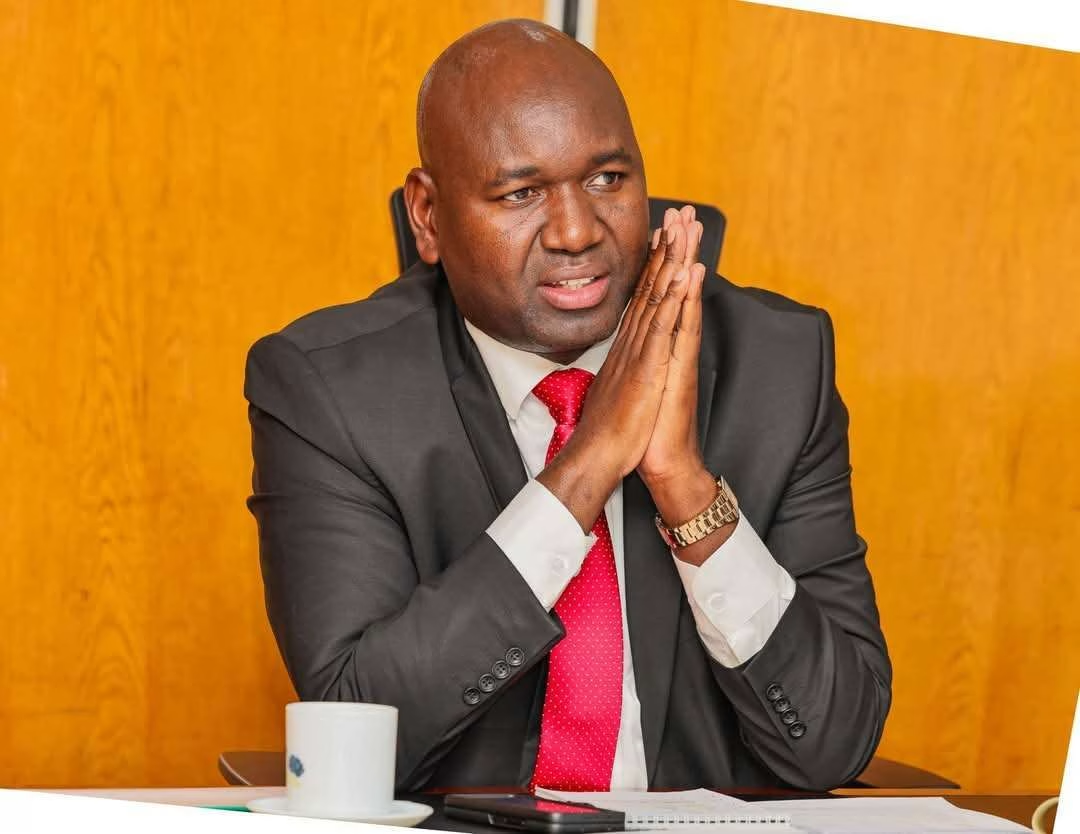
The report was shared during The National Conversation on CBE which took place on April 24, 2025, in Nairobi. This discussion featured teachers and relevant ministry officials who operate at the grassroots level of curriculum execution.
Addressing the opening of the event, Cabinet Secretary for Education Julius Migos Ogamba stated that the county dialogues were designed to update stakeholders on the CBE implementation status and provide a platform for stakeholder participation in validating transition guidelines from Junior School to senior school.

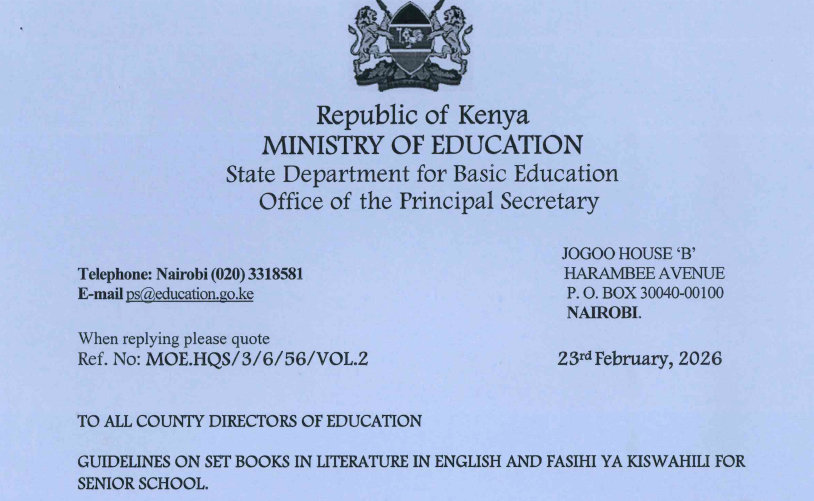
The concerns raised during the County Dialogues 2025 included a national readiness audit, which involves assessing senior schools and their preparedness for implementing educational pathways.
CS Ogamba stated that the issue was addressed, as the government has conducted a thorough assessment to ensure a seamless transition for Grade 9 learners into senior secondary school. This year, the MOE plans to build 1,600 laboratories for schools lacking such facilities, with completion expected by year-end.
The selection process for Grade 9 students will commence on May 20, following the students’ completion of the Kenya Junior Secondary Education Assessment (KJSEA).
“I encourage all of you—especially teachers, parents, and guardians—to adequately guide our Grade 9 candidates as they begin to choose their preferred Senior Schools. This process will initiate on May 20, 2025,” stated the CS.
The stakeholders also requested capacity building; the MOE has initiated infrastructure mapping, prioritized the distribution of STEM equipment, and is currently training teachers in STEM through CEMASTEA.
The stakeholders further advocated for the stabilization and localization of the curriculum. They urged the government to reduce the frequency of reviews and customize content to enhance its local relevance.
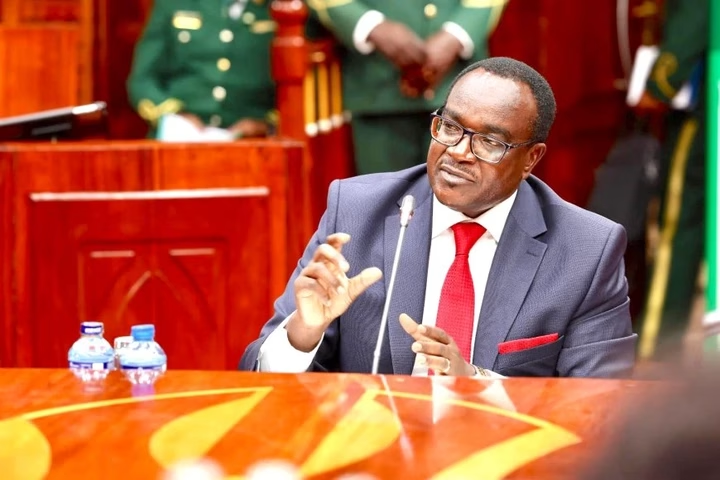
Prof. Charles Ochieng’ Ong’ondo, the Chief Executive Officer (CEO) at the Kenya Institute of Curriculum Development (KICD), noted that they have completed the rationalization of the curriculum. The government has also developed career guidelines that are now ready for dissemination.
Teaching and learning materials for the rationalized areas are also prepared for distribution. The KICD also intends to carry out a needs assessment within the 2024/2025 financial year.
The MOE is depending on local and national television stations for empowering all education stakeholders; it has also translated parental engagement guidelines into Kiswahili.
Regarding assistive materials and infrastructure, the government has established a factory for producing assistive devices at the Kenya Institute of Special Education (KISE).
The stakeholders also emphasized concerns about assessment integrity and fairness; the government has implemented standardized grading, and the training of teachers is ongoing for school-based assessment on administrative SBA, along with updates of scores and record values, with schools utilizing parents’ Annual General Meetings for awareness.
The government has also prepared career guidance for junior and pre-vocational schools, which are now ready for distribution.
During his final remarks, the CS stated that the main takeaway from the discussion has been the decision to make mathematics a mandatory subject for all students in Senior School.
“We have established a technical team that will collaborate with experts from the KICD to figure out the methods of delivering mathematics at the Senior School level,” he stated.
Ogamba noted that the ministry will also promptly initiate discussions on how to create a strong mechanism for facilitating reentry and assessments for private candidates to ensure they complete their basic education.
The MOE continues to oversee fee guidelines through audits conducted by the schools audit department and the Office of the Auditor-General. It is also providing school fees through CDF bursaries, Elimu Scholarship, and other initiatives.