The budget for Kenya’s Ministry of Education is set to decrease even as student enrollment continues to grow. This is according to the 2025 Economic Survey from the Kenya National Bureau of Statistics.
The report indicates that total government spending on education and training is projected to fall from Sh601.5 billion in the 2023/24 fiscal year to Sh594.2 billion in 2024/25. Recurrent expenditures, primarily for salaries and operational costs, are expected to decline by 1.7% to Sh566.1 billion, while development spending is anticipated to rise by 9.8% to Sh28.1 billion.
The report states, “Total expenditure for the education sector is expected to decrease from Sh601.5 billion in 2023/24 to Sh594.2 billion in 2024/25. Total recurrent expenditure is projected to drop by 1.7% to Sh566.1 billion in 2024/25, making up 95.3% of the total education expenditure.”
The report also highlights varying outcomes for different departments within the sector regarding development budget adjustments. The Teachers Service Commission’s development budget is expected to increase from Sh334.7 billion to Sh346.8 billion. “Recurrent expenditure for the Teachers Service Commission is projected to rise by 3.6% to Sh346.8 billion in 2024/25, representing 61.3% of the recurrent expenditure for the education sector,” the report noted.


Basic Education is set to receive Sh115.9 billion, a 7.1% increase from the previous fiscal year, accounting for 74.6% of the sector’s total development budget. Conversely, the State Department for Vocational and Technical Training will see an 8.5% reduction, receiving Sh23.1 billion in the upcoming fiscal year.
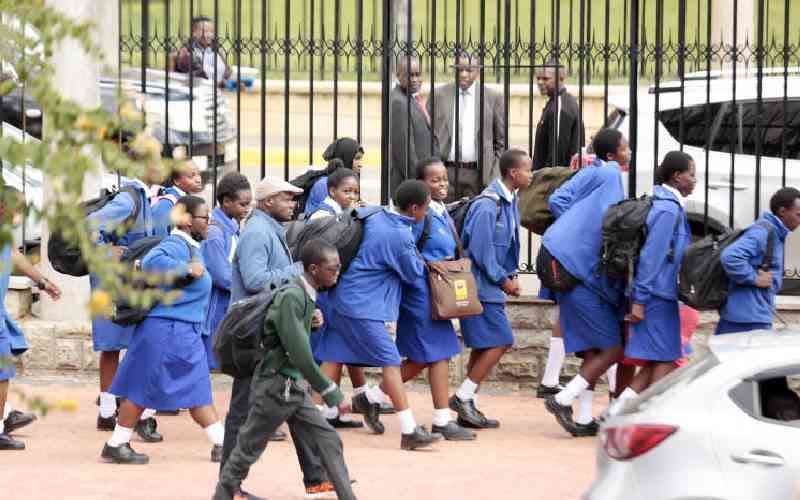
Despite these budget changes, the education sector has seen significant growth in infrastructure and enrollment. The number of basic learning institutions rose by 38.8% to 129,463 in 2024, largely due to the addition of junior schools, which now make up nearly a quarter of all such institutions.
The number of pre-primary schools increased by 1.8% to 47,760, while primary schools grew by 9.6% to 38,997. The number of secondary schools saw a slight increase to 10,755. “TVET institutions grew by 6.9% to 2,756 in 2024, partly due to the rise in accredited vocational training centers. The total number of universities increased from 70 in 2023 to 72 in 2024 with the chartering of the National Intelligence Research University and Tangaza University,” the report stated.
Enrollment trends reflected this infrastructure growth. Pre-primary enrollment rose from 2.89 million to 2.91 million learners. Enrollment in primary and junior schools increased by 3.2% to 10.73 million, while secondary school enrollment grew by 5.2% to 4.32 million. TVET enrollment also surged by 10.4% to 709,885 students.
University enrollment is expected to rise from 579,000 in 2023/24 to 629,100 in 2024/25. The number of candidates registered for the Kenya Certificate of Secondary Education increased by 6.9% to 965,172. Additionally, the number of Grade 6 learners registered for the KPSEA assessment grew by 2.5% to 1.31 million, with those taking the exam increasing by 5.5%.
However, the number of teachers in public primary schools fell by 3.2% to 212,602, attributed to factors such as retirement, disciplinary actions, study leave, and natural attrition. In contrast, the number of teachers in public secondary schools and teacher training colleges rose to 130,818, up from 125,563 the previous year.
Regarding funding, the Higher Education Loans Board (Helb) significantly increased support for university students, with Helb loans rising by 59.5% to Sh46.9 billion. Funding under the New Funding Model increased from Sh17.9 billion in 2023/24 to Sh20.9 billion in 2024/25. However, allocations to universities through the Universities Fund sharply decreased from Sh30.0 billion to Sh12.9 billion.
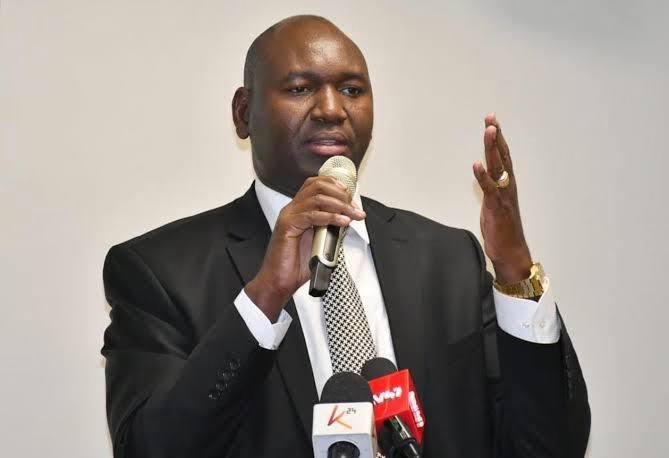
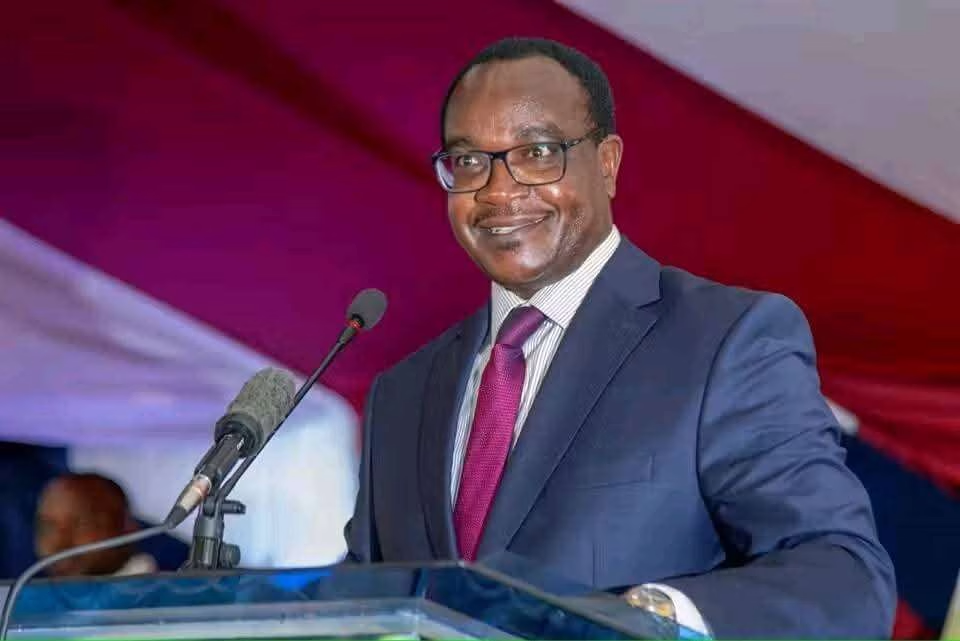
“The figures are decreasing because we used to have tuition fees paid directly to the universities, which is changing. The new model allows students to receive the funds directly,” explained KNBS Director General McDonald Obudho during the report launch.
Obudho also discussed related national statistics, noting that the health sector received increased funding for counties, although only 44.8% of births were registered in 2024, highlighting significant gaps in civil registration. He also pointed out improvements in national security, with a decrease in reported crime cases, but expressed concern over the declining police-to-population ratio, which now stands at one officer per 512 people.