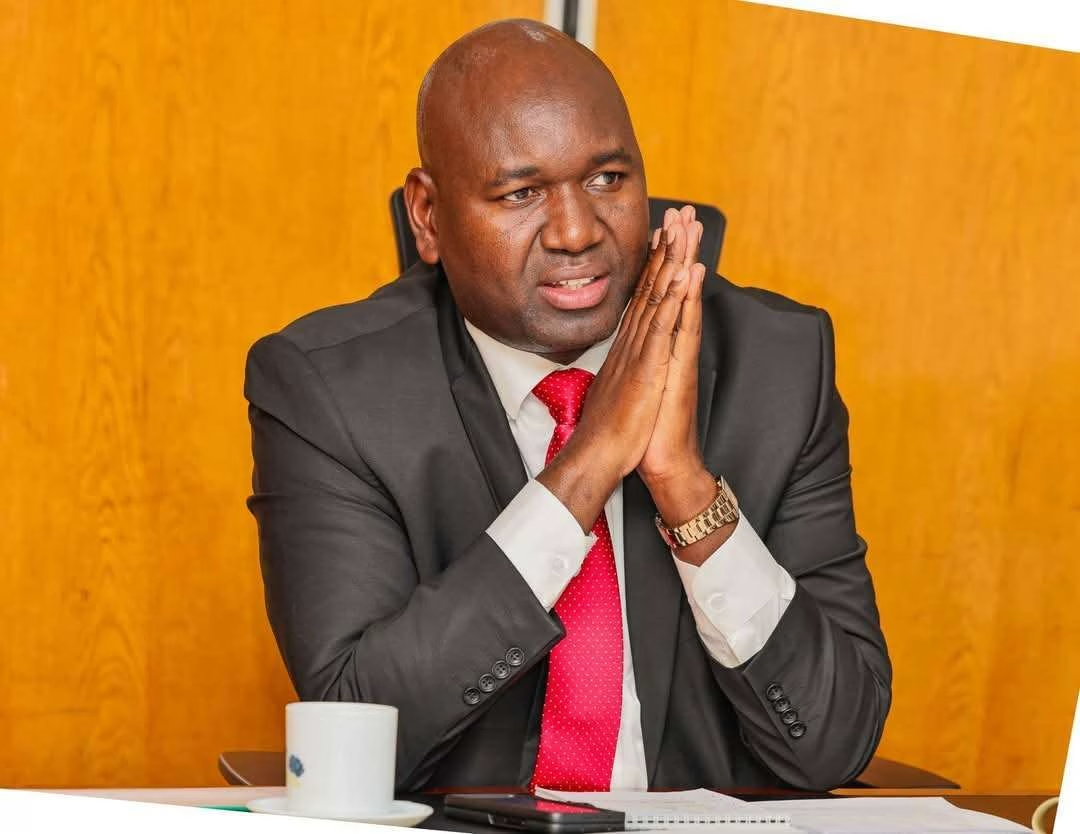
𝐄𝐃𝐔𝐂𝐀𝐓𝐈𝐎𝐍 𝐂𝐎𝐌𝐌𝐈𝐓𝐓𝐄𝐄 𝐐𝐔𝐄𝐒𝐓𝐈𝐎𝐍𝐒 𝐏𝐒 𝐁𝐈𝐓𝐎𝐊 𝐎𝐕𝐄𝐑 𝐁𝐔𝐃𝐆𝐄𝐓 𝐒𝐇𝐎𝐑𝐓𝐅𝐀𝐋𝐋, 𝐒𝐊𝐄𝐖𝐄𝐃 𝐄𝐍𝐑𝐎𝐋𝐋𝐌𝐄𝐍𝐓 𝐈𝐍 𝐒𝐄𝐍𝐈𝐎𝐑 𝐒𝐂𝐇𝐎𝐎𝐒
Members of the National Assembly Committee on Education, chaired by Hon. Julius Melly, put Principal Secretary for Basic Education, Amb. (Prof.) Julius Bitok, budget shortfalls and challenges in transition to Senior school during the presentation of the 2026/27 Budget Policy Statement.
The Committee noted that the State Department for Basic Education faces a 45% funding deficit, with key programmes underfunded. While the Department sought KSh216.4 billion, the BPS proposes KSh134.8 billion, leaving a gap of KSh81.6 billion.
Under the breakdown presented, Junior School Capitation requires KSh54 billion but was allocated KSh31 billion, leaving KSh23 billion unfunded. Free Day Secondary Education (FDSE) faces a KSh23.5 billion shortfall, while Free Primary Educationis underfunded by KSh7.4 billion. Infrastructure development for both primary and junior schools is also severely constrained, with only KSh200 million set aside for primary infrastructure against a need of KSh1 billion.
Committee Vice Chair, Hon. Eve Obara raised concerns about overcrowding in Grade 10, questioning why schools designed for three streams were admitting more than 800 students. “This over-enrolment is not sustainable. What is the Ministry’s policy on capacity limits?” she asked.
The PS explained that the transition to Senior School was conducted digitally, placing 1.1 million learners, The overcrowding arises from manual interventions by Principals after the automated placements,” he said. “Some became overzealous and took in too many students.” He acknowledged that National schools such as Lenana School had enrolled 850 learners despite a capacity of 700 learners.
Committee Chair, Hon. Melly faulted the Ministry for skewed enrollment. “You cannot have one school with 800 students while a neighboring one has 20. TSC teachers are idle in some schools while others are overwhelmed. This is a crisis,” he said, directing the PS to table a matrix of enrollment by school to address the disparities.
Lawmakers also expressed concern over the delayed payment of invigilators and examiners for the 2025 exams.
On examination payments, the PS said the Ministry had requested KSh1.5 billion from the National Treasury to settle outstanding arrears. The Kenya National Examinations Council budget for FY 2026/27 stands at KSh9.9 billion, up from KSh9 billion last year.
Hon. Dick Maungu sought details on the Kenya Education Management Information System (KEMIS)project, citing reports that it could cost KSh34 billion. PS Bitok said the project is a 10-year inter-ministerial initiative with the Ministry of ICT and Konza Technopolis, aimed at integrating all education data under one system.
On his part Hon. Abdul Haro called for clarity on special needs schools saying most were “dilapidated and toxic.” The PS reported that 2,600 learners had been assessed last year and 16,850 rehabilitated, adding that infrastructure remains a priority if more funding is secured.
Hon. Melly urged the Ministry to prioritize pending bills and exam payments in the next quarter, emphasizing that “teachers and examiners have already worked, and their payments must not be delayed.”
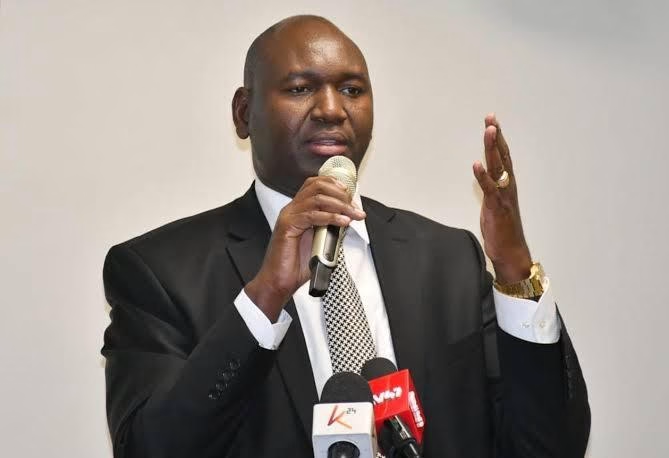
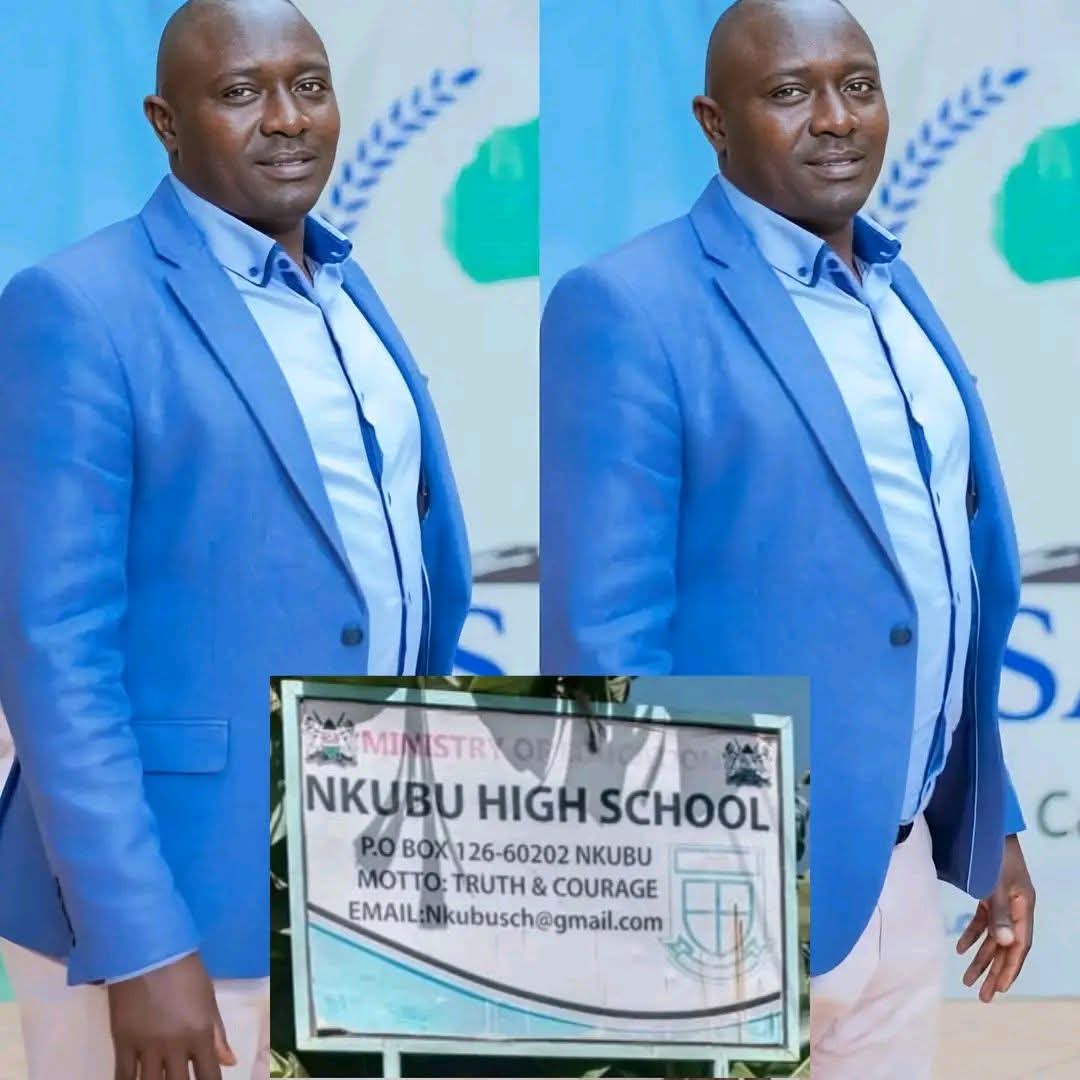 Assault on the deputy principal of Nkubu High School Mr. Gitari: Here is what happened
 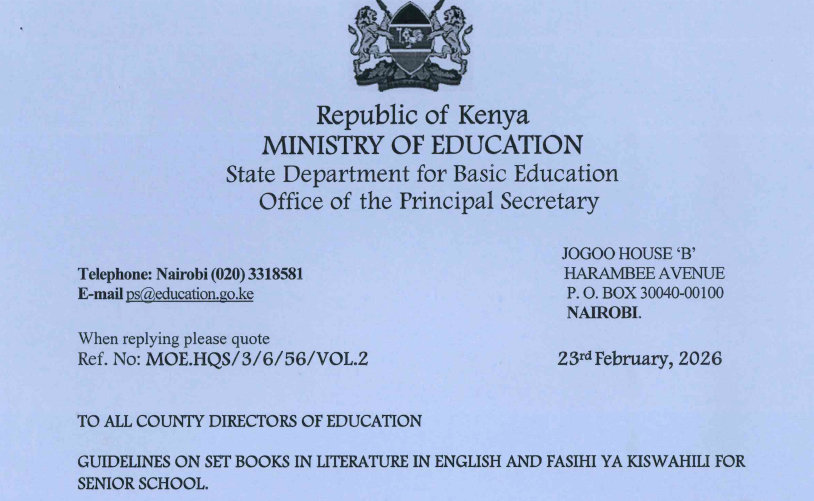 Education Ministry’s Circular on Fasihi & Literature set-books for senior schools (2026-2030)
 Government to reduce TVETs Fees