Government Set to Challenge High Court Ruling on eCitizen School Fee Payments
The government has revealed its intention to contest a High Court ruling that deemed its mandate for school fees to be paid solely via the eCitizen platform as unlawful.
This ruling, issued by the High Court on Tuesday, raised concerns regarding the legality and accessibility of the government’s directive.
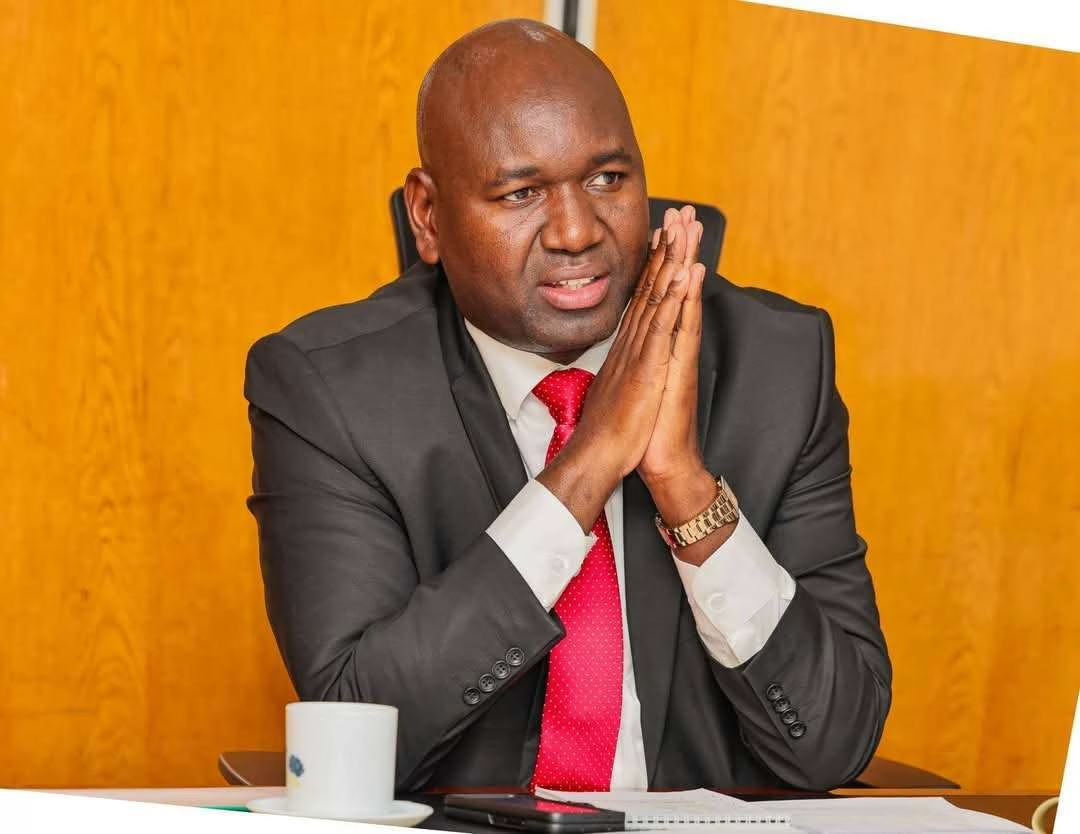
Julius Bitok, the Principal Secretary for Basic Education, defended the government’s stance, asserting that the eCitizen platform was established to shield parents from the excessive and often concealed fees that intermediaries frequently impose.



“The platform guarantees transparency and accountability in the payment process, protecting parents from unnecessary financial burdens that have plagued the school fee system for far too long,” Bitok stated.
In his ruling, Justice Mwita pointed out that the government’s failure to engage with parents, school administrators, and other stakeholders prior to rolling out such a significant policy violated democratic principles and the constitutional requirement for public participation.
The High Court concluded that the directive lacked adequate legal foundation and could potentially marginalize parents who struggle with digital payment methods. The court underscored the importance of extensive consultations before implementing such policies.
“The government neglected to involve the public in the decision-making process, and this oversight undermines the directive’s legitimacy,” he remarked.
“A decision of this magnitude should have been preceded by open discussions with those who will be affected,” he added.
Last February, the government mandated that parents of students in national schools pay their fees through the eCitizen system.
This directive ignited a debate among education stakeholders, with some lauding it as a move towards financial transparency, while others contended that it imposes undue restrictions on parents, particularly those in rural areas with limited access to digital resources.
Dr. Magare Gikenyi, a physician based in Nakuru, took legal action against the government’s directive, arguing that it was illegal and unconstitutional due to its lack of public engagement and disregard for the principles of transparent governance.
Despite this legal setback, the government remains resolute, with Bitok asserting that the appeal is essential for establishing a streamlined and accountable payment system.
“We respect the court’s ruling, but we firmly believe that eCitizen offers an effective solution to the challenges parents have faced for years. This platform is efficient and will safeguard parents from excessive and hidden charges,” he concluded.