Government to Maintain Funding for National Exam Candidates – CS Mbadi
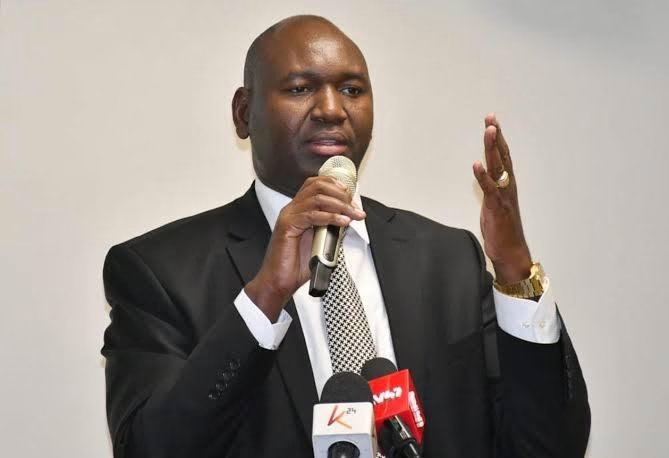
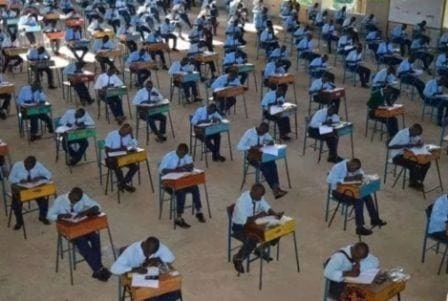
Treasury Cabinet Secretary John Mbadi has eased concerns regarding the national examination fees, confirming that the government will continue to finance the Kenya Certificate of Secondary Education (KCSE) exams.
In response to rising public discontent over plans to eliminate the decade-long waiver for national exam fees, Mbadi spoke at a town hall gathering on June 9, 2025, reassuring citizens that all students will have their examination costs covered this year.
He explained that although the initial budget did not allocate funds for exams like the KCSE, the Treasury has now secured the necessary resources.


“While we initially did not include examination fees in this year’s budget, we have now made the funds available,” Mbadi stated. “I want to reassure all Kenyan students that they will be able to take their exams. The government will take care of the costs; we are simply reorganizing the system.”
Previously, Mbadi had pointed to the unsustainable nature of the exam subsidy, citing increasing budget deficits as the reason for the proposed removal of the waiver. This plan would have led to a new fee structure where only students from low-income families would continue to receive exam fee waivers.
During the town hall meeting, the Treasury CS highlighted concerns from the Cabinet regarding the high expenses associated with administering national exams, particularly questioning the practice of printing exam materials overseas.
“As a Cabinet, we were puzzled by the significant funds allocated to exams, especially when we could not understand why these materials were produced abroad while more sensitive documents like passports are printed locally,” Mbadi remarked.
He further noted that the Ministry of Education has been tasked with creating a more economical approach to conducting national assessments. “The Ministry needed to devise a more practical framework for administering and funding exams—certainly not the Sh11 billion that was previously spent,” he explained.
The initial proposal to eliminate the exam fee waiver had ignited widespread outrage, with fears that it would impose a heavy financial burden on low-income families and exacerbate educational inequality.
The exam fee waiver was introduced in 2015 as part of the government’s initiative to promote free and compulsory basic education.