JSS 𝐓𝐞𝐚𝐜𝐡𝐞𝐫𝐬 𝐭𝐫𝐚𝐢𝐧𝐞𝐝 𝐨𝐧 𝐯𝐢𝐫𝐭𝐮𝐚𝐥 𝐥𝐚𝐛𝐬 𝐭𝐨 𝐞𝐧𝐡𝐚𝐧𝐜𝐞 𝐒𝐓𝐄𝐌 𝐞𝐝𝐮𝐜𝐚𝐭𝐢𝐨𝐧
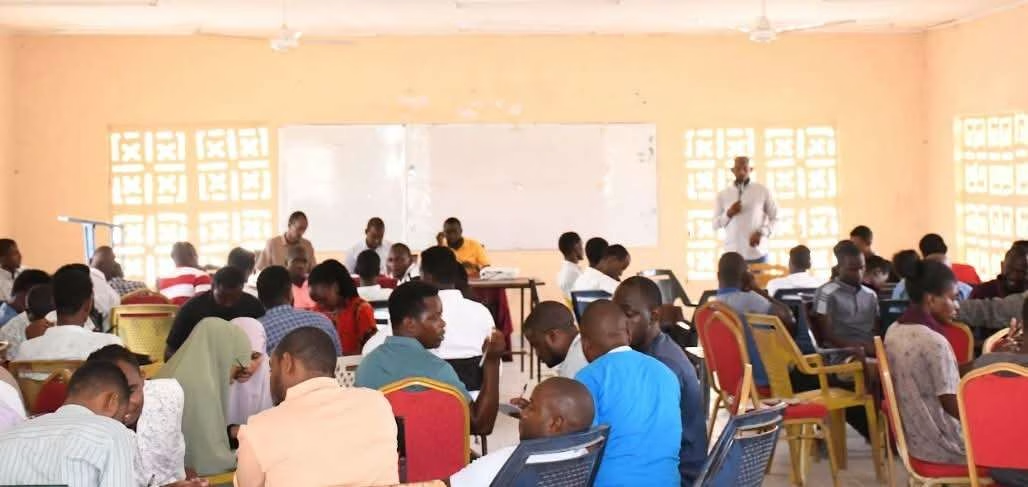
Over 100 junior school teachers in Wajir County are undergoing training on the use of virtual laboratories to enhance the teaching of Science, Technology, Engineering, and Mathematics (STEM) subjects.
The initiative, spearheaded by the Ministry of Education in collaboration with the Centre for Mathematics, Science, and Technology Education in Africa (CEMASTEA), aims to address infrastructure challenges in schools by leveraging digital technology.
Dr. Koriyow Hussein Ali, the County Director of Education in Wajir, highlighted the significance of the training, stating that it is a crucial step toward implementing the Competency-Based Curriculum (CBC).



“This training is equipping teachers with skills to use virtual labs, which is essential in regions like Northern Kenya, where laboratory infrastructure is limited. By integrating technology into learning, students can grasp scientific concepts effectively despite the scarcity of physical labs,” he said.
According to Makoba Kizito, the STEM Programme Coordinator at CEMASTEA, the training at Wajir High School has achieved a 100% attendance rate, with 111 junior school teachers participating.
“The objective is to empower teachers with skills to integrate virtual labs into their lessons. This approach will not only improve the quality of STEM education but also encourage more students to pursue STEM pathways,” he explained.
Kizito further noted that the training covers learner-centered teaching strategies and mentorship to help teachers guide students in appreciating STEM subjects through real-world applications.
Abdurrahman Ali Hassan, a representative of the trainers, emphasized the long-term impact of the programme.
“Teachers from all sub-counties have been selected based on school representation, ensuring inclusivity. The skills gained here will make educators more effective in classroom delivery, ultimately benefiting learners,” he said.
One of the trainees, Soheila Abdi from Waso Junior Secondary School, expressed enthusiasm about the programme, noting that virtual labs foster student engagement and enhance understanding.
“The current curriculum is more effective because it allows students to interact with experiments repeatedly, improving their grasp of scientific concepts,” she stated.
The government’s commitment to enhancing STEM education through technology-based solutions is expected to bridge the gap in science education, especially in marginalized areas.
As the trained teachers return to their respective schools, they are set to play a key role in ensuring CBC implementation is effective and impactful for learners.