
In a sweeping reform aimed at transforming the country’s education system, the Kenyan government has unveiled plans to dissolve the Kenya National Examinations Council (KNEC) and establish a new body — the Kenya National Educational Assessments Council (KNEAC).
The proposed KNEAC Bill, 2025, received Cabinet approval on Tuesday and sets the stage for a major shift in how learners are evaluated. Central to the reforms are strict penalties targeting academic malpractice, marking what officials describe as a decisive crackdown on exam fraud.
Championed by the Ministry of Education, the legislation seeks to align national assessments with the Competence-Based Curriculum (CBC).
The new framework will move away from high-stakes, single-sitting national exams toward continuous assessment methods designed to more accurately gauge students’ skills and competencies.
Under the proposed law, severe consequences await those found culpable of wrongdoing.
School principals convicted of document forgery could face up to 10 years in prison or fines reaching Sh10 million. Individuals who leak assessment materials on social media platforms risk five-year jail terms.
Education Cabinet Secretary Julius Ogamba defended the reforms, calling them critical to restoring trust in Kenya’s academic certification.
“We are dismantling entrenched examination cartels and replacing an outdated exam-driven model with a transparent, competency-based system that fairly reflects every learner’s ability,” Ogamba said during a press briefing.
Despite the government’s strong stance, teachers’ unions have raised concerns over the severity of the proposed sanctions.
Kenya National Union of Teachers (KNUT) Secretary General Collins Oyuu cautioned against measures that could unfairly penalize educators.
“While we fully support integrity in education, the penalties must be proportionate. A Sh10 million fine could devastate a teacher for circumstances beyond their control,” he noted.
Public reaction remains mixed. Some parents welcome the hardline measures, hoping they will level the playing field.
“For too long, wealth has influenced grades while hardworking students were sidelined,” said Mary Wanjiku, a trader and parent. “If these reforms bring fairness, then they are long overdue.”
Should Parliament expedite the Bill’s passage, KNEC will be given 60 days to conclude its affairs and transfer its responsibilities, assets, and records to KNEAC.
Existing staff members are expected to transition to the new institution, pending a fresh vetting process.
Follow ACTT Digital Media
-
 Moi Girls’ High School Vokoli to be closed, give way to Kaimosi Friends University
-
 Assault on the deputy principal of Nkubu High School Mr. Gitari: Here is what happened
-
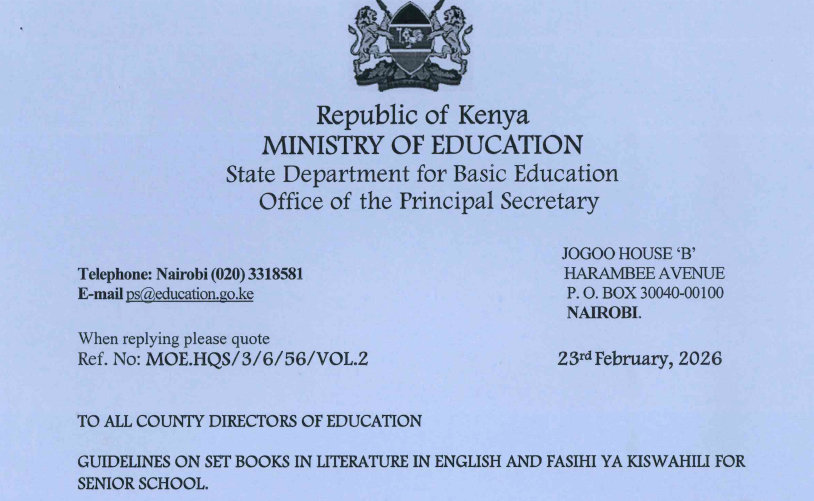 Education Ministry’s Circular on Fasihi & Literature set-books for senior schools (2026-2030)
-
Senior Schools’ Setbooks List {Ministry of Education Circular}