KUPPET Opposes Government’s Plan to Make Mathematics Optional at Senior School
The Kenya Union of Post-Primary Education Teachers (KUPPET) has firmly rejected the government’s suggestion to make Mathematics an optional subject for senior secondary students, arguing that this change would negatively impact the development of the nation’s workforce and educational quality.
This opposition follows the Ministry of Education’s recent announcement that Mathematics will no longer be mandatory for senior secondary students under the Competency Based Curriculum (CBC), representing a significant departure from the previous 8-4-4 system.
Under the new curriculum, students will be required to take four core subjects: English or Kenya Sign Language, Kiswahili, Physical Education, and Community Service Learning, and will then select three additional subjects from a list of 38 options.


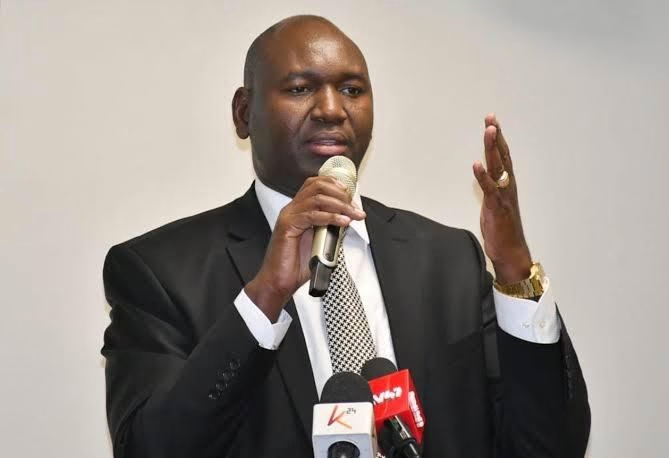
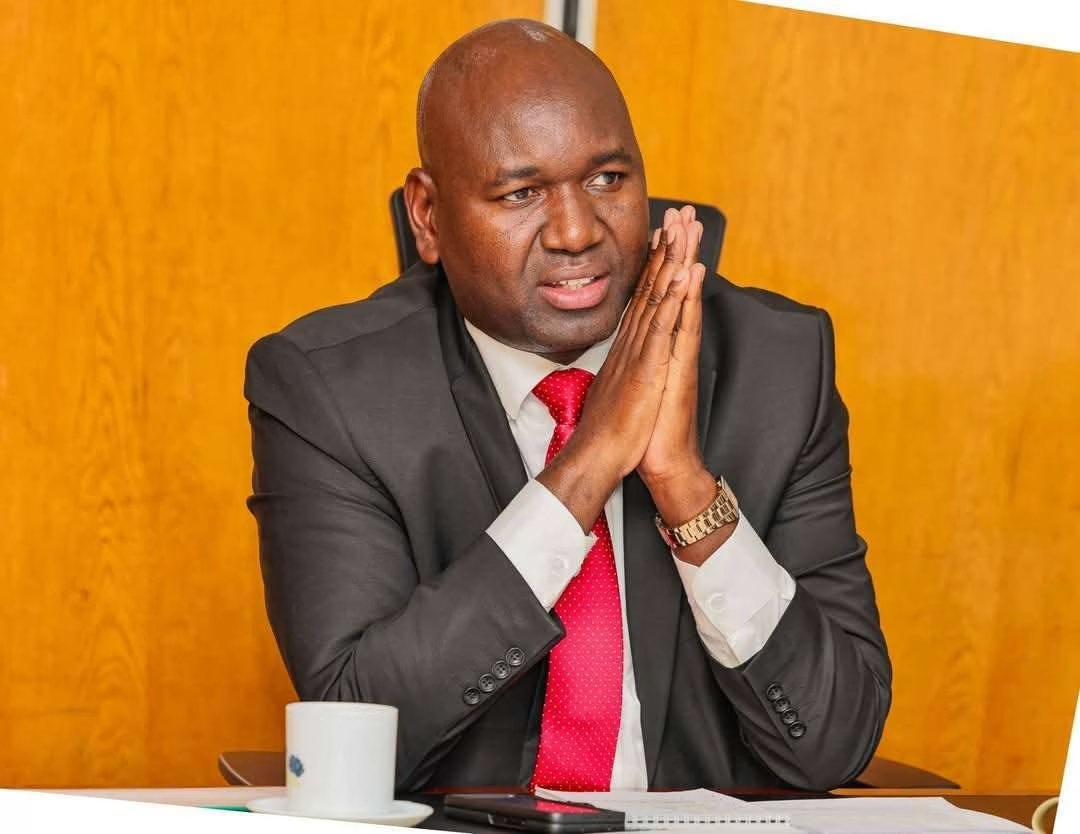
KUPPET’s Acting Secretary General, Moses Nthurima, emphasized that Mathematics is a fundamental subject relevant to various fields, including the humanities, sports, and STEM disciplines. During a press conference on Wednesday, he stressed that making Mathematics optional would harm students’ academic and career prospects.
“KUPPET opposes the government’s proposal to make Mathematics an optional subject at the senior school level,” he declared. “Mathematics is crucial for developing a skilled workforce for the 21st Century and is applicable in many other areas, including the humanities and STEM.”
Nthurima also expressed concerns regarding the recent promotion list from the Teachers Service Commission (TSC), which has led to dissatisfaction among educators nationwide. He noted that the union’s National Executive Board has received numerous complaints from teachers who feel overlooked in the 2024/2025 promotions.
He highlighted that the primary issue is the equal allocation of 25,252 promotional vacancies across all 47 counties, without considering differences in staffing levels. This method, according to Nthurima, disadvantages teachers in counties with larger teacher populations, such as Kiambu and Kakamega, where competition for promotions is much more intense.
“The implication is that teachers in smaller counties are being favored, while those in densely populated areas continue to face stiff competition for promotions,” Nthurima added.
KUPPET has therefore called for a reassessment of the promotion process to ensure equity, advocating for a merit-based system that takes into account the varying staffing levels across different counties.