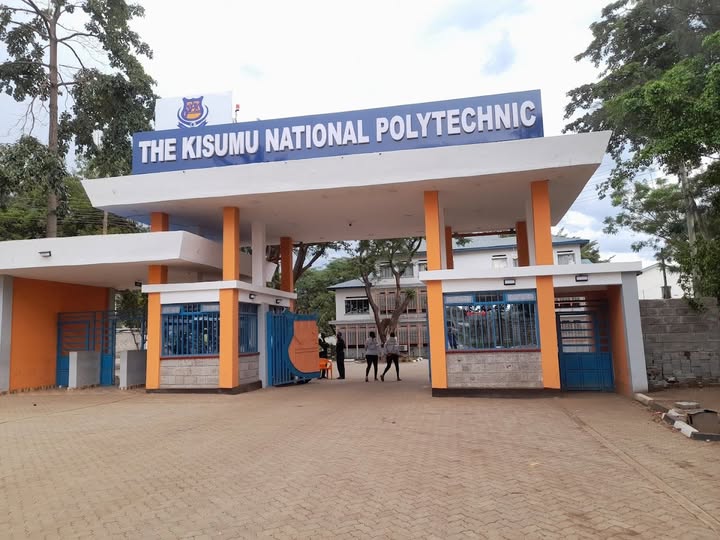
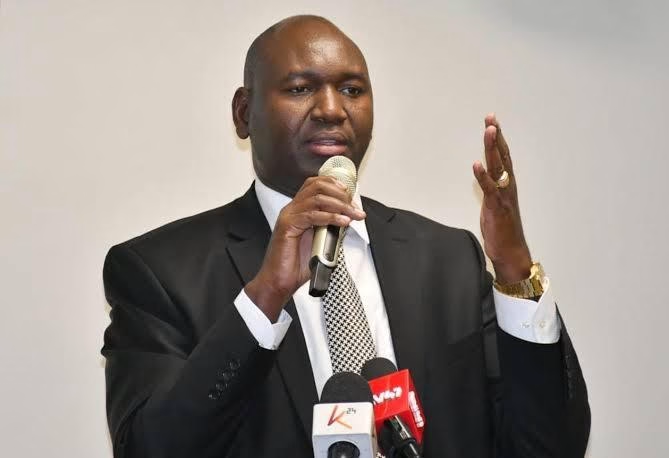
Ministry of Education Report on Total Number of Registered Schools, plus ghost schools

REPUBLIC OF KENYA MINISTRY OF EDUCATION
OFFICE OF THE CABINET SECRETARY
PRESS STATEMENT
For Immediate Release
Nairobi, Thursday, 12th February 2026
STATEMENT BY THE CABINET SECRETARY, MINISTRY OF EDUCATION, ON THE RELEASE OF THE SCHOOL DATA VERIFICATION REPORT
Background
Today, we are officially releasing the School Data Verification Report. This report is the outcome of a nation-wide exercise that was carried out by the Ministry of Education. The exercise started on 1st September, 2025.
The Government invests significant public funds annually in the provision of free and compulsory basic education, in line with Article 53 of the Constitution. The funds for Free Primary Education, Junior School Education, Free Day Secondary Education, and Special Needs Education, are allocated strictly on the basis of learner enrolment as captured in the National Education Management Information System (NEMIS).
In this context, accurate data is therefore not optional — it is a legal, financial, and ethical obligation. The verification exercise was conducted to safeguard public resources, strengthen accountability, and ensure that Government capitation is based on accurate, verifiable, and credible enrolment data across all public basic education institutions. The objectives of the exercise were to:
- Confirm the accuracy and authenticity of learner enrolment figures used for capitation.
- Eliminate unauthenticated learners and non-operational schools from public funding.
- Ensure equitable and fair distribution of resources to schools.
- Strengthen the integrity of education data as we transition from NEMIS to the more robust Kenya Education Management Information System (KEMIS) as per the recommendation of the Presidential Working Party on Education Reform.
Scope and Methodology of the Verification
The verification exercise covered public primary schools, junior schools, secondary schools, and special needs education institutions across all the 47 counties.
The verification focused on reconciling learner enrolment and institutional records captured in NEMIS with independently submitted and validated school-level data. The school-level data was submitted by Heads of Institution and Sub-County Directors of Education.
While the exercise achieved significant national coverage and produced credible results, several operational and systemic challenges were encountered during the verification process:
1. Connectivity constraints in remote and hard-to-reach areas delayed data submissions and synchronization.
2. Incomplete and inconsistent data submissions from some institutions, which complicated data authentication and delayed final verification. Fourteen (14) institutions did not submit data at all.
3. Capacity gaps at the school level, particularly in institutions that lacked trained data officers or personnel adequately familiar with NEMIS requirements and verification tools.


- Lack of birth certificates affected the verification of early grade learners in primary education.
Findings
Despite these challenges, the verification exercise has produced a report that provides the foundation for strengthening the integrity of the education sector data.
The exercise revealed that while a majority of schools complied with data requirements, significant anomalies were identified in others. These include:
- Discrepancies between the data on NEMIS and the school-level data as submitted by Heads of Institutions as indicated below:
| No | Level | Enrolment in NEMIS | Verified Enrolment | Variance |
| 1 | Primary School | 5,833,175 | 4,947,271 | -885,904 |
| 2 | Junior School | 2,430,398 | 2,973,648 | +543,250 |
| 3 | Secondary School | 3,352,884 | 3,265,154 | -87,730 |
- Unauthenticated learner records, including missing or invalid Unique Personal Identifiers, duplicated or incorrect assessment numbers, and mismatched examination centre codes.
- Ten (10) secondary schools and seventeen (17) primary schools that were non-operational due to insecurity, lack of learners, relocation of communities, or administrative closure — but whose status had not been reported to the Ministry and who continued to appear in NEMIS.
- One hundred and two (102) junior schools and eighty-four
(84) primary schools that were below the stipulated minimum enrolment threshold. - Weak oversight at the Sub-County level, where discrepancies were neither reported nor corrected promptly.
Data entry in NEMIS is done at the school level. Heads of Institution are the custodians of school data and are personally responsible for the accuracy, completeness, and timeliness of all learner records entered into the system. Any deliberate falsification, inflation, or misrepresentation of enrolment data constitutes gross misconduct and a breach of public trust.
Similarly, Sub-County Directors of Education are responsible for oversight, supervision, and validation of schools within their jurisdiction. Where discrepancies occurred and were ignored, condoned, or failed to be escalated, administrative responsibility arises.
In light of the foregoing findings, the Ministry is taking the following action:
1. This report will be forwarded to the Teachers Service Commission for appropriate administrative action against:
(a) Fourteen (14) Heads of Institution for failure or refusal to submit data for verification.
(b) Twenty (20) Heads of Institution for submitting inflated student enrolment data.
2. Administrative action is being taken against twenty-eight (28) Sub-County Directors of Education and Quality Assurance and Standards officers in areas where systemic failures or supervisory lapses are established. These include officers who failed to report non-operational schools in their respective areas of jurisdiction.
3. This report will be submitted to the Directorate of Criminal Investigations for further action.
4. Suspension of all unverified learners from resource allocation in order to protect public funds and uphold accountability. Funding for the affected learners will only be restored upon verification.
5. Non-operational schools will be subjected to formal closure or de- registration in accordance with existing laws and regulations.
- Data verification will be carried out on a termly basis.
7. Strengthening capacity building for Heads of Institution and education officers on data management, information security and accountability.
8. Accelerating the transition to KEMIS, which will introduce stronger validation controls, real-time reporting, and improved interoperability. - Reorganising administrative structures and human resource within the Ministry for greater efficiency, transparency and accountability.
These actions are necessary to restore discipline, protect public resources, and reaffirm the integrity of our education system.
I thank all officers and stakeholders who participated in this exercise and assure Kenyans that the Ministry of Education remains committed to delivering a fair, accountable, and learner-centred education system.
Julius Migos Ogamba, EBS
CABINET SECRETARY