New Teacher Transfer Rules by TSC: All You Need To Know
In a significant policy change that will impact numerous educators nationwide, new teacher transfer rules have been established to guarantee fairness, health considerations, and stability within the education sector.
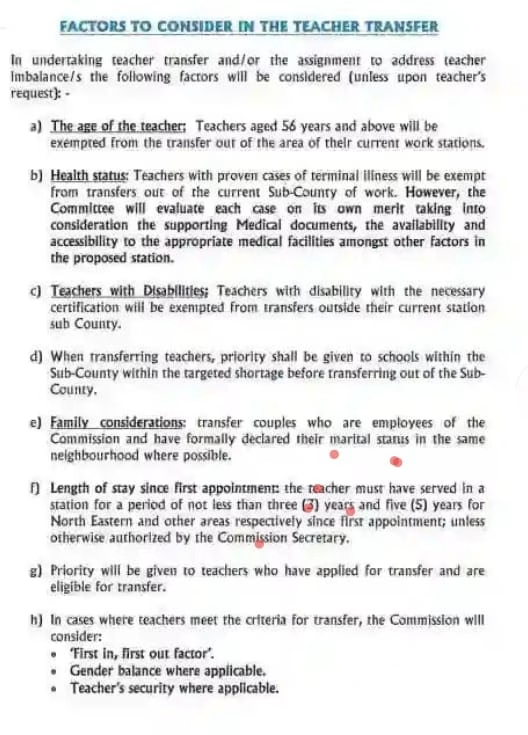
The new framework, detailed in the document titled “Factors to Consider in the Teacher Transfer,” emphasizes critical aspects that the Teachers Service Commission (TSC) and associated authorities must evaluate before transferring educators. These measures are intended to balance staffing necessities while simultaneously safeguarding teachers’ well-being.
Here’s everything you need to know regarding the new transfer regulations:




1. Age of the Teacher Takes Center Stage
Teachers aged 56 years and above will be exempt from being moved out of the location of their current work stations. This action is designed to protect veteran teachers from the strain of relocation and to enable them to spend their remaining years with minimal interruptions.
The age consideration recognizes the vital role that seasoned teachers play in ensuring school stability, particularly in rural and challenging areas.
2. Health Status is Now a Major Factor
Teachers diagnosed with terminal illnesses are now shielded from being transferred outside their current sub-county of employment. Nonetheless, each situation will be assessed individually. Key factors will include:
- Supporting medical documentation
- Availability and access to suitable medical facilities
- Other specific factors depending on the proposed location
This approach guarantees that educators facing serious health issues are not subjected to further difficulties due to unnecessary relocations.
3. Special Considerations for Teachers With Disabilities
Teachers who possess the necessary disability certification will also be protected from transfers beyond their current sub-county. This initiative reaffirms the TSC’s dedication to inclusivity and support for educators living with disabilities.
The guideline ensures that educators with disabilities can continue their service without the added burden of adapting to new, potentially unsuitable environments.
4. Priority on Intra-Sub-County Transfers
When transferring teachers becomes necessary, the new policy emphasizes that priority should first be given to moving them within the same sub-county, particularly in schools experiencing shortages.
Teachers will only be transferred outside their sub-counties when absolutely necessary. This is aimed at reducing disruptions in teachers’ personal and professional lives.
5. Family Considerations Given New Importance
Couples who are both employed by the Commission and have officially declared their marital status will now be prioritized for placement within the same neighborhood whenever feasible.
This forward-thinking initiative aims to bolster family bonds, enhance work-life balance, and contribute to overall teacher satisfaction and productivity.
6. Minimum Length of Stay Required Before Transfers
Teachers must have completed a minimum of three (3) years in their initial station to be eligible for a transfer. For those assigned to North Eastern and other hardship regions, the minimum duration is extended to five (5) years, unless otherwise permitted by the Commission Secretary.
This policy promotes continuity and consistency within schools while also honoring teachers’ aspirations for career advancement.
7. Priority for Those Who Have Applied for Transfer
Teachers who have officially requested a transfer and fulfill the eligibility requirements will receive top priority. This approach will guarantee that teachers’ personal situations and preferences are taken into account whenever feasible, enhancing their satisfaction in their work environments.
8. Additional Considerations by the Commission
In instances where numerous teachers qualify for a transfer according to the aforementioned criteria, the Commission will evaluate further based on:
- First in, first out factor: Those who submitted their applications earlier will be prioritized.
- Gender balance: Transfers will be managed in a way that fosters gender balance within schools.
- Teacher’s security: In regions where safety is a concern, the teacher’s protection will be a crucial deciding factor.
Why These Changes Matter
The extensive new transfer policy demonstrates an increasing awareness within the education sector that the wellbeing of teachers has a direct effect on the academic success of students. When teachers feel secure and supported, they can concentrate more effectively on their primary mission: educating and developing the next generation.
Integrating factors such as health status, disabilities, family connections, and personal safety into transfer evaluations signifies a move towards a more compassionate, teacher-focused methodology in education management.
What Teachers Should Do
Teachers are encouraged to become acquainted with the new regulations and ensure that all needed documents—such as medical certificates or marriage declarations—are correctly submitted to the Commission.
Those wishing to transfer should also keep in mind the minimum stay requirements and submit their applications promptly to take advantage of the “first in, first out” prioritization.
As these guidelines are put into operation, it is anticipated that teachers will undergo a more equitable, clearer transfer process that better acknowledges the realities of their personal and professional circumstances.