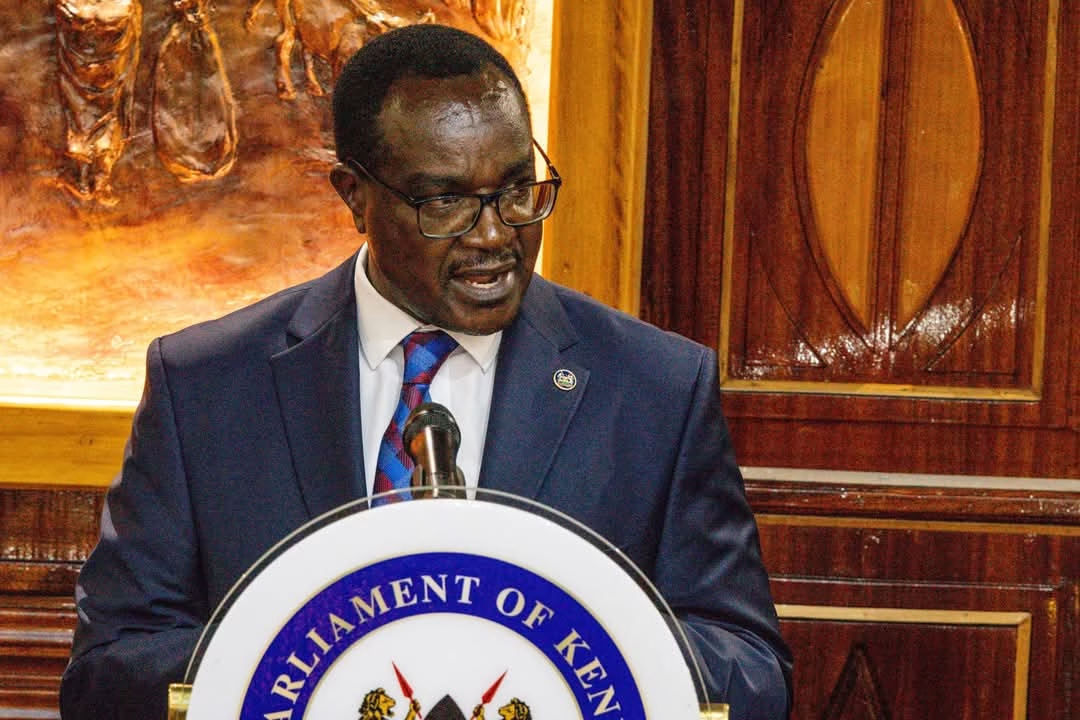
In summary: To combat the teacher unemployment crisis, Ogamba stated that the Ministry and TSC are enhancing recruitment collaboration and pushing for better budget allocations.
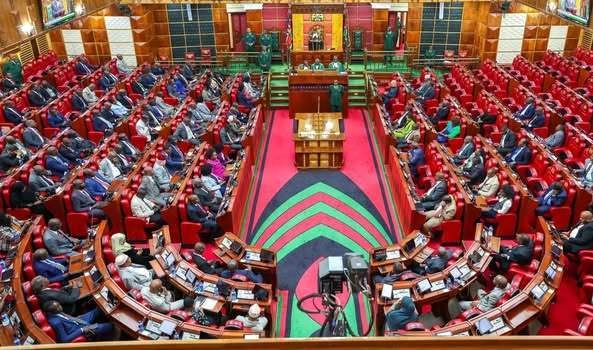
Over 343,000 trained teachers are unemployed despite being registered with the Teachers Service Commission (TSC) in Kenya, as revealed by Education Cabinet Secretary Julius Ogamba. During a Senate session on Wednesday, Ogamba explained that the issue arises from limited budget allocations and an uneven distribution of teachers across different counties.
He noted that TSC registration is voluntary, and not all graduates have registered, implying that the actual number of unemployed qualified teachers could be even higher. The Ministry of Education, in partnership with the TSC, is working to tackle this issue through collaborative recruitment efforts and advocacy for increased funding.
To combat the teacher unemployment crisis, Ogamba stated that the Ministry and TSC are enhancing recruitment collaboration and pushing for better budget allocations. However, disparities among counties remain, leading to calls for a more equitable distribution strategy to ensure adequate teaching staff in all regions.

In response to questions from Nominated Senator Joyce Korir, who sought data categorized by graduation year and clarification on employment limits in certain counties, Ogamba acknowledged the complexity of the issue, which is exacerbated by financial constraints and geographical disparities. His comments were part of a broader Senate inquiry into the ongoing challenges in the education sector, including strikes, staffing shortages, infrastructure deficits, and university funding issues.
Ogamba mentioned that the national teacher shortage currently stands at 98,461. He noted that 1,429 teachers have been deployed in Makueni County this financial year, but many areas still face significant shortages. Makueni Senator Daniel Maanzo raised concerns about education access in marginalized regions and urged the Ministry to expand the school feeding program in drought-affected areas. Ogamba responded that the government is already implementing school meals in parts of Makueni and plans to extend the program, along with integrating clean cooking technologies in school kitchens as part of an eco-friendly initiative.
The Senate session also addressed challenges in vocational education. Nominated Senator Catherine Mumma questioned the alignment of curricula between county-run Vocational Training Centres (VTCs) and nationally-managed Technical and Vocational Education and Training (TVET) institutions, as well as the shortage of student accommodation nationwide. Ogamba explained that while counties manage VTCs, the national government oversees TVETs, and efforts are underway to harmonize curricula and establish shared standards through collaboration with county governments.
According to the Ministry, Kenya has 1,156 VTCs with over 141,000 trainees, and there is a high demand for boarding facilities, especially in urban areas and Arid and Semi-Arid Lands (ASALs). To address this, Ogamba mentioned partnerships with the African Development Bank and the German Development Bank, as well as utilizing the National Government Constituency Development Fund (NG-CDF) for infrastructure development. The Ministry is also promoting Public-Private Partnerships (PPPs) to construct hostels on institutional land.
Regarding public universities, Nairobi Senator Edwin Sifuna expressed concern over the recent closure of the Technical University of Kenya (TUK) due to a lecturers’ strike. He inquired about government measures to prevent further disruptions.
Ogamba explained that TUK is facing a significant funding deficit, generating Sh207 million monthly while needing Sh314 million to operate, with Sh272 million allocated for salaries, resulting in delayed statutory deductions and a debt of Sh12.99 billion. To stabilize the university, the government has committed Sh145 million in payroll support for the first half of 2025 and plans to provide conditional grants over the next seven financial years to assist with salary payments and clear arrears.
On inclusive education, Nominated Senator George Mbugua requested data on learners with hearing impairments and clarification on policies for inclusion in lower primary schools. The Ministry reported fluctuating enrollment figures for students with disabilities and reaffirmed its commitment to inclusive education, highlighting the Sector Policy for Learners and Trainees with Disabilities (2018). This policy allows parents to choose between special, integrated, or mainstream schools based on available support. The government provides financial support per learner, including additional funds for those with special needs, while also working to strengthen support systems for day schools.
The Senate also discussed the challenges posed by the Competency-Based Curriculum (CBC) on school heads. Kakamega Senator Boni Khalwale questioned whether the government plans to review the salaries of primary school headteachers now responsible for overseeing pre-primary and Junior Secondary levels. Ogamba stated that a comprehensive job evaluation is forthcoming, with proposals submitted to the Salaries and Remuneration Commission (SRC) to inform the 2025–2029 Collective Bargaining Agreement (CBA). The evaluation will consider expanded job responsibilities, increased workloads, and new teaching roles introduced under CBC.