Tag Archives: Belio Kipsang

Long-serving Education PS Belio Kpsang reassigned

Advertisements
Advertisements

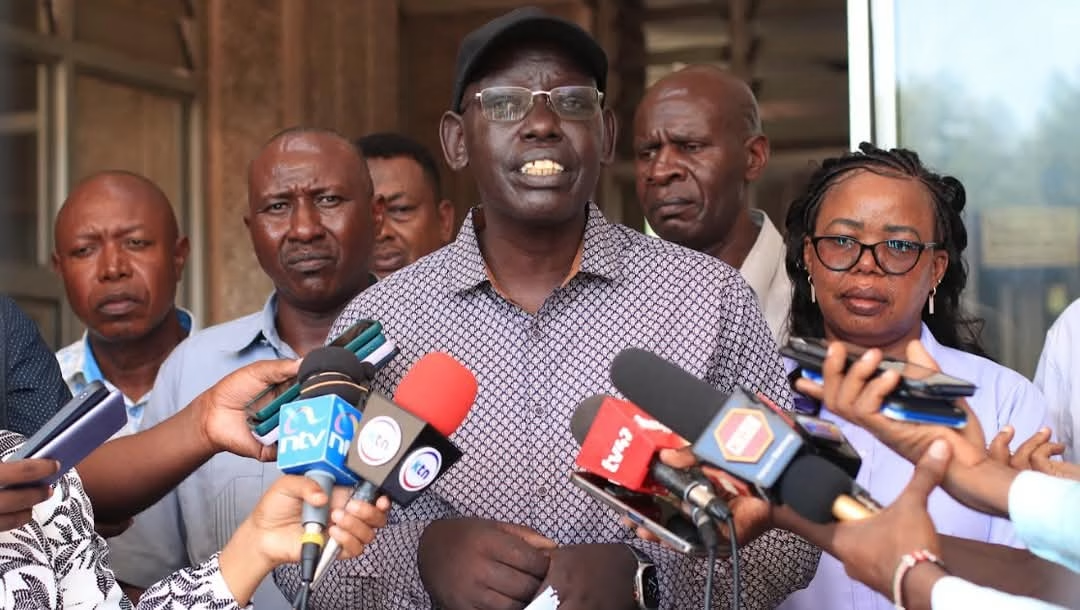
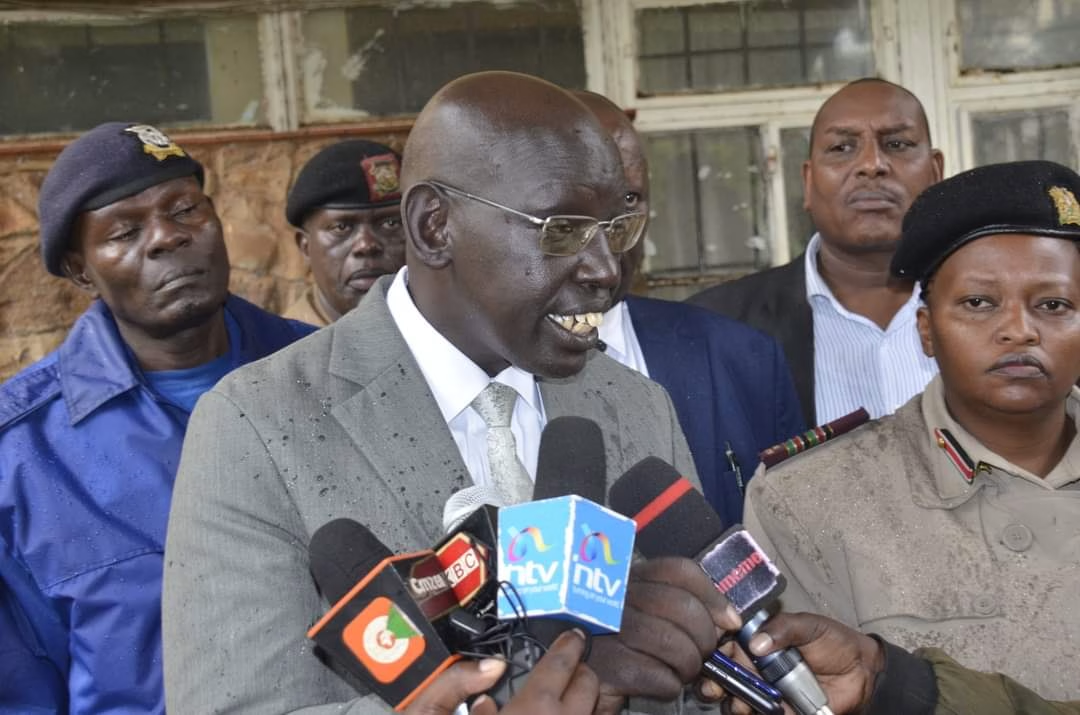
Long-serving Education Principal Secretary Belio Kipsang has been reassigned.

President William Ruto of Kenya has appointed new Principal Secretaries as part of recent changes in his administration.

According to a memo released on Thursday, March 20, Ruto has moved Kipsang from the Basic Education role in the Education Ministry shortly after he made controversial statements regarding Mathematics.

Advertisements

Last Thursday, Kipsang announced that Grade 9 studentsโ€”the first cohort under the Competency-Based Curriculum (CBC)โ€”will start selecting their subjects and senior schools in the second term of this year.

“We are allowing time for parents and students to discuss their interests and future paths. The selection process will begin as soon as they return to school,” he stated.

Advertisements

The former Education Principal Secretary indicated that Mathematics will no longer be a mandatory subject for students moving to senior secondary school, representing a significant shift under the CBC framework.

Advertisements

Instead, students will be required to take English or Kenya Sign Language, Kiswahili, Physical Education, and Community Service Learning as compulsory subjects, while they can choose from a selection of 38 options to guide their academic and career paths.

This marks a departure from the previous 8-4-4 system, where Mathematics was a core subject alongside English, Kiswahili, and at least two sciences (Physics, Chemistry, or Biology).

Moreover, the Ministry of Education has proposed a cap on the number of students from a single junior secondary school who can enroll in the same senior school, limiting it to a maximum of five. This change aims to encourage diversity in student placements, although some stakeholders believe it may be overly ambitious, particularly for day schools that draw students from their local areas.

On Thursday, the Kenya National Examination Council announced that the final Grade 9 score will be determined by students’ performance in primary school, internal assessments conducted by teachers, and their results from the national Kenya Junior School Education Assessment (KJSEA), which will take place at the end of the year.

The KJSEA will account for 60 percent of the final score and will also influence the student’s placement in senior secondary school. The remaining 40 percent will be evenly divided between scores from internal assessments and primary school performance.

Advertisements

Students who are unhappy with their placements will have the chance to request transfers, depending on available spots after reporting.

For private candidatesโ€”those not enrolled in a formal educational institutionโ€”placement will only be available in day senior secondary schools.

Senior schools will now be categorized into three main academic pathways to accommodate the varied interests and abilities of students.

The Triple Pathway Schools will provide three distinct areas of study: science, technology, engineering, and mathematics (STEM), social sciences, and arts and sports.

However, students will not be required to take all three. Instead, they will choose a pathway that aligns with their strengths and aspirations.

The Double Pathway Schools will offer either STEM and social sciences, or STEM and arts.

Meanwhile, the Vocational and Special Needs Pathway Schools will cater for learners with disabilities such as autism, cerebral palsy and cognitive challenges, focusing on hands-on vocational training tailored to their abilities.

To further streamline placement, the ministry has classified senior schools into three types based on accommodation; day schools and hybrid schools, which will accommodate boarding and day students, with specific provisions for boys-only, girls-only, or mixed-gender setups.

Subjects

Senior schools will offer a total of 38 subjects, with core subjects including English, Kiswahili, Kenyan Sign Language for learners with hearing impairments, physical education, and community service learning. Information and communication technology will be integrated across all subjects.

Eunice Gachoka, the senior deputy director of Educational Media at the Kenya Institute of Curriculum Development, projected that 15 per cent of learners will pursue the arts and sports pathway, which is structured to nurture creative talents and athletic abilities. This pathway is divided into two main areas, sports science and performing arts.

“We anticipate that 15 per cent of learners will pursue this route, while 60 per cent will opt for STEM. The STEM track will cover areas such as building construction, electricity, metalwork, mechanics, woodwork, media technology and specialised subjects like marine and fisheries technology, which will be available in select schools,” she said.

Alice Gathii from the Ministry of Education assured that the placement process will be structured to guide learners into specialised fields based on their interests and abilities. She clarified that learners in triple pathway schools will not be required to take all three pathways.

“We’ve ensured that learners with hearing, visual, physical, cognitive, or developmental challenges such as autism and cerebral palsy are not left behind,” she said.

Regarding placement, Gathii assured parents that learner preferences and school capacity will be key considerations.

Meanwhile, in the latest changes, President William Ruto has Moved Ps Kipsang from the Ministry of Education to the Immigration Department.

Education PS Belio Kipsang swaps with Prof Julius Bitok in latest appointments

Advertisements

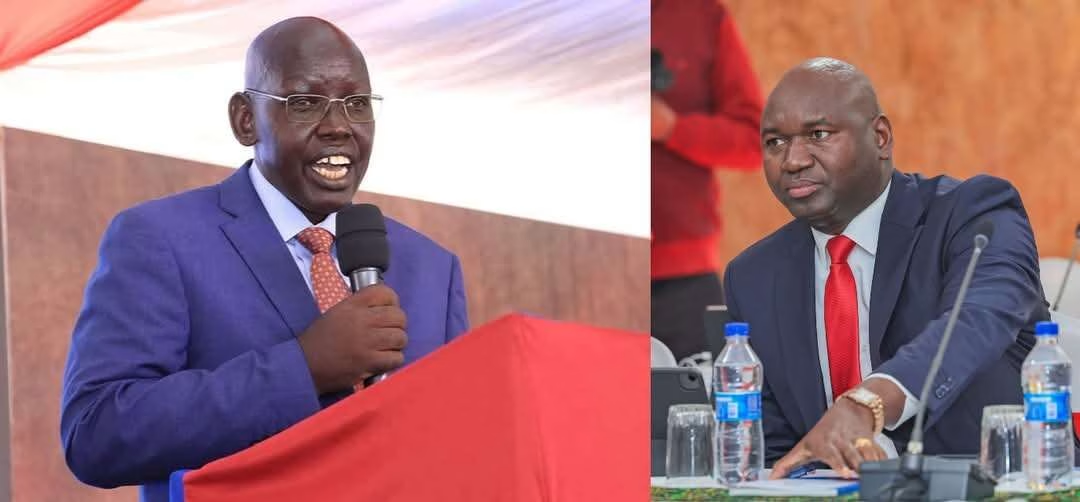
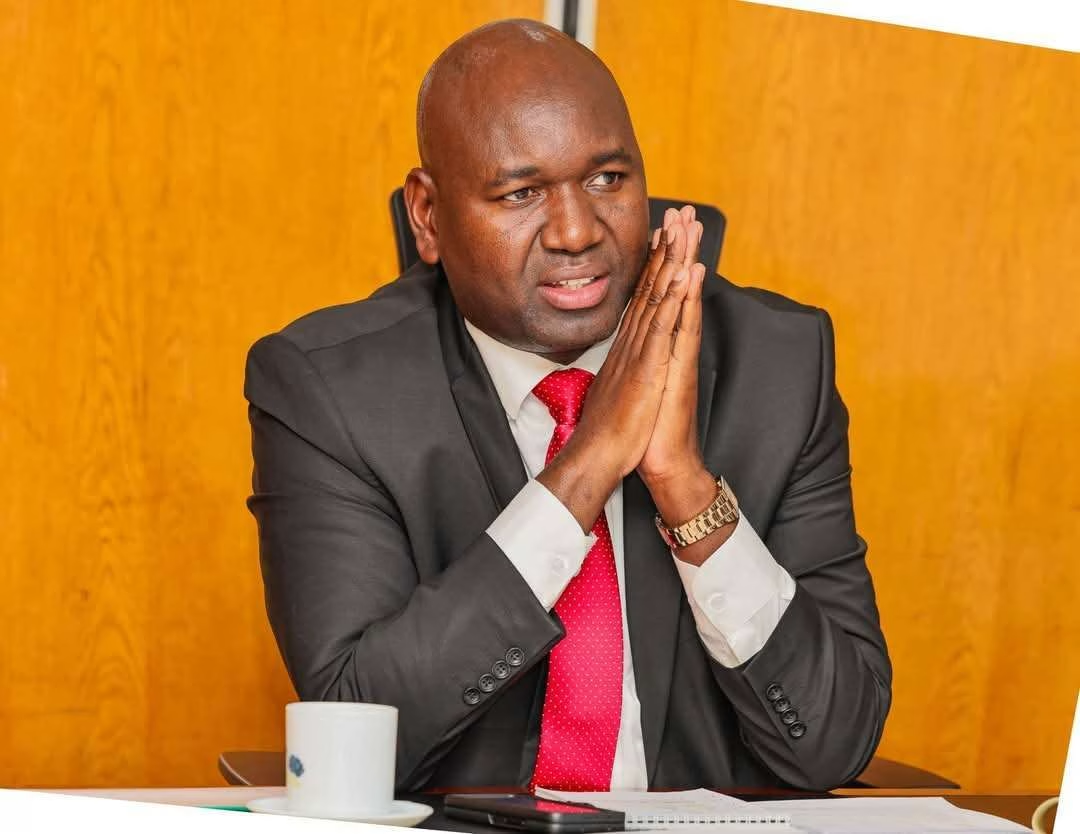
In the recent reshuffle announced by President William Ruto, Long Serving Education Principal Secretary Dr. Belio Kipsang has been reassigned from his role as Principal Secretary for Basic Education. He will now take on the position of Principal Secretary for Immigration and Citizen Services. Professor Julius Bitok, who previously held that role, will succeed him in Basic Education.

The announcement stated that these changes aim to capitalize on opportunities in emerging economic sectors and tackle challenges impacting Kenya’s social structure.

Overall, the adjustments are intended to expedite the execution of the government’s key socio-economic strategy, the Bottom-Up Economic Transformation Agenda (BETA).

Advertisements

All set for grade 9 learners as Govt employs more teachers & constructs classrooms

Advertisements

๐„๐๐ฎ๐œ๐š๐ญ๐ข๐จ๐ง ๐Œ๐ข๐ง๐ข๐ฌ๐ญ๐ซ๐ฒ ๐š๐Ÿ๐Ÿ๐ข๐ซ๐ฆ๐ฌ ๐ฉ๐ซ๐ž๐ฉ๐š๐ซ๐ž๐๐ง๐ž๐ฌ๐ฌ ๐Ÿ๐จ๐ซ ๐ ๐ซ๐š๐๐ž ๐Ÿ— ๐ญ๐ซ๐š๐ง๐ฌ๐ข๐ญ๐ข๐จ๐ง

As schools, learners, and guardians gear up for the first term of the education calendar, they have been assured of adequate classrooms, books, and teachers.

State Department for Basic Education, Principal Secretary (PS), Dr. Belio Kipsang, says the government has been working round-the-clock to ensure a smooth reopening of schools.

Advertisements

The government has constructed additional classrooms in primary schools to accommodate Grade 8 learners transitioning to Junior Secondary Schools (JSS) under the Competency-Based Curriculum.

โ€œAs a government, in the last year we have been preparing ourselves so that we transition well,โ€ stated the PS.

Grade 6 Candidates sitting for a past KPSEA national exam by KNEC.

As per the recommendations of the Presidential Working Party on Education Reform, the PS expounded that 93 per cent of Kenyans wanted their children to be in primary schools for Junior Secondary Education.

Advertisements

Since the introduction of CBC in the county in 2017, Dr. Kipsang said the transition has been smooth except for a few challenges which have been surmounted.

โ€œUp to today, we have been able to supply books to every level of learning. From the day we started with Grade One up to Grade Nine. I want to confirm that Grade Nine books have all been printed; 9.9 million books have been printed,โ€ stated the PS.

He added that 85 per cent of schools have already received the books, and distribution is ongoing in the remaining 14 per cent of schools.

๐‚๐ฅ๐š๐ฌ๐ฌ๐ซ๐จ๐จ๐ฆ๐ฌ ๐Ÿ๐จ๐ซ ๐ ๐ซ๐š๐๐ž ๐Ÿ— ๐ข๐ง ๐Œ๐ฎ๐ซ๐š๐ง๐ โ€™๐š ๐œ๐จ๐ฆ๐ฉ๐ฅ๐ž๐ญ๐ž

Construction of classrooms to host grade 9 Junior Secondary School learners in Murangโ€™a is complete, the County Director of Education Ms. Ann Kiilu has confirmed.

Speaking on Friday when she commissioned four grade 9 classrooms at Technology Primary school the Director revealed that in phase one, the county was allocated 82 classrooms which already have been completed.

She added another that 172 classrooms which the county got in phase two are at 95 percent complete, assuring that come early next week when the learners will resume studies for term one, all classrooms will be ready for occupation.

โ€œThe remaining few classrooms are at the final stages and the contractors are currently doing finishes to ensure that when students resume their studies, the facilities will be ready for use,โ€ she said.

Ms Kiilu added that in phase three, the county is allocated 30 classrooms which will be constructed from mid this month.

โ€œAll public primary schools will get a classroom and for now priority was given to schools with big enrolment for grade 9 and which did not have free classrooms,โ€ she added.

The government, she revealed, has also equipped the classrooms with lockers from funds allocated for schoolsโ€™ renovation, maintenance and improvement kitty.

โ€œNo parent is supposed to buy a locker as all classrooms have been equipped with the facilities. Books for grade 9 have also been distributed to all schools hosting junior secondary schools and I assure you that Murangโ€™a is ready to roll out grade 9 come next week.โ€ Remarked the director.

A total of 23, 018 learners in the county are expected to transit to grade 9 with Kiilu assuring more teachers have been deployed to handle the extra class.

โ€œWe thank the parents who have supported the classrooms project as this has ensured the classrooms were completed in time,โ€ she noted.

Head teacher of the Technology primary school Ms. Beatrice Wachira lauded the government for enabling her school to get four new classrooms for grade 9.

โ€œWe have 168 students in this school who are joining grade nine and our parents have also supported us as they have done the foundation of the classrooms to complement the money we got from the ministry of education.

โ€œThe foundation was done in a way that we can do storey building in future for more classrooms. Our school has also received books both textbooks and exercise books for our learners.โ€ She added.

Dr Belio Kipsang exits Education Ministry as new PS Bitok takes over

Advertisements

Dr. Belio Kipsang has stepped down from the Education Ministry as Professor Julius Kibet Bitok officially takes over as the new Principal Secretary for Basic Education.

Prof. Bitok succeeds Dr. Kipsang, who has been reassigned to the State Department for Immigration and Citizen Services at a pivotal moment for the Competency-Based Curriculum (CBC), which is undergoing significant changes.

During a handover meeting on Wednesday, Education Cabinet Secretary Julius Migos Ogamba welcomed the new PS and emphasized the importance of his role in ensuring quality education for students.

Advertisements

โ€œThe sector has complete confidence in you. I look forward to your contributions to this field to effectively serve our students, and we will support you,โ€ he stated.

Dr. Kipsang, who has dedicated 29 years to the education sector, assured Prof. Bitok of a strong foundation, especially in managing the transition of junior school students to senior school in January 2026.

“I have faith in him; he can successfully oversee the remaining aspects of Competency-Based Education (CBE). I am confident in Prof. Bitokโ€™s capability to handle the final stages of the system,” Dr. Kipsang remarked.

Advertisements

Now leading Immigration and Citizen Services, Dr. Kipsang humorously invited his colleagues to visit him at his new post.

“You can come to Nyayo House for your ID cards and other travel documents,” he said, reflecting on his ten years of service as PS in the Ministry of Education.

This transition occurs amidst ongoing discussions about the implementation of CBC and the government’s higher education funding model, which was recently deemed unconstitutional by the High Court.

As Prof. Bitok begins his role, he faces a system still grappling with challenges, including public concerns regarding CBC implementation, teacher readiness, and school infrastructure.