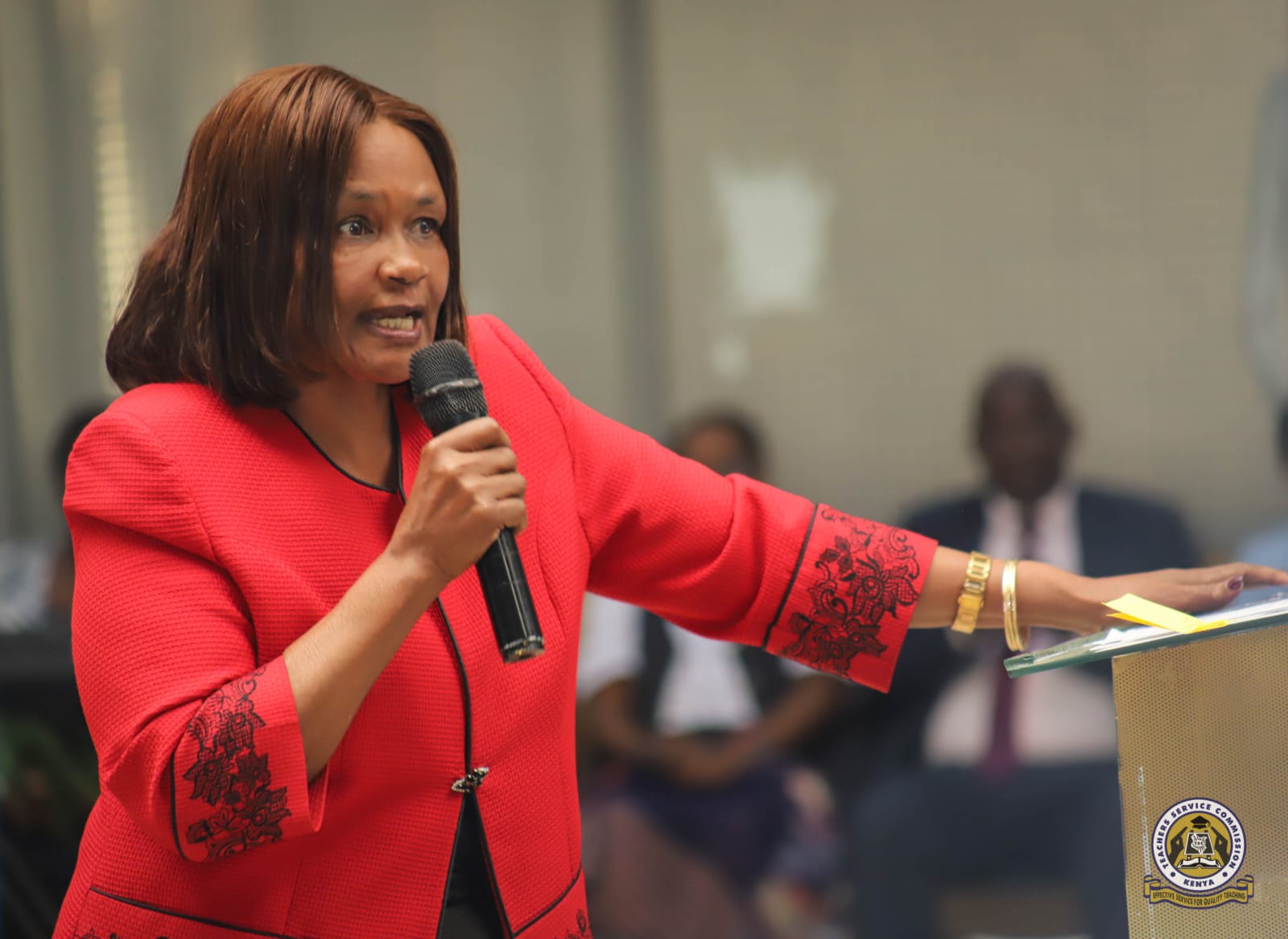
Teachers are set to receive non-pensionable allowances as part of new TSC reforms.
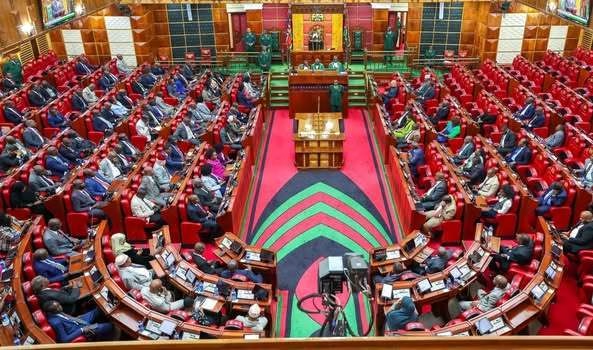
A new Bill currently in Parliament may provide legal support for allowances that teachers have long sought, creating a schedule of defined benefits and establishing clear terms for those in acting roles.
The Teachers Service Commission (Amendment) Bill, 2024, aims to modify the TSC Act of 2012 to create a transparent and predictable system for allowance payments while also formalizing the appointment process for teachers in acting capacities.
Introduced by Mandera South MP Abdul Haro, the Bill is presently with the National Assembly’s Departmental Committee on Education and intends to enhance the administration of benefits within the teaching sector. It brings forth significant reforms, such as a new Section 32A that specifies the criteria and processes for assigning teachers to act in elevated roles.


A new ‘Schedule Four’ attached to the Bill enumerates nine allowances that can be provided under particular conditions. These are: Housing allowance, Commuter allowance, Hardship allowance, Responsibility allowance, Special school allowance, Reader’s facilitation allowance, Leave allowance and Transfer allowance.
The Bill suggests that while the majority of these allowances will not be pensionable, the responsibility allowance will be pensionable if a teacher qualifies for it up to and including their final date of service.
To promote fairness in compensation, the suggested legislation also aims to revise Section 11 of the existing Act by adding a new paragraph requiring the Teachers Service Commission (TSC) to consult the Salaries and Remuneration Commission (SRC) when determining the allowances due to teachers.
“The primary aim of this Bill is to amend the Teachers Service Commission Act to provide various allowances that the Commission may pay to teachers above their basic salary,” Haro states in the memorandum of objects and reasons.
Clerk of the National Assembly Samuel Njoroge has asked the public to share their opinions on the Bill by May 9.
“In line with Article 118(1)(b) of the Constitution and Standing Order 127(3), the Clerk of the National Assembly hereby invites the public and stakeholders to present memoranda regarding the Bill,” Njoroge disclosed in a public notice.
The proposed changes arise amidst increased demands from teachers’ unions for significant salary increases and improved benefits in the forthcoming collective bargaining agreement (CBA) for 2025–2029.
The Kenya National Union of Teachers (Knut) is advocating for a 60 percent rise in basic salary and improved allowances. The Kenya Union of Post Primary Education Teachers (Kuppet) seeks an increase of between 50 and 100 percent, as well as the establishment of a risk allowance for science teachers.
Knut is additionally urging for overtime pay or fixed compensation for teachers working during public holidays, as well as three incremental credits for educators assigned to arid, semi-arid, or difficult-to-staff regions. The union is also seeking that the TSC provide acting allowances to teachers in roles such as deputy headteacher, deputy principal, and heads of departments, who have yet to be confirmed.
Both unions encountered backlash from members for consenting to the 2021–2025 CBA, which did not include a monetary aspect. They have subsequently justified the decision, clarifying that turning down the agreement would have led to a legal crisis because of statutory deadlines.
If approved, the Teachers Service Commission (Amendment) Bill, 2024, is anticipated to improve transparency, fairness, and motivation in the teaching field.