
TSC response to MPs on Teachers’ Promotions Dated 20th May, 2025
TSC KENYA RESPONSE to Education committee
We wish to acknowledge that the prolonged stagnation of teachers in various job groups is the result of several compounding factors accumulated over time. The Commission has taken a critical review of these issues and outlines the following:
1. Lack of Regular Promotions
Over the past ten years, the Commission has only conducted promotion interviews on three occasions. This irregularity has led to a significant backlog of eligible teachers awaiting promotion, contributing to widespread stagnation across all cadres.
Recommendation:
We propose that Parliament allocates a dedicated annual budget for teacher promotions. Regular and predictable promotion cycles will prevent future backlogs and sustain motivation among educators.
2. Career Progression Guidelines (CPG)
We extend our apologies to teachers and the nation for the negative outcomes resulting from the implementation of the Career Progression Guidelines. While introduced with reformative intentions, the CPG framework has inadvertently led to the stagnation of thousands of teachers.
In response, we have committed to reviewing the guidelines. Specifically, we are eliminating Job Groups C5 and D2 and merging them with adjacent grades. This restructuring will streamline the promotion process and ensure a more equitable career progression system.
3. Promotion Irregularities and Corruption
A recent audit of the promotion list revealed unexplainable anomalies, including cases where teachers with minimal years of service were elevated to higher job groups. These promotions did not align with the established criteria.
As a corrective measure, we have removed such individuals from the list and re-advertised the affected positions to uphold fairness and meritocracy.
We reiterate: corruption has no place in the teaching service. We remain committed to transparency, equity, and integrity in all our processes.
4. New Job Groups: T1, T2, and T3
We have introduced new job groups — T1, T2, and T3 — to create a clear path for teachers who do not hold administrative positions but qualify for promotions beyond Job Group C4.
This initiative allows classroom teachers to rise through the professional ranks without being limited to scarce administrative roles. We no longer wish to peg higher job groups exclusively to administrative duties. This change opens up opportunities in the upper cadres for all deserving teachers based on merit and experience.
DETAILED RESPONSE FROM TSC
ADDITIONAL INFORMATION SUBMITTED TO THE DEPARTMENTAL COMMITTEE ON EDUCATION REGARDING TEACHERS’ PROMOTIONS
20TH MAY, 2025
- BACKGROUND
- The Teachers Service Commission is established under Article 237 (1) of the Constitution with the overall mandate of teacher management and regulation of the teaching service as provided under Article 237(2) and (3) of the Constitution.
- As a public organ, the Commission is bound by the National Values and Principlesof Governance set out under Article 10 of the Constitution as well as the Values and Principles of Public Service set out under Article 232 of the Constitution.
- To operationalize the mandate of the Commission, the Parliament enacted the Teachers Service Commission Act and the Code of Regulations for Teachers (CORT). The two legislations provide for powers and procedures within the functions of the Commission. Notably, section 11 of the Act requires the Commission to among others, formulate policies to achieve its mandate.
RESPONSES TO THE SPECIFIC QUESTIONS
- Provide the interview template used for the ongoing promotion cycle
- The interview tools used during the promotions for Adverts 1 to 32are attached herein asAppendix 1.
- Submit a comprehensive three-year promotional data set including the list of all the teachers interviewed their scores and interview outcomes
- The Commission is still processing this data and will be shared once finalized.
- Provide a list of teachers promoted in the current cycle who were also promoted in the last three years, including age, gender and ethnicity
- Before the advert was published, the Commission conducted an analysis of its data base to determine the adequacy of potential applicants who had completed the requisite three (3) years in one grade.
- The analysis indicated that there were certain promotional grades that lacked enough applicants in certain counties who had the required experience of three years as stipulated in the Career Progression Guidelines.
- The findings revealed that the shortage of potential applicants affected both ASAL and Non ASAL counties.In-order to ensure that promotions were distributed across the country and that no County was disadvantaged, the Commission adopted a flexible approach:
- The requirement of three years in a grade was reduced up to a minimum of six months of service for teachers in counties that lacked adequate numbers of eligible candidates
- This flexibility was applied across specific adverts and specific counties both in ASAL and Non ASAL areas.
- The reduction of the mandatory three years requirement was to ensure fair opportunities for all teachers in the country while considering historical staffing challenges including consideration for teachers in acting positions and marginalized groups to ensure succession management.
- For example, in gradeD3(Principal), the analysis showed that there were no adequate teachers in grade D2 who had served for the requisite three years. In this regard, a waiver was granted from three years to six months in all the forty-seven counties to attract applicants. In addition, for Deputy Principal III (D1) position, the Commission waived the three-year requirement for eighteen counties (18) including Migori, Narok, Busia, Bomet,Homabay, Kwale, Mandera among others.
- The Commission’s decision was also informed by the need to minimize delocalization of teachers, enabling them to serve within their localities where possible and to progressively promote administrators in acting capacities to substantive grades.
- As a result of the waiver a total of 5,291 teachers who had not served for at least three years in their grades were promoted.
- Provide raw data on interview results for each teacher as recorded at the Sub County level
- The collection of raw data from all the sub-counties is ongoing and will be availed to the Committee.
- Provide the length of service in Current positions for both promoted and not promoted teachers since their last promotions
- Attached as Appendix 2 is the list of teachers, indicating the length of stay in their current grade for both promoted and non-promoted teachers.
- Give an Analysis of Promotions disaggregated by Sub County, Ethnicity, Gender, Age and Disability status
- Attached is the disaggregated analysis of promotions conducted during the current cycle by Sub-County(Appendix 3A), Ethnicity(Appendix 3B), Gender(Appendix 3C), Age(Appendix 3D), and Disability Status(Appendix 3E).
- Give a detailed explanation of how affirmative action was applied in the current promotion cycle including clear definitions and clarifications on any changes from the definition of affirmative action applied between 2017 and 2021.
- Affirmative action measures applied during the 2024/2025promotionsincluded: –
- Gender Parity:The Commission made deliberate efforts to ensure gender inclusivity in teacher promotions in line with the constitutional requirements in the public service. As a result, the promotions achieved a gender distribution of 04% female and 52.96% male, exceeding the one-third gender rule.
- Persons with Disabilities (PWD):A total of 1,275 teachers with disabilities (5.049% of promotions) were promoted in 2024/2025 F/Yhencethe Commission ensured compliance with the national disability framework.
- Progressive Promotion in ASAL and Hard-to-Staff Areas:
The Policy on Appointment and Deployment of institutional Administrators requires the following, that Principals be in D3, D4 and D5 grades, Deputy Principals be in D1, D2 and D3 grades. Head teachers be in C5 and D1 grades and Deputy Headteachers be in C4 and C5 grades.
The Job Evaluation conducted in 2016 reinforced this grade expectation to reflect the worth and complexity of the duties undertaken by these teachers. An analysis of the current staffing situation in ASAL counties and other listed hard to staff areas reveals that institutional administrators are performing in lower grades that do not match the level of responsibility they carry.
Majority of these teachers serve in grades C2, C3, C4 and C5 rather than the required D grades for Principals and Deputy Principals. Head teachers and Deputy Head teachers are similarly under-graded some serving in C1, C2 or C3 instead of the requisite grades. These teachers have been performing administrative duties for many years without substantiative appointments.
In addition, they do not earn acting allowances or special duty allowance despite carrying out full administrative duties. This mismatch has compromised succession management, school leadership and motivation of teachers in these marginalized regions.
In this regard, the Commission progressively promotes these teachers holding administrative positions until they attain the grades that are commensurate to their administrative positions on affirmative action. The 2021-2025 CBA between the Commission and the teacher unions entrenched this commitment under Clause 9.3
Honorable Members, we wish to clarify that the 2017-2021 CBA did not have a specific term on promotions based on affirmative action. The CBA was founded on a job evaluation conducted by the Salaries and Remuneration Commission. Following the recommendations of the job evaluation report, the salary of all teachers in the public sector across all the grades were reviewed.
On the other hand, the teachers’ unions negotiated for promotions on affirmative action in the 2021–2025 CBA. Specifically, Clause 9.3 provides that the Commission shall progressively promote teachers in ASAL and hard to staff areas holding administrative positions, until they attain the grades that are commensurate to their administrative positions.
- Give a formal response to the allegations that some promoted teachers were subsequently assigned to different regions
- Following the promotions, the Commission is in the process of assigning and posting teachers. This process will take into consideration the availability of vacancies, especially for teachers in administrative grades. Teachers who are in non-administrative grades will be retained at their current stations.
- Accordingly, allegations that promoted teachers were reassigned to different regions are inaccurate, as the process has not yet been finalized.
- Give the strategic plan detailing the measures in place to ensure that future promotions are fair, transparent, predictable and automatic where applicable.
- In discharging its mandate, the Commission endeavours to apply the values and principles of public service enumerated under Article 232 of the Constitution in its processes.
- Specifically, in promotion of teachers, the Commission has put in place the following strategies to ensure the process is transparent, fair, predictable and automatic where applicable: –
- Alignment with Legal and Regulatory Frameworks: The promotion process strictly adheres to Regulation 73 of the Code of Regulations for Teachers (CORT), the Career Progression Guidelines (CPG), and the ‘Policy on Selection and Appointment of Institutional Administrators’. The scoring criterion aligns with Regulation 73 of CORT by scoring teachers on performance, seniority and experience, academic qualifications, merit, among others. Further, in-line with clause 9.3 of the 2021-2025 CBA the Commission promotes teachers in ASAL and hard to staff areas on affirmative action. This alignment to legal and regulatory frameworks provides the foundation for fair, transparent and predictable promotion practices.
- Development of Promotion Guidelines:Going forward the commission will develop promotion guidelines clearly setting out standardized promotion criteria and procedures to ensure the process is fair, transparent and accountable.
- Automation of Teacher Promotion Process through Teachers Online System: This digitized system will provide a platform for online application for advertised promotion vacancies, shortlisting, and notification of interview outcome and generation of promotion letters. Automation of these processes not only eliminates human error but also enables teachers to track the status of their applications in real-time thus fostering transparency and fairness in the promotion process.
- Development and use of standardized evaluation criteria: The Commission has developed a standardized scoring criterion used during interviews to assess candidates objectively. This criterion encompassed various factors such as performance appraisal, institutional leadership experience, age, and contribution to academic excellence. This rigorous evaluation process is designed to prioritize meritocracy, ensuring fairness and consistency while minimizing potential favoritismand bias.
- Publication of vacancies and results: Vacancy announcements are publicly advertised through the print media and the TSC website, ensuring transparency and enabling wider dissemination of information. The advertisement specifies specific advert requirement, ensuring that teachers fully understand the qualifications and timelines required. Additionally, the Commission publishes the list of all successful applicants on its website to enhance transparency in the promotion process.
- Common cadre promotions: The Commission has established a predictable promotion policy that provides for the automatic progression of teachers serving in common cadre grades, without the need for competitive interviews. This policy applies to the following categories:-
a) P1 Certificate Holders: Teachers appointed at entryGrade B5 are eligible for automatic promotion to Grade C1 after serving a minimum of three years, subject to satisfactory performance.
b) Diploma Certificate Holders: Teachers entering serviceatGrade C1 are eligible for automatic promotion to Grade C2 upon completion of three years of service, subject to satisfactory performance.
c). Bachelor’s Degree Holders: Teachers entering serviceat Grade C2 qualify for automatic promotion to Grade C3 after three years of service, subject to satisfactory performance.
- CONCLUSION
The Commission remains steadfast in fulfilling its constitutional mandate of managing and regulating the teaching service in Kenya and takes this opportunity to appreciate the unwavering support from the Departmental Committee on Education. Particularly, the Committee has facilitated budgetary allocation that has enabled the Commission to recruit additional teachers and the promotion of those in service. This support has been instrumental in addressing staffing gaps, teacher motivation and retention across the country.
However, a significant number of teachers have continued to stagnate in the same grade for extended periods of time due to budgetary constraints. The Commission therefore humbly requests the continued support of this Committee in securing additional funds to enable promotion of all its teachers from time to time.
The Commission remains committed to working closely with the committee and all the stakeholders to ensure efficient and effective implementation of its mandate.
 TSC Circular on Updating of data on registered teachers not currently employed by the Teachers Service Commission
 Mwalimu National Sacco Loans & Repayment Schedule (BOSA Loans)
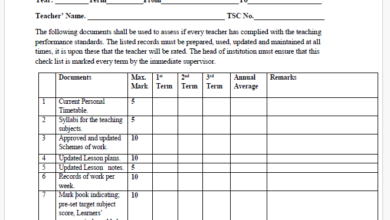 Latest TPAD Teacher’s Checklist of TSC Professional Documents
 Official Kuppet BBF Guidelines For All Branches