Why KMTC students will have to wait longer to receive direct benefits from HELB
The Kenya Medical Training College (KMTC) students are having trouble getting money from the Higher Education Loans Board (HELB) because of a budget deficit of Sh19 billion and unclear legal guidelines.
Julius Ogamba, the Education Cabinet Secretary, explained to the National Assembly’s Joint Committee on Education and Health that the ministry wants to help all students in higher education, but the current rules don’t allow it.
He explained to the legislators that when it comes to budgeting, institutions create their budgets through their respective government departments. For example, HELB goes through the Ministry of Education to create its budget, while KMTC works with the Ministry of Health.
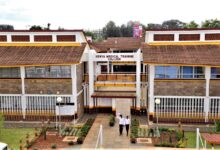
Mr. Ogamba explained to members of parliament that it’s crucial to understand that certain universities and training institutions, like KMTC, are not under the Ministry of Education. This fact affects how the budget is decided by the National Assembly.
The education CS stated that because of how budgets are allocated based on different sectors, HELB doesn’t receive enough resources to assist other tertiary education institutions that are not under the Ministry of Education.
Mr. Ogamba explained to the committee that the budget given to HELB for funding students is specifically allocated for a set number of students in universities and other educational institutions under the Ministry of Education.
The CS mentioned that many tertiary education and training institutions not under the Ministry of Education are not getting funding because HELB doesn’t have enough money.
“This lack of budget is causing these institutions to struggle financially. As a result, students and staff at these institutions may not have access to necessary resources.” Mr. Ogamba highlighted this issue as a concern that needs to be addressed.
The Ministry of Education is responsible for overseeing these institutions, but they are not receiving the necessary funding. Without proper funding, these institutions may not be able to function effectively. This could impact the quality of education and training provided to students.
Additionally, it may also affect the overall performance and reputation of these institutions. Mr. Ogamba emphasized the importance of ensuring that these institutions receive the funding they need to operate efficiently. He called for action to address this funding shortfall.
HELB plays a crucial role in providing financial support to tertiary education and training institutions. The lack of funding from HELB is leading to financial challenges for these institutions. Without adequate funding, these institutions may struggle to maintain their operations. This could have negative consequences for both students and staff at these institutions.
Mr. Ogamba’s comments shed light on a significant issue within the education sector. – It is crucial to address the funding challenges faced by these institutions. This will help ensure that students and staff have the necessary resources to succeed. Ogamba’s remarks underscore the importance of finding a solution to this funding issue.
The Ministry of Education and other relevant authorities must work together to address this funding shortfall. – Ultimately, providing adequate funding to these institutions is essential for the overall improvement of the education sector.
The CS informed the committee that when funds are allocated from the treasury to the institutions it oversees, the money is designated for a specific amount of students.
“The existing resources of HELB, which show a shortfall of Sh19.7B, are allocated for a specific number of students attending universities and TVET institutions,” stated Mr. Ogamba.
The papers presented to the joint committee show that in the 2024/25 Fiscal Year, the ministry needed a loan of Sh1,394,443,131 for 122,634 KCSE 2023 students but only got Sh13,768,404,874, resulting in a shortfall of Sh12,373,961,743.
In addition, the ministry did not have enough money to support students who took their exams in 2023 and enrolled in different technical vocational programs.
Mr. Ogamba mentioned that many higher education institutions and training schools not under the Ministry of Education do not receive funding because HELB does not have enough money.
The CS informed the committee that as long as the ministry receives sufficient resources, it is willing to support students in all other tertiary institutions not under its direct jurisdiction.
“The Ministry of Education and HELB are prepared to collaborate with everyone involved to make sure that students in all tertiary education institutions receive funding. This may involve allocating more funding to HELB. Therefore, we will be asking for the backing of the two departmental committees to help us secure this support,” according to Mr. Ogamba.
Despite the limitations on the budget, Mr. Ogamba informed the members of parliament that HELB has been collaborating with different institutions outside the ministry to offer financial assistance to students. This support is given based on the resources allocated by these institutions from their own budgets.
One example is KMTC, where Mr Ogamba mentioned that HELB has given support of Sh1.2 Billion for the financial years 2022/2023 and 2023/2024. This support was made possible through resources from the Ministry of Health.
The committee was informed by the CS that from 2014 to 2019, HELB gave loans amounting to Sh468 million to KMTC students. This funding was received from USAID, an organization that has been disbanded by the current US President, Donald Trump.
The issue raised by Balambala MP Abdi Shurie was that students at KMTC were not eligible for the fund, which he saw as unfair treatment.
“Why are KMTC students not eligible for HELB support like students from other public institutions?” He inquired.
HELB initially provided funding only for university students, but with the passing of the TVET Act in 2013, they started funding TVET trainees at different institutions under the Ministry of Education.