
HISTORY & GOVERNMENT
REVISION BOOKLET
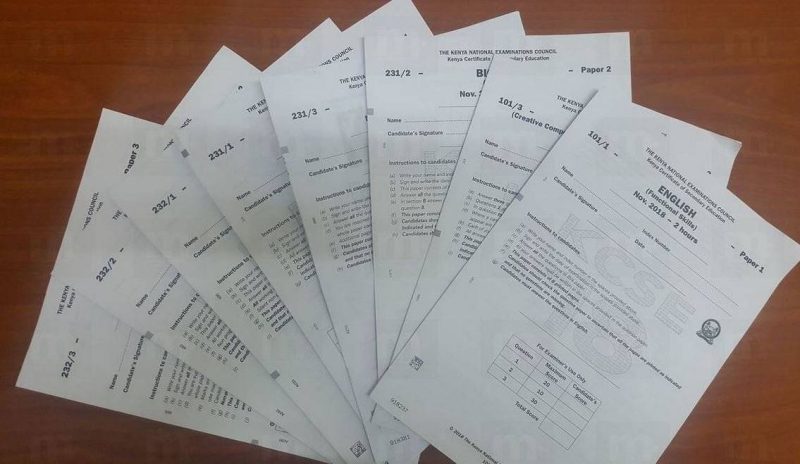
7 Sample Papers complete with their Marking Schemes
HISTORY & GOVT I
PAPER 1
SECTION A (COMPULSORY)
- Name two sources of Kenyan History. (2mks)
- Give two ways in which Islam was spread in Kenya. (2mks)
- Name two Coastal settlements in Kenya before 1500 AD. (2mks)
- Who appoints District Commissioners in Kenya? (1mk)
- What was the main Provision of the Carter Land Commission of 1932? (1mk)
- State two reasons why the Colonial Government in Kenya built roads. (2mks)
- State two reasons why Africans were not allowed to grow cash crops in Kenya. (2mks)
- What was the main feature of African Education in Kenya during the Colonial Period. (1mk)
- Name two independent churches which came up in Western Kenya during the
independence struggle. (2mks)
- Name one political movement which was formed in Kenya between 1919 and 1930. (1mk)
- State two situations which may lead to by-elections in Kenya. (2mks)
- Give two roles of the local native councils in the Colonial administration of Kenya. (2mks)
Read and download more free history resources below; Educationnewshub.co.ke:
History Paper 1 Topic By Topic Questions And Answers
HISTORY NOTES FORM 2: NEW SYLLABUS SIMPLIFIED NOTES
HISTORY NOTES FORM 3: NEW SYLLABUS SIMPLIFIED NOTES
History & Government notes and exams for forms 1, 2, 3 and 4 free downloads
HISTORY NOTES FORM 4: NEW SYLLABUS SIMPLIFIED NOTES
HISTORY NOTES FORM ONE: NEW SYLLABUS SIMPLIFIED NOTES
HISTORY NOTES FORM 1-4: COMPLETE HISTORY NOTES
History Paper 2 Topic By Topic Questions And Answers (All Topics)
History and Government free lesson plans for all topics (Form one to four)
SECTION B (30 MARKS)
13(a) State five reasons for the Bantu migrations into Kenya in the Pre-Colonial era. (5mks)
- Describe five political activities the Agikuyu community in the Pre-colonial period. (10mks)
14(a) List three ways in which the Christian activities facilitated the British Colonization of
Kenya. (3mks)
- Describe briefly how the Central government was organized in Colonial Kenya. (12mks)
15(a) State five immediate causes of the MAU MAU movement. (5mks)
- Explain five problems which faced African nationalists in Kenya before 1945. (10mks)
SECTION C (30 MARKS)
16.(a) What was the I.P.P.G in full? (1mk)
- Outline two ways in which the advent of Multiparty Politics has led to tribal
animosity in Kenya since 1991. (2mks)
(c) What is the role of Political parties in Kenya’s development. (12mks)
17(a) What is an election Petition? (2mks)
Outline in a Chronological order the law making process in Kenya. (3mks)
- Discuss the functions of the Electoral Commission of Kenya. (10mks)
18(a) Name any two new districts created in Nyanza Province between 1997 and mid 1998.
(2mks)
- What is the main reason for the creation of new administrative units in Kenya’s
Provincial administration since independence? (1mk)
(c) Explain six duties of District Commissioner in Kenya. (12mks)
HISTORY & GOVT I
PAPER I
MARKING SCHEME
- Sources of Kenyan History
- – Archaeology
- – Anthropology
- – Linguistics
- – Oral traditions
- – Genetic studies / Zoology / Biology / Botany
- – Written materials
- – Any 2 points, 1 mark each
- Ways in which Islam was spread.
- – Through Jihad’s / Holy wars
- – Through conquests
- – Through Trade / Commerce
- – Through inter-marriages between the Arabs and Africans.
- – Through Education
- – Through Political administration / Sharia Any 2 points, 1 mark each
The Coastal settlements in Kenya before 1500 AD.
- – Mombasa
- – Lamu
- – Pate
- – Malindi
- – Vumba
- – Gedi
- – Manda
- – Fazza
- – Kilifi Any 2 points, 1 mark each.
- The District Commissioners in Kenya are appointed by:
- – The president.
- The main Provision of the Carter Land Commission of 1932.
- – It fixed the boundaries of the White Highlands and removed Africans from there.
- Reasons why the colonial government in Kenya built roads.
To facilitate transportation of goods from the rural farms to the Urban Centres / Foods
To provide links between individual European farms and the railway lines.
To facilitate effective administrative control of the Kenya colony.
To open up the African districts for labour supply.
Any 2 points, 1 mark each (2marks)
- Reasons why Africans were not allowed to grow cash crops in Kenya:-
- – To avoid competition with the settlers
- – To enable them tap cheap African labour from the reserves
- – To render Africans poor so as to be completely dependent on the Whitemen
- – To avoid rivalry in trade from such products.
Any 2 points, 1 mark
- The main feature of African education in Kenya during the Colonial period.
- – It was elementary and Craft-Oriented. 1 Point
- The independent Churches which came up in Western Kenya during the independence Struggle:-
Nomiya Luo Church
Dini ya Musambwa
The Christian Universal Evangelist Union
Dini ya Roho
African Independent Pentecostal Church Any 2 points, 1 mark each
- The political movements which were formed in Kenya between 1919 and 1930.
- – The East African Association
- – The Kikuyu Association
- – The Young Kikuyu Association
- – The Young Kavirondo Association
- – The Kavirondo Tax payers Welfare Association
- – The Kikuyu Central Association Any 1 point, 1 mark each
- Situations which may lead to by-elections in Kenya:-
- – When a member withdraws his citizenship or is grabbed by a Court of Law.
- – When an incumbent member of parliament dies
- – When an MP receives a jail term exceeding 12 months or receives death penalty from court of law
- – When a member resigns from the party which sponsored him.
- – When an MP resigns from the Parliament
- – When a member is proved to have committed an election offence.
- – When an MP is declared bankrupt by a Court of Law.
- – When an MP fails to attend eight consecutive parliamentary sessions without a valid reason.
Any 2 points, 1 mark each.
- The roles of the Local Native Councils in Colonial Kenya:-
- – To provide a means through which the government could come to understand the African and be able to contain him.
- – To encourage and develop a sense of responsibility and duty towards the state among the African leaders.
- – To provide a forum through which Africans of all status could express themselves but be restricted to the district level.
Any 2 points, 1 mark each.
SECTION B (30 MARKS)
13(a) Reasons for the Bantu migrations into Kenya in the Pre-colonial Period.
- – Population pressure at their original homelands
- – The iron technology enabled them to fight away their enemies and produce more food hence expansion began to chase their enemies and expand agriculture.
- – Internal pressure caused by family quarrels
- – Natural calamities like diseases, famines and drought befell them.
- – The spirit of adventure
- – External pressure by warring neighbours
Any 5 points, 1 mark each
- The political activities of the Agikuyu in the Pre-Colonial Period:-
- – The Agikuyu were organized into clans
- – The clan was the highest Political unit
- – The members of a clan occupied a single territorial called mbari, usually one ridge.
- – Each clan was led by a council of elders, Kiama which had a Chairman called, Muthamaki
- – Muthamaki emerged due to his personality and leadership potentials.
- – The senior council of elders, i.e. the Kiama performed both religious and judicial roles
- – The council ensured that law and order was maintained and settled disputes.
- – The Riika (age-set) was a very vital unifying sector in the clan.
- – Its members considered each other as brothers. They jointly received military training and thereafter made up a single fighting unit.
- – During peace times performed tasks like the construction of paths, bridges and houses.
- – The Kikuyu system was basically a decentralized type of Political Organization.
Any 5 points, 2 marks each
- (a) Ways in which the Christian Missionary activities facilitated the British Colonization
of Kenya:-
- – They built schools where Africans were taught Western culture and education hence Africans were pacified.
- – The abolished slavery which had been on for years hence Africans saw their government to be a better one.
- – They also provided free health services to Africans, hence many diseases could be treated, thus better partners
- – Due to African hostility to them in some areas, they called for their governments to come for their protection. Any 3 points, 1 mark each
- How the central Government was organized in Colonial Kenya:-
- – At the head of the Colonial administration was the Colonial Secretary based in London.
- – At first the Headquarters was in Zanzibar. By 1900 it was transferred to Mombasa.
- – The Governor was the head of the Colony.
- – He was advised by an Advisory Council set up later.
- – An executive council also emerged to ensure implementation of colonial policies
- – A legislative council was set up in 1907 to make colonial laws with the governors assent.
- – For easy centralization of authority, the colony was divided into administrative provinces headed by Provincial Commissioners
- – Provinces were further divided into districts under District Commissioners and Officers, Manned by White Officers.
- – Below them were the Chief heading locations under the Chiefs, Authority Act – They were Africans.
- – Under them were the village headmen.
N/B The Chiefs main duties were to collect taxes, recruit African labour and maintain law
and order at grassroots.
– There was a very strict chain of command.
Any 6 points, 2 marks each
15.(a) The immediate causes of the MAU MAU movement:-
- – Pressure from the ex-world War II servicemen who demanded for fair rewards in 1947.
- – The massacre of striking workers by the British Police at the Uplands Bacon Factory in 1947
- – The brutal eviction of African residents at the Olenguruone settlement scheme by the Colonial government / The Olenguruone episode of 1947.
- – The Urban crisis whereby the dwellers stayed in pathetic conditions i.e. unemployment, discrimination, poor housing etc.
- – The closure of the vegetable factory at Karatina which led to loss of revenue and unemployment there, hence the farmers were really affected / The Karatina Factory incident.
Any 5 points, 1 mark each
- Problems which African nationalists in Kenya before 1945:-
- – They applied primitive fighting tactics compared to Britain who had better trained soldiers.
- – They had communication problems as they did not have a lingua Franca and yet each tribe had its own language.
- – The White government controlled the Mass Media against their wishes hence difficult to disseminate their grievances.
- – Their was no adequate international support to add necessary pressure on the colonialists e.g. UNO & OAU.
- – The African freedom to move within the country was curtailed by the Kipande system hence affecting their activities.
- – The Africans also lacked the firearms which were widely used by the White army, hence they relied on weaker and proper types of weapons.
- – Due to little or no formal education, some of them could not understand the need for national unity against a common enemy-the British
- – Tribal feelings were strong in them at this time, hence they had very localized demands e.g. Luos, Agikuyu, Akamba e.t..c. Any 5 points, 2 marks each
SECTION C (30 MARKS)
16.(a) The I.P.P.G. in full:-
- – The Inter-Parties Parliamentary Group.
- Ways in which the advent of Multiparty politics has caused tribal animosity in Kenya since 1991:-
- – It has led to ethnic clashes in various parts of the country.
- – Each tribe became suspicious of another as far as national leadership is concerned since 1992.
- – Mushrooming of tribal-oriented Political parties
- – Appointments to national top jobs is based on Political Affiliations/Tribal overlordship
Any 2 points, 1mark each
(c ) The role of Political in Kenya’s development:
- – They participate in educating Kenyans about their democrative rights
- – They teach Kenyans about their Policies and Manifestos so as to enable them choose which one to belong.
- – They groom people who undertake national leadership roles e.g. President.
- – They contribute to economic development by raising funds for the needy people or for building development projects e.g. schools, cooperatives, health centres, etc.
- – The opposition put checks and balances on the ruling party which has to deliver to survive / can pass a vote of no confidence on an unpopular government.
- – Political parties through parliament reduces the excesses of the Chief executive / abuse of power
- – They also participate in preaching peace and harmony among Kenyans in their various constituencies.
- – They discuss and make or amend the laws governing the country the August House.
Any 6 points, 2 marks each
- (a) An election petition defined:-
- – This is a legal complaint raised against a person who is suspected to have committed an election offence during an election in a country. The competent court of law has to try such a case e.g. High Court. A good definition
(b) The law – Making process in Kenya takes an elaborate process going through several
stages:-
- – The first reading
- – The second reading
- – The committee stage
- – The third reading
- – The Residential Assent
- – The Kenya Gazette
N/B The Chronology must be checked.
- Functions of the Electoral commission of Kenya:-
- – Preparation of nomination papers, voting cards and ballot boxes country wide
- – Distribution of nomination papers, voting cards and ballot boxes to the voting stations.
- – Supervising the voting in various polling stations.
- – Counting of votes after the voting exercise is over.
- – Fixing voting stations in every constituency throughout the country.
- – Appointing returning officers to represent him in each constituency.
- – Organizing a fresh register of voters
- – Fixing new electoral boundaries Any 5 points, 2 marks each
- (a) The new districts created in Nyanza province between 1997 and Mid 1998.
- – Gucha District
- – Nyando District
- – Bondo District Any 2 points, 1 mark each
(b) Main reason for the creation of new administrative units in Kenya:-
- – To bring government services closer to the local residents.
- Duties of District Commissioners in Kenya:-
- – To represent the President in his area of Jurisdiction e.g. during Public holidays
- – To link the district residents with the government.
- – To co-ordinate government administration in his district.
- – To coordinate development projects in the District as the Chairman of the District Development committee.
- – To intregret/ explain government policies at the district level.
- – He is the chairman of the District liquor licensing Board
- – He is the Chairman of the District land control board.
- – He ensures that government policies are implemented at the district level.
- – He is the chairman of the District Trade Licensing Board.
- – He issues permits / licenses for Public meetings in the district.
- – He is an ex-office member if the District country councils hence oversees their administrations.
- – He may administer civil marriages on behalf of the state.
- – He administers district revenue to ensure transparency and accountability in their use.
- – He co-ordinates the works of all the government ministries and the NGO’s in his district.
Any 6 points, 2 marks each
HISTORY & GOVT I
PAPER II
SECTION A (COMPULSORY)
- State two social activities of the early man during the Middle stone age. (2mks)
- How did religion contribute to early Urbanization in Africa? (2mks)
- Give two raw materials which could be combined into bronze metal. (2mks)
- Give one way in which magazines and newspapers are useful to the modern man. (1mk)
- Name one missionary society who visited Buganda Kingdom before 1900. (1mk)
- List two differences between Islam and Christianity. (2mks)
- Give two advantages of road over railway transport. (2mks)
- What was the main reason for Menelik’s resistance against the Italians? (1mk)
- State two ways in which the opening of the Suez canal in 1869 contributed to the scramble
for African Colonies. (2mks)
- What is balance of trade? (1mk)
- List the two theories of agricultural origins and development in the world. (2mks)
- Give two social effects of the Trans-Saharan Trade on west African people. (2mks)
SECTION B (30 MARKS)
13.(a) State three factors which have facilitated industrialization in the third World since Mid 20th.
(3mks)
- Explain six factors which have hindered rapid industrialization in the third World countries.
(12mks)
14.(a) Give three factors for the development of trade between the West African Coast and the
outside World. (3mks)
- Outline three ways in which slaves were acquired during the Trans Atlantic Slave trade.
(3mks)
- Discuss the economic impact of the Trans-Atlantic Trade. (9mks)
15.(a) State three reasons for Samori Toure’s resistance against the French Colonialists. (3mks)
(b) Explain six factors for the protraction of this resistance (12mks)
SECTION C (30 MARKS)
16(a) State three reasons for early agriculture in India. (3mks)
- Discuss the effects of inherent food shortages on the economies of African countries (12mks)
17(a) Name three gods among the Maya Society. (3mks)
- Explain the six roles of traditional religion among the Maya of Central America (12mks)
18(a) Name any three iron working sites in Africa. (3mks)
- Explain six results of the discovery and use of iron in Africa. (12mks)
HISTORY & GOVT I
PAPER II
MARKING SCHEME
SECTION A (20 MARKS)
- The social activities of the early man during the Middle Stone Age Period.
- – Early man had fully developed language
- – He wore animal skins
- – Painted their bodies with red ochre and soils
- – Had developed religious practices, e.g. burrying the dead.
Any 2 points, 1 mark each
- How religion contributed to early Urbanization in Africa:-
- – The areas of worship were built with very strong and magnificent architectural designs/temples/shrines.
- – Religion attracted hundreds of worshipers to regions of worship hence contributing to urbanization.
- – Religious centres were generally sacred, hence enhancing unity and peace in such centres which was necessary for development e.g. in the East Coast of Africa / City States grew due to Islamic influence. Any 2 points, 1 mark each
- The two raw materials which could be combined into bronze metal are:-
- – Tin
- – Copper Any 2point, each 1 mark
The ways in which magazines and newspapers are useful to the modern man.
- – Sources of leisure / entertainment
- – Provision of news
- – Provision of advertising facilities / trade Any 1 point, 1mark
- The Missionary Societies which visited Buganda Kingdom before 1900.
- – The Church Missionary Society
- – The Holy Ghost White Fathers / Roman Catholics.
Any 1 point
- Differences between Islam and Christianity.
- – Mohammed was the lost prophet while Jesus one of the many prophets
- – Islamic Doctrines allow for Polygamy while Christian one do not.
- – The Holy book in Christianity is the Bible while Muslims use the Koran
- – Islamic doctrines are more rigid while Christian ones are relaxed.
Any 2 points, 1 mark each
- The advantages of road over railway transport:-
- – Road transport is faster than railway transport where there are no electric trains.
- – Railways are more expensive to construct compared to roads
- – The wagons are more expensive to buy compared to vehicles
- – Rails are less flexible compared to roads
Any 2 points, 1 mark each
- The main reason for Menelik’s resistance against the Italians.
- – To preserve Ethiopia’s national sovereignty / independence.
Only 1 point
- Ways in which the opening of the Suez Canal in 1869 contributed to the Scramble for African colonies.
- – It provided the shortest sea route to India
- – Whoever controlled Egypt obviously controlled the Suez Canal.
- – Whoever controlled the Nile waters also controlled Egypt and the Suez Canal and thus facilitated Colonization of Uganda
- – Kenya was colonized as a route to India
- – Countries who funded the construction of the Canal claimed refund in the name of colonizing Egypt. Any 2 points, 1 mark each
- Balance of trade definition.
- – This refers to the money value difference between the exports and imports of a Country.
A good definition.
- The theories of agricultural origins and development in the World:-
- – The one area (centrifugal) theory which holds that agriculture first developed in a single place and then spread to other parts of the World.
- – The independent theory which holds that the agrarian systems developed independently in different areas of the World. 2 points, 1 mark each
- The Social effects of the Trans Saharan Trade on West African People:-
- – The introduction and spread of Islamic religion in Western Sudan
- – It encouraged intermarriages between the peoples of North Africa and Western Sudan
- – It led to Warfare as rulers built their armies to defeat one another.
- – It led to the growth and development of towns and cities in West Africa e.g. Jenne, Gao, Timbuktu, etc.
- – The Islamic type of Education was introduced where even schools and Universities were built.
- – Diplomatic relations between the Western Sudan and North Africa improved.
- – New architectural designs were copied by the people of Western Sudan.
- – Islamic scholars were also employed in western Sudan.
Any 2 points, 1 mark each
SECTION B (30 MARKS)
13.(a) The factors which have facilitated industrialization in the Third World since Mid 20th.
- – Availability of cheap labour.
- – Availability of necessary raw materials e.g. agricultural and minerals.
- – Acquisition of relevant technological know-how
- – Existence of some indigenous industries which provided the foundation for the process of industrialization.
- – Demand for the products both locally and in other countries
- – Availability of capital from World Bank, IMF etc.
- – Existence of a developed infrastructural facilities e.g. roads, railways, banks, insurance, etc.
- – Availability of power e.g. Coal, HEP, oil, etc.
- – Encouragement of foreign investment in the third World.
- – Political Stability/Sound economic planning.
Any 3 points, 1 mark each
- Factors which have hindered rapid industrialization in the third world countries:-
- – The large scale poverty which befalls such countries e.g. India.
- – Political turmoil which leaves no room for meaningful development.
- – Stiff competition from the developed world e.g. the USA.
- – High population growth rates which differ to the national revenue to only feeding and social welfare activities.
- – Poor network of transport and communication in such nations.
- – Inadequate capital for industrial investment.
- – Poor planning, hence less emphasis on the industrial sector.
- – The bulk of the labour force is illiterate or semi-literate, hence the needed expertise and skills are lacking.
- – Widespread restrictive and protective policies which don’t encourage private enterprise and investors.
- – These countries lack the necessary natural resources e.g. minerals.
- – Some lack the necessary power. Most of the tropical rivers have not been harnessed for HEP generation. any 6 points, 2marks each
- (a) Factors for the development of trade between the West African Coast and the outside
World:-
- – High demand for the foreign goods in W. Africa and demand for Western goods too in the New World and Europe.
- – Existence of local trade in the area
- – Accessibility of the regions through the Atlantic Ocean
- – Existence of a strong economy based on agriculture / availability of goods.
- – Presence of good and able leaders who provided security to traders.
- – Existence of rich merchants who invested in the trade.
- – The availability of slaves which later became a vital trade commodity from the forest belt.
Any 3 points, 1 mark each
- How slaves were acquired during the Trans Atlantic Slave Trade:-
- – Organized raids by individual traders and chiefs.
- – Warfare, through sale of war captives
- – Through leaders selling out subjects
- – Though kidnapping
- – Through enticing e.g. with sweets
- – Through panjaring / seizing of a debtor. Any 3 points, 1 mark
(c) The economic impact of the Trans Atlantic trade:-
- – Slave trade stimulated the growth of trade between Europe and West Africa e.g. guns & cloth were brought into West Africa.
- – Houses were destroyed and farms were burnt, while animals were killed hence destruction of property.
- – It led to the decline of the famous Trans- Saharan trade.
- – It led to economic underdevelopment and the strong men and women were taken away to captivity during slavery.
- – The importation of manufactured goods led to the decline of local industry.
- – The Africans developed a taste for the Western manufactured goods e.g. cloth, rum and glassware.
- – It led to the emergence of a wealthy class of merchants who acquired wealth from the trade e.g. John Hawkins, Jaja of Opobo, Samori Toure, etc.
- – It helped the United States to rise and grow as an industrial power using the skilled European and unskilled African slave labour
- – It led to underdevelopment and overexploitation of resources in Africa and America by the Europeans. any 6 points, 1½ marks each
15(a) Reasons for Samori Toure’s resistance against the French Colonialists:-
- – To end the French Colonialists
- – To end the French attempt to extend their pendence of the Mandinka Empire
- – To enable him maintain his throne
- – To defend the areas claimed by him
- – The French violation of their treaty of friendship – BISANDUGU
any 3 points, 1 mark each
- Factors for the protraction of this resistance.
- – Samori had acquired a lot of wealth from trade and hence was capable of maintaining his workers and soldiers.
- – He had a very strong standing army of about 12,000 regular and 90,000 reserves.
- – His capability to manufacture most of his weapons locally including supplement from abroad / well equipped army.
- – He had a determination of retaining and safeguarding his independence inspite of the foreign threats to occupy and rule it.
- – Samori was a staunch Muslim, thus he waged a jihad against the infidels / pagan French Christians / Mass religions support.
- – He had very good organizational skills hence was able to create highly swift and agile guerilla units within his army.
- – He applied the scorched earth policy against the French.
- – The creation of Boles United the Mandinka.
any 6 points, 2 marks each
SECTION C (30 MARKS)
16.(a) Reasons for early Agriculture in India:-
- – Availability of water from R. Ganges and Indus for irrigation farmlands
- – Existence of fertile soils which were deposited along river valleys.
- – Existence of indigenous crops in the area.
- – Establishment of settlements along river valleys created more demand for food / High population / high demand for food.
- – Decrease in food supply from the natural environment led to starvation.
- – Availability of farm labour
- – Availability of storage facilities
- – Availability of means of transport of wooden wheeled carts
- – Use of good tools e.g. wooden plough
- – Use of improved methods of irrigation e.g. earth dams and dykes
- – Availability of adequate rainfall during certain times of the year promoted farming.
- – Immigrants from Middle East who had agricultural knowledge introduced farming.
any 3 points, 1 mark each
- Effects of inherent food shortages on the economies of African countries:-
- It has led to high mortality rates due to either lack of food or malnutrition
- Huge sums of money are spent on food importation / hinders industrialization
- It leads to very high food prices, hence many poor remain hungry.
- It sometimes causes political inrest due to soaring food prices e.g. Sudan, Somali, Ethiopia, etc.
- It worsens the refugee problem is some countries. People move to the neighbouring nations in search of food and due to civil wars.
- Countries remain, dependent on the West for food aid.
- It extends the effects of neo-colonialism from the Western Capitalists.
Any 6 points, 2 marks each (12marks)
17.(a) The three gods according to the MAYA of Central America:-
- Kunab Ku – Supreme god
- Yum Kax – god of maize
- Pipil – sun god
- Chec – god of rain
Any 3 points, 1 mark each (3marks)
- The roles of traditional religion among the Maya of Central America:-
- Religion provided spiritual care to the members of the society.
- Religion set moral standards in the society
- It promoted unity and harmony in the society
- Religious leaders played advisory roles in matters affecting the society.
- Religion provided the basis for secular law
- It was used to unite them against foreign invasion
- It served as a link between the Spiritual world and man
- It provided answers to the mysteries of nature
- Medicinemen relied on religion to treat the sick.
any 6 points, 2 marks each (12 marks)
- (a) The iron working sites in Africa:-
– Nok – Bahaya – Taruga
– Meroe – Aksum – Winam Gulf
– Carthage – Kwale
any 3 points, 1 mark each (3marks)
- Results of the discovery and use of iron in Africa:-
- The discovery of iron technology led to the manufacture of better and efficient tools for farming e.g. iron hoes and pangas
- The use of iron tools enabled people to clear natural vegetation and bring more land under cultivation / increased food production.
- The demand for iron ore and iron tools led to the development of trade between communities.
- The development of iron technology led to the job specialization, iron smiths became very respectable members of the society.
- The use of iron weapons in warfare intensified inter-community conflicts. The stronger communities conquered and absorbed the weaker ones
- The possession of iron weapons made it possible for communities to improve their system of defence.
- Possession of iron weapons led to the emergence of states through conquest e.g. Mali, Songhai, Ghana etc.
- Possession of iron weapons and implements facilitated immigration of people – they were better armed and could face the dangers on the way.
any 6 points, 2 marks each (12 marks)
HISTORY & GOVT II
PAPER ONE
SECTION A: (25 MARKS)
- Give two examples of unwritten sources of history. (2mks)
- State three characteristics that distinguish man from other primates. (3mks)
- Identify two archeological sites in Tanzania. (2mks)
- Give the major areas of study in history. (2mks)
- Give two methods used by the archeologists to determine the age of fossils. (2mks)
- State the theories put forward to explain the origin of man. (2mks)
- State two economic activities of the Homo sapiens. (2mks)
- Give reasons why Africa is considered the cradle of mankind. (2mks)
- State two characteristics of Homo – sapiens. (2mks)
- State two factors which contributed to the development of early agriculture in ancient
Egypt. (2mks)
- Identify the main impacts of early agriculture in India. (2mks)
- State two ways in which the Agrarian Revolution contributed to the development of urban centres in Europe. (2mks)
SECTION B (45 MARKS)
- (a) Discuss the factors which led to agrarian revolution in America. (10mks)
(b) State five effects of food shortages in Africa. (5mks)
- (a) Give five characteristics of industrial Revolution in Europe. (5mks)
(b) What factors favoured the development of industries in Britain? (10mks)
- (a) Discuss the consequences of the use of Iran in Africa. (10mks)
(b) What was the use of gold in Africa? (5mks)
- (a) State three advantages of petroleum as a source of energy. (3mks)
(b) What problems have faced Brazil in her efforts to industrialize? (5mks)
- What was the role of priests in Ancient Egypt? (5mks)
- State two uses of modern wind energy. (2mks)
SECTION C (30 MARKS)
- (a) Identify five factors that led to the rise of Asante Empire. (5mks)
(b) Identify the main sources of the British constitution. (8mks)
- What was the importance of the Odwira festival. (2mks)
- (a) State some of the problems that European companies faced in Africa during the
19th century. (5mks)
- Identify the causes of the Chimurenge war. (10mks)
- (a) What led to the downfall of Samouri Toure after keeping the French at bay for 15 years?
(10mks)
(b) Why did Menelik fight the Italians at the battle of Adowa. (5mks
HISTORY & GOVT II
PAPER ONE
MARKING SCHEME
- – Oral traditions – Customs handed down from one generation to another by word of mouth.
- Anthropology – Study of present day organisation of communities
- Linguistics – Careful analysis of a peoples language will reveal the peoples past development.
- Archeology – Study of mans past by scientific analysis of the material remains of his culture.
- Paleontology – They deal with fossils to provide information about the physical characteristics of earlier farms of humanity. any 2 x 1 = 2mks
- – Development of speech
- Development of brain
- The upright posture. 1 x 3 = 3mks
- – Garusi
- Olduvai Gorge
- Peninj
- Apis Rock
- Isimila
- any 2 x 1 = 2mks
- – Political history
- Social history
- Economic History. any 2 x 1 = 2mks
- – Carbon 14 method
- Potassium organ method
- Palea – magnetic dating
- any 2 x 1 = 2mks
- – Creation
- Evolution
- Mythical (traditional theories.) any 2 x 1 = 2mks
- – He was a tool maker
- He hunted and gathered wild animals and roots
- He was also a fisherman
- He practised agriculture
- He kept animals
- He also made baskets, pots and made clothes. any 2 x 1 = 2mks
- – Mans eaniest remains have been found in Africa.
- Mans eaniest material culture has been found in Africa any 2 x 1 = 2mks
- – Sloping forehead / thick forehead
- Large brain 1000cm3 – 1800cm3 or thinking man
- Walked upright
- Had refined speech
- Had smaller jaws compared to earlier farms.
- Had well – developed thumb for grasping
- Thick and heavily built any 2 x 1 = 2mks
- – Fertile deposits of silt left by the flooding of the annually
- Availability of water for irrigation form the Nile.
- The improvement of basin irrigation by the invention of the shadoof
- Shadoof irrigation made if possible to grow crops of grains annually
- The invention of ox-drawn ploughs increased agricultural production.
any 2 x 1 = 2mks
- – Adequate food led to population increase.
- Indian society was highly stratified especially in cities. Most of the people were labourers either in agriculture or performing low jobs in trade. The wealthy few and administrators or kings and priest were merchants.
- A type of writing consisting of pictograms was developed.
any 2 x 1 = 2mks
- – The enclosure system forced the landless peasants to migrate to urban centres to look for
wage labour.
- Mechanization in agriculture also forced many peasants from the farms into the towns to seek employment. any 2 x 1 = 2mks
SECTION B ( 45 MKS)
- a) – Immigrants from Britain due to enclosure system found fertile grounds in America to
practice their farming skills.
- Introduction of slave labour in the 16th century slaves cleared bushes and provided labour in the farms.
- In America crops were grown in areas that favoured them eg. Carn in carn belt, wheat in wheat belt etc.
- Introduction of plantation farming brought large areas under farming
- Increased demand for raw materials for European industries encouraged expansion in agriculture
- American government gave aid to farmers eg. 1860 homestead Act, which legalised land ownership and authorised the federal government to give loans to farmers.
- Scientific inventions eg. Cotton gin in 1793 and John Deere’s Steel plough.
- Application of new and improved farming methods
- The development of food preservation methods eg. Canning and refrigeration
- Development of good transport and communication network e.g roads and railway.
1 x 10 = 10mks
- – Many countries spend their foreign reserves on importing food stuff. This has reduced capital investment in other industrial sector.
- Due to food shortage, food prices go up thus forcing many people to go hungry
- Some countries have been faced with political instability due to food shortage and high prices e.g Sudan, Tunisia in 1980s
- Frequent food shortages force people to become refugees in neighbouring countries
- Many countries faced with food shortage have to rely on aid from developed countries. Aid is usually given with certain conditions which affects that country politically and economically.
- Death caused by lack of food or proper diet are high in such countries.
any 5 x 1 = 5mks
- a) – The use of machines to replace human labour
- Use of steam power to replace water, wind and animal power
- Made use of loan and steel in many fields such as building of houses, machines instead of wood and iron.
- Rise of factory system in towns instead of the cottage industries at home.
- High standards of living
- Development of science and the intensive application of scientific knowledge in production.
- Growth of modern capitalism
- Production of good in large quantities. 1 x 5 = 5mks
- – Britain had accumulated wealth from her trade with other countries and her colonies. She was able to invest this capital in industry.
- She had a powerful navy which she used to protect her merchants
- She had a large population that provided labour in the industries as well as large market for her manufactured goods
- She had valuable minerals like coal and iron ore that were very important for industrialization.
- Existence of capitalists / entrepreneurs who were willing to invest in the industries.
- Well developed transport and communication system eg. Good roads and railway system
- Political stability and good leadership provided a good atmosphere for industrial growth
- Availability of skilled labour
- She had no internal custom barriers which could negatively affect industrialization.
- Existence of banking and insurance system gave financial help and security to the industrialists
- Scientific revolution led to improvement and expansion of industries.
any 10 x 1 = 10mks
- (a) Discuss the consequences of the use of Iran in Africa.
- With new tools forests were cleared for cultivation and livestock rearing.
- With new tools for cultivation food production increased.
- Destruction of forests influenced environmental and climatic changes.
- With increased food production migrants, took place leading to the settlement of wide areas.
- Powerful states based on Iron technology know how arose e.g. Nubia and kush along Nile in Sudan and Azom and Ghana.
- Kingdoms also rose as a result of use of Iron weapons e.g. Mwene Mtapa, Buganda and Bungaro kingdoms.
- It led to rise of a special class of people – the blacksmiths.
- It enhanced trade between different communities through trade.
- Iran implements were also used as medium of exchange.
- Use of Iran weapons intensified inter – communities conflicts. The stronger ones conquered the weaker ones. (10×1 = 10marks)
- What was the use of Gold in Africa.
- Decorations and making ornaments e.g. Jewellery, utensils, for kings in Egypt rings and bangles.
- It was used to make coins in Egypt and Mesopotamia.
- The rich in Egypt use it to make handles for their swords.
- It was a measure of wealth due to the fact that it was a precious metal.
- It was a trading commodity in central and West Africa.
- It was used to make swords and blades. (Any 5×1 = 5marks)
- (a) State three advantages of petroleum as a source of energy.
- It is cheap for the countries that produce it.
- It is easy to transport.
- It can be put into many uses e.g. kerosene, aviation fuel, petrol and cooking gas.
(1 x 3 = 3marks)
- What problems have faced Brazil in her efforts to industrialize?
- Internal poverty affecting 40% of the population such that they cannot buy the manufactured goods.
- Inability to fully exploit her natural resources especially in the Amazon forest and Malo arosso plain. They are sparsely coastal belt.
- Inadequate transport problems makes things worse.
- High rate of inflation which makes goods very expensive.
- High foreign debt is another problem. (1×5 = 5marks)
- What was the role of the priests in Ancient Egypt?
- Maintaining temples.
- Presiding the future e.g. when floods or drought occur.
- Advising pharaoh’s on administrative and religious issues.
- Taught the pharaoh’s how to read, write hunt and turaws javelin.
- They hatmarized different agricultural activities such as weeding planting and harvesting. (Any 5×1 = 5marks)
- Uses of modern wing energy
- Pump water
- Generate electricity. (Any 1×2 = 2marks)
- (a) Identify five factors that led to rise of Asante Empire.
Several small Asante states emerged around Kumasi. They gave support to each other when need arose mainly because they belonged to Oyoko clan.
They got a lot of wealth from the Trans-Atlantic slave trade which she used to strengthen the kingdom.
Asante acquired guns ammunition from Europeans which she used to conquer other states.
Centralization of authority under the Asanthene have ensured effective administration.
Asante kingdom was endowed with very important items of trade e.g. gold and kola – nuts.
The area was fertile and ideal for mixed farming thus plenty of food for the population. (Any 5×1 = 5marks)
- Identify main sources of the British constitution.
- Decisions made by the British carts of law.
- Writings of political twinkers
- Bio graphics of statesmen
- Textbooks
- The Hansard
- Government publications.
- Historical documents
- Parliamentary acts. (1 x 8 = 8marks)
- What was the importance of the Odwira festival.
- The kings (state) met in Kumasi and pledged to the Asantehene.
- Honoured the dead
- Settled any disputes among themselves. (Any 2×1 = 2marks)
- (a) State some of the problems that European companies faced in Africa during the 19th
- They had anticipated to get a lot of profit from trade only to discover there was very little trade.
- Most became bankrupt due to lack of revenue.
- They encountered serious resistance from the Africans which made administration very expensive.
- Transport was a big problem because most rivers were not navigable and other means were not developed e.g. roads and railway.
- Lack of experienced staff – they employed soldiers who had no knowledge of administration. (1×5 = 5marks)
- Identify the causes of the Chimurenge war.
- Loss of independence. Both Shana and the Ndebele had lost their independence to the British.
- Loss of their king. The Ndebele had lost their king Lobengula during 1893 war.
- Loss of land. Most of the fertile land had been taken by the British and the Africans were pushed into unproductive reserves that had no water or were infested with tsetse fly e.g. Gwaii and Shangani.
- Forced labour: The Shana were forcibly recruited to provide cheap labour in settler farms.
- Africans were forced to pay taxes to the white government.
- The Shona had always traded with the Portuguese but this had been disrupted by the British who took over the trade.
- Material disaster such as famine, drought, locust, rinder pest were given a religious interpretation. To the priests their god mwari was annoyed with the presence of the whiteman.
- Loss of cattle – The British confiscated cattle from the Ndebele and the Shona.
- The Ndebele were annoyed because they had lost the Shona as their subject. They could no longer use them as (Holi) slaves.
- Use of mashona police. The Ndebele angered them because the Shona were their subjects. (1×1- = 10marks)
- (a) What led to the downfall of Samouri Toure after keeping the French at bay for 15 years?
- He failed to achieve unity from the African e.g. Ahmad of Tokolor Empire and Tieba of Sikasso.
- The French had powerful weapons.
- The French army was well trained and well disciplined and equipped.
- He moved his empire eastwards thus lost the Buremines which were a source of revenue for him.
- His people got tired of being moved from place to place and started supporting the French.
- The adoption of the scorched earth policy by Samori against local rulers made some people hostile towards him and helped the French.
- Sierra Leone was declared a British protectorate: he could not impart arms any more.
- He failed to get support of the British who bargained with the Mandinka for French concessions elsewhere in Africa.
- As the war progressed the wanted more money and therefore imposed heavy taxes on his people. This made him very unpopular. (1×10 = 10marks)
- Why did Menelik fight the Italians at the battle of Adowa.
- He wanted to preserve the independence of his kingdom.
- To protest against Italy’s claim that Ethiopia was their protectorate
- Italy had annexed northern part of Ethiopia.
- Italians had made effort to divide Ethiopian rulers by inciting the Northern chiefs against Menelik.
- Their efforts to deter him from holding negotiations with Russia and France.
(1×5 = 5marks)
HISTORY & GOVT II
PAPER II
SECTION A.
- State the methods the historians have used to obtain the historical information concerning
their country. (2mks)
- What are the most common features of the political organisation of most Bantu communities.
(3mks)
- State three economic activities of the Kalenjin in Kenya during the pre-colonial period.
(3mks)
- State three reasons behind the Maasai migration during the pre-colonial period (3mks)
- Describe the economic organisation of the Somali in pre-colonial period. (3mks)
- What religious functions did the Orokoiyot of the Nandi perform during the pre-colonial
period? (3mks)
- State two religious practices of the Agikuyu. (2mks)
- Give two reasons why the British allowed the Imperial British East Africa Company to administer their possession in East Africa during the 19th (2mks)
- Give two reasons why the Turkana were able to resist the incoming of the British for such
along time. (2mks)
- What were the reasons behind the construction of the Kenyan Uganda railway. (2mks)
SECTION B (45 MARKS)
- (a) What were the effects of the Maasai migration during the pre-colonial period? (7mks)
(b) What was the role of the council of elders among the Kenyan communities during the
pre-colonial period?. (8mks)
- (a) What were the sources of information about the Kenyan Coast by the 16th (5mks)
(b) Describe the characteristics of Coastal towns by 1500. (10mks)
- (a) What factors led to the Mau Mau uprising in colonial Kenya? (10mks)
(b) Name five African leaders who were detained with the declaration of a state of emergency
in Kenya. (5mks)
- (a) In what ways did the colonial government provide settler agriculture? (9mks)
(b) Name some of the enterpreneurial activities Africans engaged in during the Colonial
period in Kenya. (6mks)
SECTION C (30 MARKS)
- (a) What are the duties and functions of the District Commissioners? (9mks)
(b) Identify six categories of people whose personal liberty is limited. (6mks)
- (a) Identify the rules of using the wheel on people who used it. (5mks)
(b) What is the role of KANU in government? (10mks)
- (a) Identify several types of elections in Kenya. (6mks)
(b) State the conditions necessary for one to qualify to be elected as a member of parliament.
(9mks)
HISTORY & GOVT II
PAPER II
MARKING SCHEME
SECTION A (25 MARKS)
- Methods the historians used to obtain the historical information concerning their
Archeology
Anthropology
Written records
Oral traditions
Linguistics Any 2×1 = 2marks
- Features of the political organisation of most Bantu communities.
The Bantu were organized into clans.
They had age-set and the kinship systems.
Most of the Bantu societies were decentralized.
They had councils of elders who acted as the highest political constitutions.
They had warriors who defended each community.
Any 3×1 = 3marks
- Economic activities of the Kalenjin in Kenya during the pre-colonial period.
- They were farmers growing millet & sorghum
- They practised livestock keeping.
- They were iron workers making iron tools and weapons.
- Hunted and gathered wild fruits and roots.
- Traded with neighbours e.g. Luo, Maasai and Abaluyia.
- Had Craft Industry which included pottery and basketry and leather work.
Any 3×1 = 3marks
- Reasons behind the Maasai migration during the pre-colonial period.
- Population increase / pressure.
- Search for pasture for their animals.
- Drought and famine.
- Internal quarrels / civil wars.
- External pressure / war with neighbours e.g. the Iteso, Turkana and Karamajong’.
Any 3×1 = 3marks
- Economic organisation of the Somali in pre-colonial period.
- They were nomadic pastrolists who kept camels, cattle, goats and sheep.
- They also practised smithing, pottery and weaving & other crafts.
- Hunting and gathering. any 3×1 = 3marks
- Functions the Orokoiyot of the Nandi perform during the pre-colonial period
- Acting as a priest / mediating between people and God.
- Offering sacrifices to God on behalf of the people.
- Blessing people before they undertook special activities e.g. blessing warriors before a raid. any 1x 3 = 3marks
- Religious practices of the Agikuyu.
- Ancestral worship
- Worshipped God in sacred places
- They offered sacrifices to God. any 2×1 = 2marks
Reasons why the British allowed the Imperial British East Africa Company to administer their possession in East Africa during the 19th Century.
It would have been very expensive for the British tax payers to sustain.
The company officials were familiar with the region based in their trading experience in the area.
British government did not have enough personnel for administration.
any 2×1 = 2marks
Reasons why the Turkana were able to resist the incoming of the British for such along time.
– Their country was hilly, rocky and dry therefore they were able to relocate their
animals and homesteads as soon as they sighted the British.
- They knew their terrain better than the British.
- They acquired arms from Ethiopia through their agents like the Dangiro and Merille.
Any 2×1 = 2marks
Reasons behind the construction of the Kenyan Uganda railway.
- To establish effective control over British East Africa.
- To stop slave trade and promote legitimate trade.
- To facilitate the movement of troops and government administrators.
- To link Uganda with the East Coast and the outside world for greater economic growth. Any 2×1 = 2marks
SECTION B (45 MARKS)
(a) Effects of the Maasai migration during the pre-colonial period
- Increase in population in Kenya.
- Split of Maasai into two Ilmaasai and Iloikop.
- Kwari took over cultivation. They were partly influenced by their agricultural neighbours and favourable climate and soil.
- A number of communities were displaced by the Maasai e.g. Abagusii.
- They intermarried with their neighbours e.g. Agikuyu, Gusii.
- They traded with their neighbours i.e. Gusii, Agikuyu and Akamba.
- They influenced improvements in the military techniques of their neighbours.
1×8 = 8marks
(b) Role of the council of elders among the Kenyan communities during the pre-colonial period.
Maintenance of law and order.
Settlement of disputes.
Presiding over religious ceremonies.
Dealt with war affairs & epidemics
Ensured peaceful relations with other communities by setting boundaries.
Determined inter-tribal marriages.
Declared times for social functions such as initiation.
Declared ware and make peace neighbours. 1×8 = 8marks
- (a) Sources of information about the Kenyan Coast by the 16th century
- Greco Roman documentary that only makes indirect references to the Coast.
- The periplus of the Erythrean sea written in Greek around 120 A.D. describing commercial voyage along the coast.
- Geography – a title of a book written by Claudius Atolemy on the 5th It describes regular and busy commerce between outsiders and the local population.
- Documents by Arab merchants such as Ibu-Batula and Al Masudi provide some information.
- Several Swahili histories (chronicles) which have come down from early time e.g. the history of pate, Lamu and Mombasa.
- Archeological evidence which include remains of pottery iron tools and coins which support the existence of international trade. Any 5×1 = 10 marks
(b) The characteristics of Coastal towns by 1500.
Kiswahili was the language of communication.
Islam was the common religion.
Architecture was African but with influence from Arabian, Persian and Indian designs.
Islamic law was used in administration
Prosperity was based on commerce across the Indian Ocean.
Trade was the main economic activity in the towns.
A sultan, Sheikh or diwan headed a city state government which was independent.
Towns were centres of commerce, religion and administration.
Competition among the city states for wealth and power was common.
Towns minted and used their own coins / money.
People wore woven and silk clothes. Any 10×1 = 10marks
- (a) Factors that led to he Mau Mau uprising in colonial Kenya
- Loss of independence to Europeans
- Failure by the colonial government to fulfil the promises made during recruitment of the war effort e.g. employment.
- There was growing unemployment as well as deteriorating living and working conditions for African workers
- Oppression by cruel chiefs and colonial police
- Land alienation.
- Refusal by the Colonial government to introduce political reforms.
- Discrimination in the provision of Social services.
- Police opening fire on upland Bacon factory workers who were on strike killing and wounding some.
- The Olong episode October 1949 in Seme arid Yatta.
- Taxation
- Poor wages
- Forced labour
- European cultural arrogance. Any 10x = 10marks
(b) African leaders who were detained with the declaration of a state of emergency in Kenya.
– Jomo Kenyatta
- Bildad Kagia
- Fred Kubai
- Paul Ngei
- Achieng Oneko
- Kungu Karumba Any 5×1 = 5marks
- (a) In what ways did the colonial government provide settler agriculture?
- They provided the settlers with land.
- They provided continuos flow of labour.
- African agricultural activities were controlled to reduce competition for markets e.g. Africans were not allowed to grow coffee until 1930’s.
- They provided adequate transport network to ease marketing of produce and delivery of farm inputs e.g. roads were constructed and railway extended.
- They established research stations to facilitate the development of better breeds for better yields.
- The Colonial government established banks where the settlers got loans.
- They encouraged settlers to form co-operatives for better marketing of their produce.
- Through political representation in the legislative council they managed to get many Concessions from the government such as tariff barriers and removal of custom duties.
- The Ministry of Agriculture was established to co-ordinate their agricultural activities. 1×9 = 9marks
(b) Name some of the enterpreneurial activities Africans engaged in during the Colonial period
in Kenya.
– Food processing.
- Trade
- Mining
- Beer brewing
- Tailoring
- Sheep keeping
- Commercial transport. Any 6×1 = 6marks
SECTION C (30 MARKS)
- (a) The duties and functions of the district commissioners
- He represents the president in National Celebrations at the district level.
- He is responsible for the maintenance of law and order.
- He Co-ordinates all government departments in the district. As such he guides and supervises the work of departmental heads.
- He explains government policies to the people.
- He also ensures that all government projects are implemented.
- He is a member of local authorities in the district and therefore ensures that councils carry out their duties.
- He issues licences and trade permits for example he is the chairman of liquor licencing board and the District Trade Licencing Board.
- He administers marriages on behalf of the state.
- He administers district revenue and Co-ordinate the functions of various non-government organisations. 1×9 = 9marks
(b) Identify six categories of people whose personal liberty is limited.
- Convicted criminals
- A person suspected of having committed or about to commit a criminal offence.
- A person of unsound mind.
- A drug addict.
- A vagrant.
- A young person under 18 years of age may be denied personal liberty for the purpose of his education and welfare.
- A person with an infection or contagious disease be detained to prevent spread.
Any 6×1 = 6marks
- (a) Identify the rules of law that limit free speech.
- If one makes or publishes openly false statement about another person, he commits a circuit offence.
- It is an offence for anyone to disclose confidential information relating to the government e.g. National Security and defence.
- It is an offence to incite people against the government or promote hostility among Kenyans.
- Law prevents people from publishing anything which the courts and parliament consider as interference with their functions.
- It is an offence to publish obscene matters. 5×1 = 5marks
(b) What is the role of KANU in government?
- Promote the country’s economic and social development.
- The party decides and formulates policy objectives within the government works.
- The party keeps the government informed of the feelings of the people towards the establishment.
- The party implements its policies through the civil service.
- KANU officials advise the government on policies that are popular with the masses.
- The party lays down policy to guide its members of parliament.
- The party decides and proposes the various development project to be undertaken by the government.
- Maintaining law and order.
- Formulate foreign policies. 1x 10 = 10marks
- (a) Identify several types of elections in Kenya.
- Civic elections i.e. Local government.
- Presidential election.
- General elections / parliamentary.
- Elections of the speaker / Deputy Speaker of the National Assembly.
- Party election.
- By election. 1×6 = 6marks
(b) State the conditions necessary for one to qualify to be elected as a member of
parliament.
- Must be a Kenyan citizen.
- Must be 21 years and above.
- Be registered as a voter in the constituency one wants to contest in the election.
- Be able to read and write in English and Kiswahili.
- Must have been in the country for at least 6 months prior to the elections.
- Be registered member of a registered political party.
- Should not be one who has been declared bankrupt.
- Must not hold other posts in the civil service.
- Must not be insane.
- Must pay 10,000/- shilling deposit.
- Must not have been in jail or the last 6 months.
- Must have either been born there or has an asset in the constituency or staying there.
Any 9×1 = 9marks
HISTORY & GOVT III
PAPER II
SECTION A (25 MARKS)
- What does the term Pre-History mean. (1mk)
- Why are written records important as a source of information on History? (1mk)
- How is Geology related to the study of History? (1mk)
- What does the term “Homind” mean? (1mk)
- What is the other name for Dryopithecus? (1mk)
- Give three distinct characteristics of Homosapiens. (3mks)
- What factors favoured the beginning of agriculture during the New Stone Age? (3mks)
- Name two early forms of energy. (2mks)
- Name three forms of early transport. (3mks)
- Give three reasons why Seyyid Said made Zanzibar his capital. (3mks)
- Give two characteristics of Agrarian Revolution. (2mks)
- What role does adequate population play in the industrial development of a country? (2mks)
- Why was Uganda important to the British during the scramble and partition of Africa?(2mks)
SECTION B (45 MARKS)
- (a) State factors that contributed to the development of early Agriculture in Ancient Egypt.
(5mks)
Explain the effects of the development of early Agriculture in Ancient Egypt. (6mks)
- (a) Give five factors that led to rapid development of urban centres in Europe in the
19th Century. (5mks)
Explain the results of urbanization in Europe in the 19th Century. (10mks)
- (a) What was the effect of the use wheel on people who used it? (8mks)
(b) Explain the impact of railway transport on society. (7mks)
- (a) What methods are used by the European powers to occupy Africa during the 19th?
(10mks)
(b) State five reasons why African leaders collaborated with the Europeans. (5mks)
SECTION C (30 MARKS)
- (a) Describe the political organisation of the Ndebele during the Pre-Colonial period. (9mks)
(b) Identify factors that led to the rise of the Asante Empire. (6mks)
- (a) State some of the problems that European companies faced in Africa during the
19thC (5mks)
(b) Explain the consequences of indirect rule in Nigeria. (10mks)
- (a) Discuss the causes of the Temne-mende Revolt. (10mks)
(b) What was the significance of the Buganda Agreement? (5mks)
HISTORY & GOVT III
PAPER TWO
MARKING SCHEME
Pre-History: Refers to history of man before written records were made.
(1×1 = 1mark)
Written records are important as a source of information on History
Because they are permanent records for future reference. (1×1 = 1mark)
Geology related to the study of History
- It is a study of fossils which are used to restructure history. (1×1 = 1mark)
“Homind” means : Man – like creature. (1×1 = 1mark)
Other name for Dryopithecus : Pron consul / woodland ape (1×1 = 1mark)
Characteristics of Homosapiens.
- A big brain (about 1000CC)
- Walked upright / Bipedal
- Had a more refined speech.
- Had ability to grasp objects (3×1 = 3marks)
Factors favoured the beginning of agriculture during the New Stone Age
- Development of tools
- Development of settled life.
- Increase in population leading to high demand for food.
- Change in weather / climate conditions made wild food scarce.
Hunting and gathering were becoming tiresome.
Availability of variety of cereals e.g. wheat, barley.
(Any 3×1 = 3marks)
Forms of energy.
- Wood
- Wind
- Solar
- Water (Any 2×1 = 2marks)
Forms of early transport.
Human transport
Animal transport
Water transport
Land transport. (Any 3×1 = 3marks)
Reasons why Seyyid Said made Zanzibar his capital.
Zanzibar supported his efforts.
Green and pleasant Island with better climate than Muscat.
Had good habours where ships could anchor.
Had fresh water and fertile soil (suitable for cultivating cloves).
To control Indian Ocean Trade. (Any 3×1 = 3marks
Characteristics of Agrarian Revolution.
Invention and use of machines
Increased productivity of food.
Use of fertilizers / pesticides / control of livestock diseases. (Any 2×1 = 2marks)
Role the adequate population play in the industrial development of a country
Provides adequate supply of labour as industrial workers.
Provides ample market for manufactured goods of trade. (Any 2×1 = 2marks)
Uganda importance to the British during the scramble and partition of Africa?
- The strategy of the River Nile with its source in Uganda but strategic in Egypt because of the British occupation of Egypt and shares of the Suez Canal.
- Concern for missionaries who were being massacred in Buganda e.g. Bishop Hannington of C.M.S. (2×1 = 2marks)
SECTON B (45 MARKS)
(a) Factors that contributed to the development of early agriculture in ancient Egypt.
– Availability of reliable source of water from the river Nile
Existence of fertile soils along the river Nile – i.e Silt / Alluvial soils
The invention and use of Shadoof / canals / Irrigation methods
Existence of a stable government under the pharaoh / political able leaders
Existence writing helped them to keep accurate records of seasons and volume of floods
Use of slave labour on farms
Invention and use of farm implements e.g the Ox –drawn plough to replace sticks and
bronze drawn hoes
Foreign influence from South west Asia where crop farming was first practised
Building of food stores / storage facilities encouraged expansion of Agriculture .
( Any 9×1= 9mks )
- Effects of the development of early agriculture in Ancient Egypt
- Improved farming methods led increased food production and high population
- Farmers became settled down / permanency / led to free time to specialise in craft
- activities such as pottery/containers.
- Led to trade in food surplus due to increased food production .
- Led to development of towns /urban centres like Memphis, Akhetetan, Thebes of
- Aswan as food production centres along the river Nile valley
- Led to development of writing (Thieroglyphics) Arithmetic geometry and the calender
- which facilitated keeping of seasons etc
- Leadership developed – pharaohs took charge both over Urban and rural areas
- Agriculture influenced the development of religion . The pharaoh was regarded as the
- god ruling over humans . Religious ceremonies were held in temples e.g for good
- harvests e.tc. ( any 6 x1 = 6marks)
(a) Factors that led to rapid development of urban centres in Europe in the 19th c.
Establishment of Industries / rapid industrialisation
Enclosure system created a class of landless people who migrated to urban centres in search of waged labour
Increased mining activities mining industry facilitated rise Urban centres.
Expansion of transport system – led to rise of urban centres as railway stations at crossroads
Expansion of trade with the Outside world /international trade
Availability of capital for investment led to business activities and rise of towns to accommodate such activities.
Existence of enterpreneurs who were willing to invest surplus capital facilitated the rise of urban centres
People moved into towns and concentration of population /labour force led to rapid development of towns ( Any 5 x1 = 5mks )
(b) The results of urbanization in Europe in the 19th Century.
Poor recreational and amusement facilities
Long working hours for low wage bracket for men women and children
Migrants of many people to towns led to overcrowding in Urban centres
Increased urban population put pressure on limited social amenities such as schools and hospitals
It led to the development of slums especially for those who could not afford to pay house rents – leading to epidemics –Cholera Typhoid etc
Led to environmental pollution due to uncontrolled disposal of industrial and domestic wastes – leading to ill health (etc)
Crime increased with the increasing number of unemployed people in the urban centres
Establishment of industries in Urban centres created employment opportunities for rural craftsmen who moved to town for better wages
Led to improvement of communication infrastructure such as postal services
Led to expansion of commercial activities such as banking and trade
Too much rural urban migration led to Unemployment
The demand for raw materials led to the expansion in Agriculture
Urbanisation led to the interaction between different communities from different parts of Europe in urban centres . This promoted political awareness among masses.
Urbanisation led to Agricultural land being encroached upon as the urban centres expanded
Poor working conditions urban dwellers
Inadequate medical services and no insurance compensation for factory injuries
Low wages in relation to cost of living in urban centres
( Any 10 x1 = 10mks )
16 .(a) Effects of the use of the wheel on people who used it.
People made wagons pulled by pack animals for transport of people and goods of trade
Roads developed for wheeled wagons to travel on
Encouraged migration of people to borders and other regions
Influenced the invention of spoked wheels which replaced solid wheels, Spoked wheels influenced development of war Chariots
The wheel was adopted by potters to fashion day by Chinese and Sumerians
Water wheels ere used to generate energy in early industries in Europe/ led to improved industrial output .
Wheels were used to draw water from wells, facilitated irrigation process
In locomotives using steam engines to facilitate faster transport
( 1x 8 = 8mks )
(b) The impacts of railway transport on society.
Led to expansion of trade in Europe and the rest of the world
Facilitated the movement of people and promoted greater integration .
Promoted agriculture and assured farmers of means of transport for their farm produce
Provided employment opportunities for people in the society
Led to growth and expansion of urban centres .
Facilitated industrial process by providing quick and cheap means of transport for raw materials, manufactured goods and industrial workers .
Environmental pollution through emission of large amounts of carbon –dioxide/smoke into the atmosphere.
Reduced transport cost of goods of trade.
Paved the interior of man countries of the world to mining and farming
Paved way for colonisation and exploitation of overseas countries of their resources
Led to migrations and settlements of people in new lands and consequence development of these lands (Any 7×1 = 7mk s )
17(a) Methods used by the European powers to occupy Africa during the 19th Century.
Used chartered companies of traders to pioneer European motives e.g British South
African company and central Africa .
Used diplomatic negotiations using tactics including trickery to win over Africans
Signed treaties both agreement and forced threats to have African lands.
Persuaded Africans using lavish promises, giving presents gifts to lure chiefs to allow them to occupy their lands – Lozi and Buganda .
Promised Africans protection and trade benefits to have treaties signed e.g with or between Lobengula and Moffat of British S.A company
Some established mission stations trading posts, military posts etc as bases to operate from.
Politicians in Europe made claims over large areas in Africa for their countries on information of men on the sport.
Used divide and rule methods/ played one society against the other caused friction/defeat e.g Fante against Asante.
Annexed land bases e.g Lagos to control hinterland
Forcefully conquered and occupied areas of resistance e.g in Matebele land .
Pressurised rulers to stop slave trade hence started legitimate trade as a means of occupation.
Used Benin Conference to determine the occupation of the interior during the scramble (Any 10 x 1 = 10mks)
Reasons why African leaders collaborated with the Europeans.
Many African leaders did not understand the intentions of Europeans and assumed they would soon leave .
Some wanted protection against their enemies
They hoped to save their independence
The leaders wanted to retain their positions
Material gains from the Europeans
Influence from the missionaries already present in their country.
( Any 5 x1 =5mks)
SECTION C ( 30 MARKS)
- The political organisation of the Ndebele during the pre-colonial period.
It was a kingdom headed by a king
The king was a supreme judge and commander in chief of the army
The kingdom was divided into a number of military towns
Each settlement was headed by an Induna .
The Indunas were governed merely by enforcing the rulers directives
The settlements ( regimental towns ) were further divided into units ruled by Junior officers
The King kept a standing army
The King provided the soldiers with shields ,short stabbing spears (a segai ) as well as feeding the regiments .
Soldiers remained in active service until 40 years when they were released to go and marry. ( 9 x1 = 9 marks )
- Factors that led to the rise of the Asante Empire.
Several small Asante states emerged around Kumasi . They gave support to each other when need arose mainly because they belonged to Oyoko clan .
They got a lot of wealth from the Trans Atlantic slave trade which she used to strengthen the Kingdom .
Asante acquired guns and ammunition from Europeans which she used to conquer other states
Centralisation of the authority under the Asantehene ensured effective administration .
Asante Kingdom was endowed with very important items of trade e.g gold and Kola nuts
The area was fertile and ideal for mixed farming thus plenty of food for the population . (1 x 6 = 6mks )
- 19. (a) Problems that European companies faced in Africa during the 19th
They had anticipated to get a lot of profit from trade only to discover there was very
little trade
Most became bankrupt due to lack of revenue
They encountered serious resistance from the Africans which made administration very expensive
Transport was a very big problem because most rivers were not navigable and other means were not developed e.g roads and railway
Lack of experienced staff: They employed soldiers who had no knowledge of administration (1 x 5 = 5mks)
- The consequences of indirect rule.
It led to erosion of the traditional powers of the emirs and other African rulers
In South Nigeria the warrant chiefs who had been appointed were non-existent contributed to the modernisation of the region .
In south Nigeria the Missionaries built schools and hospitals and this helped raise the standards of living of he people
The introduction of law courts in the south helped to prevent people from taking law into their hands and traditional practices such as mutilation of limbs and human sacrifice were banned.
The North remained backward and conservative because missionaries were officially discouraged from going there: Education and health lagged behind.
Lack of skilled manpower in the North led to influx of southerners to work as teachers, clerks e.t.c . They dominated the Southerners which later brought about friction
The Emirs gained more power over people than before
In the North the system was successful because the subject felt that their traditions had been justly protected and were still ruled by their leaders
Indirect rule helped to spread the use of modern currency
It led to rise of Nationalism. The system had ignored elite and so were not happy . They spearheaded the development of nationalist movements.
(1 x10 = 10 mks)
20.(a) The causes of the Temnemende revolt.
- British extension of the protectorate to include interior Temne and Mende .
- Use of Creoles in their occupation . Africans hated them because they despised their culture
- Traditional chiefs had lost their power
- Police force – The people despised the presence of police among them . They always interfered with the internal politics of African government. They lacked respect for chiefs
- Loss of Independence
- Abolition of slave trade – It was their source of livelihood.
- Loss of land : their land was declared crown land
- Introduction of hut – tax system – African would not understand the concept of paying for houses they had built
- Forced labour – to build barracks, roads
- Flogging of chiefs in public ( 1×10 = 10mks )
The significance of the Buganda Agreement.
It gave legitimacy to British claim over Buganda
- It gave them a basis for the administration of Buganda, whose position in the protectorate was strengthened
- Kabakas powers were considerably reduced e.g chiefs did not have to rely on is patronage since they were British administrators
- Saza chiefs were the real beneficiaries . The new land tenure gave them land right to impose land rent
The increase Sazas of from 1 to 20 by the confirmation of Buganda’s recent annexation of several countries from Bunyoro caused friction later with Bunyoro over her “lost countries” (1 x 5= 5mks)
HISTORY & GOVT IV
PAPER ONE
SECTION A ( 25 MKS)
What is the meaning of Government? 2mks
Give two reasons why the Africans were against the provision of labour for settlers. 2mks
Name two independent religious movements, which were established in Kenya by 1930. 2mks
State two factors that led to the migration of the Bantu people into Kenya. 2mks
What were the reasons behind the construction of Kenya – Uganda railway? 2mks
State two economic activities of the Akamba. 2mks
Trace the administration system of the Mijikenda. 2mks
Apart from trade, give two reasons why Arabs came to the Kenyan coast by 1500 2mks
Name two city states that existed, flourished and declined on the Kenyan coast. 2mks
State the significance of the presence of the Portuguese at the Kenyan coast between
the 15th and 17th centuries. 2nks
Mention two symbols of national unity in Kenya. 2mks
Mention two methods used by European relations to establish their rule in Africa 2mks
SECTION B ( 45 MKS)
- a) Name three officials of IBEACo. Other than William Mackinnan. 3mks
- b) For what aims was the IBEA Co. formed in Kenya 5mks
- c) What part did William Mackinon play in encouraging the British interest in Kenya. 7mks
- a) Mention four present day Oromo speakers in Kenya. 4mks
- b) What were the reasons for migration of the Oromo from their original homeland? 6mks
- c) Give and explain the consequencies of the expansion of the Oromo into Kenya by
1800 5mks
- a) Give five reasons for the Akamba resistance against the British. 5mks
Discuss the reasons for the failure of armed resistance against the British by Kenyan
communities. 10mks
- a) Why did the Maasai collaborate with the British? 5mks
- b) What were the results of the collaborations? 10mks
SECTION C ( 30 MKS)
- a) Define Provincial Administration. 3mks
- b) Explain the functions of the chief. 12mks
- a) Name three occasions when the Kenyan National anthem is sung. 3mks
- b) Explain six factors that promote National Unity 12mks
- a) Name three types of local authorities in Kenya. 3mks
- b) What services are provided by Local Authorities in Kenya. 12mks
HISTORY & GOVT IV
PAPER ONE
MARKING SCHEME
- Meaning of Government.
Is a group of people who govern a nation or state.
Is an organised political community with the apparatus from the state.
- Reasons why the Africans were against the provision of labour for settlers.
- Africans attached no importance to money
- Many did not like to leave their families inorder to work for the Europeans.
- The wages provided by the settlers were low
- The poor and harsh conditions that Africans were subjected to by the white employers eg. Corporal punishment. 1 x 2 = 2mks
- The independent religious movements which were established in Kenya by
- Momiya Luo Mission
- Christian universal Evangelical union
- Kilumi movement
- African independent Pentecostal church
- African Orthodox church
– Mumbo cult. Any 2 x 1 = 2mks
- Factors that led to the migration of the Bantu people into Kenya.
Population pressure
Search for pasture
Search of land for cultivation / farming
Iron work stimulated them as they were able to clear big portions of land.
Spirit of adventure / wander lust. Any 2 x 1 = 2mks
- The reasons behind the construction of Kenya – Uganda railway
- To establish effective control over British East Africa
- To stop slave and promote legitimate trade
- To facilitate the movement of troops and government administrators.
- To link Uganda with the East Coast and outside world for greater economic growth. 1 x 2 = 2mks
- Economic activities of the Akamba
Kept livestock
They were hunters
They were traders / practised commerce
They were also cultivators. Any 2 x 1 = 2mks
- The administration system of the Mijikenda.
the political set up of the mijikenda was controlled by the clans.
The elders of the clan sorted all matters belonging to their Kaya
The clan leaders held some rituals of the Kaya
Oath taking was also administered by the elders. Any 2 x 1 = 2mks
- Reasons why Arabs came to the Kenyan coast by 1500
Some fled to the Kenya Coast as a result of religious and political persecution at home.
To spread Islam
To establish settlements
To explore the region
Adventure excitement. Any 2 x 1 = 2mks
- City states that existed, flourished and declined on the Kenyan coast.
Vumba
Gedi
Mombasa
Lamu
- The significance of the presence of the Portuguese at the Kenyan coast between the 15th and 17th
Building of Fort Jesus which became a historical site
They brought to the coast crops such as maize, groundnuts, sweet potatoes, cassava, pineapples, paw-paws and guavas.
Some of their words were added to Kiswahili
Formation of strong links with India
They introduced Christianity at the coast though it never had any impact on the local people
Their presence reduced the spread of Islam at the coast.
Any 3 x 1 = 3mks
- Symbols of National unity in Kenya.
The Kenya flag
The coat of arms
The loyalty pledge
The National Anthem
National awards any 2 x 1 = 2mks
- Methods used by European Nations to establish their rule in Africa.
Signing of treaties with African rulers
European nations came in to protect their nationals ie traders, missionaries etc
The Europeans used military action to force the acceptance of their colonial rule by Africans. Any 2 x 1 = 2mks
SECTION B ( 45 MKS)
- a) Officials of IBEA Co. other than William Mackinnon
Lord Lugard
Makenzie
Jackson
- IBEA Co. aims in Kenya.
To open up trade in the British territory with Sir William Mackinnon as its chairman
To help abolish slave trade in the interior of East Africa using the railway as a means of transport into the interior
To establish British influence and administration inland, particularly in Uganda region.
To assist in the exploration of East Africa so as to provide incentives for the Europeans to come and invest
To build the Uganda railway as a means of transport to the interior so as to exploit the resources.
To prevent the German encirclement of the British sphere of influence from within and the South of Kenya Any 5 x 1 = 5mks
- Role of William Mackinnon in encouraging the British interest in Kenya.
Started the “British Indian Steamship company” which made friendship with the Sultans of Zanzibar which led to British protectorate over sultans territories.
Being a man of mixed motives; – Religious philanthropist and commercial, he was part of businessmen in Europe who formed companies that financed missionaries to Africa e.g his IBEA Co. intervened in the case of missionary work in Uganda, – Kenya – Uganda protectorate was created.
His activities led to the signing of the Heligoland Treaty ( 1890) which divided E. Africa between Germany and Britain giving Kenya to Britain.
He encouraged investors from Europe to come to East Africa and help finance the building of the Kenya – Uganda Railway.
Urged the British Government for assistance to complete the railway. Though reluctant at first, the British consented later.
His company the IBEA Co. was used by the British to rule the Kenya protectorate and the government only took over when the company became bankrupt.
Because of the problems encountered by IBEA Co. eg. Keeping officials like captain lord Lugard being too expensive; the British govt decided to take over the rule. Invited the settlers to come and assist in raising revenue to help pay for the cost of building the railway and of administration.
Established a chain of forts and trading post from the coast to Uganda this gave the British a prospective view of the interior for exploitation purposes.
His company helped to soften the African response to British colonial advance eg. He made treaties with several rulers of the interior.
- a) Mention four present day Oromo speakers in Kenya.
Orma / Galla
Borana
Burji
Gabbra 1 x 4 = 4mks
- Reasons for migrations of the Oromo from their original homeland.
Search for pasture for their cattle
Oromo were running away from their enemies
They were forced to move because of cattle diseases
Natural calamities such as famine and draught forced them to migrate
They migrated in search for water for their animals
Family / clan feuds 1 x 6 = 6mks
- The consequencies of the expansion of the Oromo into Kenya by 1800
Through their expansion and settlement in Kenya, a new community, the Oromo came to exist in Kenya.
Expansion of Oromo into Kenya brought about population re-distribution. Some, weaker communities were displaced by the incoming Oromo. Eg. Segeju were forced to flee their original homeland to Lamu Islands, Mwangea Hills in malindi and Lower Tana.
Oromo attacked Shungwaya the mythical settlement of the Eastern Bantu speakers dislodged them and forced them to migrate further South to safer areas such as Taita Hills and Mt. Kilimanjaro area.
Expansion of the Oromo into North Eastern Kenya intensified intercommunity conflicts over pastureland and water rights in the region. Eg. Galla – Somali wars over pastureland.
Incoming Oromo communities intermarried with some of the Bantu communities eg. Mijikenda and Pokomo
Interaction between the Oromo and the Eastern Bantu groups brought about cultural fusion eg. Pokomo language has borrowed words from Oromo languages.
Any 5 x 1 = 5mks
- a) Reasons for the Akamba resistance against the British.
The British presence after the establishment of an administration station at Machakos adversely affected trade between the Akamba, and the coast. The British interfered with their trading activities, hence resistance.
The British porters and Askaris who were used by the British stole, raped and destroyed Akamba property.
The British had no respect for Akamba traditions. In 1890 the local British administrator, George Leith committed religious sacrilege by cutting down a tree form an “Ithembo” ( a sacred place) and using it as a flag pol.
British attempts to stop Akamba raiding activities on the Agikuyu caused discontent.
The British forces, who were stationed at their garrisons at Mwala and Mukuyuni were unpopular among the local communities as they looted and raped women.
1 x 5 = 5mks
Reasons for the failure of armed resistance against the British by Kenyan communities
Disunity among the Kenyan communities. They at times fought one another, thus giving room to the British to concentrate their soldiers in an area at a time and play one community against another.
Africans lacked modern weapons, thus while the British were using the machine gun they used spears, bow and arrows.
African warriors were not trained prior to their military encounters with the British. Instead they were hapharzadly gathered in times of need.
Some communities had been reduced in population by epidemics and other natural calamities. So they were unable to offer effective resistance to the British.
Poor leadership – Some leaders were even bribed with gifts eg. The Kamba leader accepted gifts of livestock and firearms to give up the armed struggle.
5 x 2 = 10mks
- a) Maasai collaboration with British.
The rise of the Nandi in the 1850’s due to political centralisation had greatly weakened the Maasai. The Nandi began to raid the communities that the Maasai raided before and even the Maasai themselves with their power and wealth, they could not offer any resistance.
The 19th century Maasai civil wars and succession disputes had further weakened them. The maasai fought amongst each other due to succession disputes.
Natural calamities e.g locust invasion, cholera epidemic ( 1869) pneumonia (1880s small pox and rinderpest weakened the Maasai.
Towards the end of the 19th century there was famine in Maasailand lenana therefore took some of his people to British forces and Gikuyu land to save them from imminent death. After the famine, he went for his people only to learn that they had been sold to slavery by the Agikuyu. He was forced to seek help from the British.
The Kendong massacre where as a result of the killing of 650 Agikuyu and Swahili porters by the Maasai, the Maasai and the British were drawn together. After the attack two Europeans organised a counter- attack on the Maasai and 100 of them were shot to death. The Maasai were impressed by the military might of the Europeans hence collaboration 5 x 2 = 10mks
- Results of collaborations?
The Maasai warriors were used to fight other uncooperative communities as auxiliaries and mercenaries.
Lenana was made “paramount chief of the Maasai.
The British used the existing friendship to negotiate for land concessions in 1904 and 1911. In 1904 the Maasai were settled in two reserves, the Laikipia and Ngong and a corridor was created to link the two. In 1911 complaints from the settlers to the effect that Massai cattle were spreading diseases to their cattle led to the resettlement of the Maasai in one reserve Ngong.
The Maasai were given a favoured status by the British
They were rewarded with cattle acquired from uncooperative peoples
The Maasai were used to pacify resisting communities e.g Nandi, Luo, Bukusu.
The Maasai not only lost land but they also lost independence.
They were displaced and manipulated. 1 x 5 = 5mks
SECTION C. ( 30 MKS)
- a) Provincial Administration.
Is part of the executive branch of the Central government, which operates at the provincial level.
It is composed of the provincial commissioner, District commissioner, District officers, Chiefs and Assistant chiefs.
The functions of the Chief
Is the main link between the government and the people at the location level
Ensures that law and order are maintained. He is empowered to arrest law breakers with the help of administration police.
Explains government policies to the people in the location through public barazas.
Issues permits for both private and public functions.
Controls the use of dangerous drugs. Eg. Bhang, and the brewing of illegal drinks
Settles minor disputes involving people in his location.
He is the chairman of the locational development committee so promotes development projects in his location.
Mobilises wananchi to participate in public works eg the building of access roads bridges etc.
Checks on the payment of taxes eg. Coffee levy, radio, and bicycle licences.
Reports births and deaths and the outbreak of infectious diseases as soon as they occur. 1 x 12 = 12mks
- a) Occasions when the Kenya National Anthem is sung.
National celebrations eg. National days like Madaraka Day, Kenyatta day, Jamuhuri Day.
During functions that are presided over by the head of state and other dignataries.
The state opening of parliament
In schools during assemblies at least once a week.
Factors that promote national unity in Kenya.
Kenya is a unitary state, and the constitution protects all Kenyans from all types of discrimination. It also guarantees equality of opportunity to all Kenyans.
The government pursues the policy of fair and equitable distribution of resources. Social amenities such as schools, hospitals, are not based on race, religion or ethnic group.
Kenya offers the same education for all children in public schools. They use the same curriculum.
Social interactions in games, cultural activities, inter-communal marriages and in places of work promote national unity
Trade between different communities promotes national unity
A national language helps to foster national unity. In 1975 kiswahili was made the national language of Kenya. It is a language which is spoken by Kenyans of different ethnic backgrounds, thus it promotes national unity. 2 x 6 = 12mks
- a) Types of local Authorities in Kenya
Municipal councils
Urban councils
Area/ county councils
Town councils 1 x 3 = 3mks
- Services provided by local authorities in Kenya.
They serve the needs of the local people eg. In urban areas they provide markets and market facilities.
In rural areas they provided such services as the construction of cattle dips
They supplement government efforts by supplying certain services that the government is unable to provide
They help in development of participatory democracy as members of local authorities are elected
They provide employment opportunities for many eg. as councillors, administrators, clerks
They provide solutions to local problems since they are in a better position to understand them than the central government.
They pass by-laws for the smooth running of the local authority eg. For prohibiting rubbish dumping and hawking certain areas.
They bury destitute persons who die within their areas of jurisdiction and have no relating
They issue trade and business licences in their areas of Jurisdiction.
6 x 2 = 12mks
HISTORY & GOVT IV
PAPER TWO
SECTION A ( 25MKS)
- Give short comings of oral traditions as a source of History. 2mks
- What is the stone Age? 1mk
- Give the names of the three main periods or phases of the stone Age. 3mks
- What was the differences between Olduwan and Acheulian tools? 1mk
- List the main uses of Acheulian hand axes. 3mks
- Which of the pithecines or hominids was also known as proconsul Man? 1mk
- Which type of tools is most typical of the late stone Age? 1mk
- What do historians call the first tool-making man? 1mk
- What was the capital of the Songhai Empire? 1mk
- Of which empire of the Western Sudan was Niani the capital? 1mk
- Who built boats using bundles of reeds? 1mk
- In Africa, drums were often used to send signals. In which country were talking drums
found? 1mk
- What was Shungwaya? 1mk
- Which is the other name for the Oromo speaking people? 1mk
- Name three inventions which were made by Sir Isaac Newton 3mks
- State three results of the interaction between the Shona and the Ndebele during the
pre-colonial period. 3mks
SECTION B (45 MKS)
- a) How did one become the King of the Asante in the 19th Century? 1mk
- b) State seven economic activities of the Ndebele during the Nineteenth Century 7mks
- c) Discuss the social organization of the Buganda 7mks
- a) Identify five factors that led to rise of Asante empire. 5mks
- b) Describe the political organisation of the Asante. 10mks
- a) Explain the causes of the Maji Maji rebellion 6mks
- b) Give the reasons for the failure of the Maji Maji uprising. 9mks
- a) State three privileges enjoyed by the assimilated Africans. 6mks
- b) Why did the policy of Assimilation fail? 9mks
SECTION C ( 30 MKS)
- a) Give reasons for the rise and growth of the Buganda kingdom 6mks
- b) Give an account of the establishment of European settlements in Africa before 1870
9mks
- a) Name three major world religions 3mks
- b) Discuss the role of religion in society 12mks
- a) Give reasons why European interest in Africa increased after 1850 10mks
- Identify the factors that facilitated European conquest of African countries in the
19th century. 5mks
HISTORY & GOVT IV
PAPER II
MARKING SCHEME
SECTION A ( 25MKS)
Short comings of oral traditions as a source of History.
The information may be distorted due to exaggerations
The giver might be biased
Inaccurate
It may be difficult to distinguish what is real from what is imaginary
Failure of memory may lead to omission of facts.
Any 2 x 1 = 2mks
Stone Age : Is the name historians have given that long period of mans history in which stone was the most important material used in the manufacture of tools and weapons
Periods or phases of the stone Age.
Early or old stone Age ( lower palaeolithic)
The middle stone Age ( middle palaeolithic)
The late stone age / upper palaeolethic. 1 x 3 = 3mks
Differences between Olduwan and Acheulian tools
Oldowan tools were fairly crude while Acheulian tools were made using more advanced stare working techniques.
Main uses of Acheulian hand axes.
Skinning animals
Cutting and shaping bone and wood
Scraping animal skins
Gathering wild vegetable foods
Crushing bones for marrow
Digging. Any 3 x 1 = 3mks
Dryopithecus Africanus 1 x 1 = 1mk
Tools is most typical of the late stone Age
Microlith
What historians call the first tool-making man
Homohabilis
The capital of the Songhai Empire
Gao
The empire of the Western Sudan capital Miani
Mali
The Egyptians built boats using bundles of reeds
The country where talking drums were found
Ghana
Shungwaya – A Bantu settlement and point of dispersal 1 x 1 = 1mk
The other name for the Oromo speaking people – Galla
Inventions which were made by Sir Isaac Newton
He discovered force of gravity
He discovered the nature of light and the speed at which it travels
He discovered the reflecting telescope and colours of the spectrum.
1 x 3 = 3mks
Results of the interaction between the Shona and the Ndebele during the
pre-colonial period.
The Ndebele adopted Shona God Mwari
Ndebele began to participate in long distance trade
The shona were led by the Ndebele ie became their subject.
1 x 3 = 3mks
SECTION B (45 MKS)
- a) How one became the King of the Asante in the 19th Century
Elected by the state kings (Omanihenas)
- b) Economic activities of the Ndebele during the Nineteenth Century
They were cattle keepers
They grew crops such a maize, cassava and millet
They were raiders, raising their neighbours for cattle
They traded with their neighbours
They were hunters and gatherers
They made pots and baskets
They were also iron workers. 1 x 7 = 7mks
- The social organization of the Buganda
They were organised into clans
The Kabaka was regarded as a semi-god
They have symbols of unity such as royal drums spears stools and throne
The umbilical cords of the Kabaka were preserved and the royal bones and tombs.
They worshipped their god – Katonda
They also practised ancestral worship
They had medicine men and sorcerers 1 x 7 = 7mks
- a) Factors that led to rise of Asante empire.
Several small Asante states emerged around Kumasi. They gave supports to each other when need arose mainly because they belonged to Oyoko clan.
They got a lot of wealth from the Trans-Atlantic slave trade which she used to strengthen the kingdom
Asante acquired guns and ammunition from Europeans which she used to conquer other states
Centralization of authority under the Asantehene have ensured effective administration
Asante kingdom was endowed with very important items of trade eg gold and Kola – nuts
The area was fertile and ideal for mixed farming thus plenty of food for the population 1 x 5 = 5mks
- b) The political organisation of the Asante.
The Asante empire was ruled by a king / Asantehene.
He ruled with the advice of a confederacy or union council consisting of kings of the states forming the union
These state kings were called Omanhenes.
Each of these kings was required to swear an oath of allegiance to the Asantehene and had to give up the right of declaring war at will on a fellow king
Each king was required to give a contingent of soldiers when called upon to do so by the Asantehene
Asante states were bound together by the golden stool. It was the symbol of unity.
Each Omanhene was given a black stool
Each state had to pay tribute during wars and national emergencies.
The annual Odwira festival further strengthened the spirit of solidarity and nationhood.
The Asante had a strong military organisation
Each member state of the union was assigned a place in command of one of the wings.
The empire consisted of three divisions.
Kumasi – directly under the Asantehene
Amatoo or states outside Kumasi but which were part of the original union and lay 80km radius of modern Kumasi.
Conquered states which were considered as provincial and loosely bound to the Asantehene and the union
Asantehene appointed officers who represented him in the conquered states and in the diplomatic service. 1 x 10 = 10mks
- a) The causes of the Maji Maji rebellion
Germans were hated because of the way they treated the Africans
They imposed hut tax which was collected with a lot of ruthlessness
The use of the Arab and Swahili as Jumbos and Akidas was resented by the Tanzanians.
Africans were against forced labour. They were forced to work in public projects such as road construction or carrying timber from the forest.
Germans had no respect for African culture eg in Ugindo they slept with Mgindo women
African land was taken and given settlers
Desire by Africans to regain their independence.
Cotton scheme: Africans got little pay for the work eg. Zaramo got 35 cents after a whole years work 1 x 8 = 8mks
- b) Reasons for the failure of the Maji Maji uprising.
Germans had superior weapons compared to the Africans who used bows arrows and spears
Germans soldiers were well trained while the African used warriors who were only used to fighting when raiding for defending community. They had no military experience.
Germans were able to get reinforcement form Germany
The scorched earth policy used by the Germans destroyed corps, livestock leading to starvation of many Africans. This weakened their resistance.
Lack of unity among Africans
Lack of co-ordination by the Africans. Each tribe fought on its own.
The warriors got demoralised when the magic water failed to work
Many warriors get demoralised when leaders were captured and executed.
Some of the African communities collaborated with the Germans while others refused to join the uprising 1 x 9 = 9mks
- a) Privileges enjoyed by the assimilated Africans.
They enjoyed some civil and political rights as French men
They could vote and be voted for
They could become members of the French chamber of deputies
They were protected by French laws hence were not discriminated against
They could become French citizens
They were exempted from forced labour 1 x 6 = 6mks
Why the policy of Assimilation failed
The school system did not indoctrinate the African sufficiently on the value of the policy. The schools were missionaries and were interested in converting the Africans to Christianity than in turning them into French man.
Cultural transformation takes generations to occur. Colonial rule lasted about
50 years.
French anthropologist rejected the ideas of assimilation. They argued that African culture and traditions should be respected.
Africans were strongly attracted to their own cultural values and therefore opposed the cultural imperialism e.g land ownership and polygamy
French businessmen saw Africans as a source of cheap labour and disapproved assimilation.
Assimilation was too expensive
Most Africans were Muslims and were not willing to change to Christianity.
French men believed in racial superiority
The assimilated Africans were alienated from the rest of the society
1 x 9 = 9mks.
SECTION C ( 30 MKS)
- a) Reasons for the rise and growth of the Buganda kingdom
Steady food supply. The Baganda cultivated plantains in the fertile interlacustrine soils. They also kept livestock. These ensured a steady food supply.
The fall of the Chwezi dynasty. The Chwezi rule in the 15th century paved way for the rise of Buganda which had been under them. The Kabaka of Buganda rallied his people behind him to annex some fertile pasturelands from neighbouring Bunyoro.
Iron – working: When Buganda took some areas from Bunyoro, the kingdom embarked on serious working and smelting. This increased the provision of weapons for the kingdoms army agricultural implements and items of trade.
Expansion of trade – Buganda grew as a result of its trade relations with the coastal Arabs and swahili who entered the kingdom in the mid – 19th century. Contact with the Arabs made Buganda acquire firearms which were used in territorial annexation campaigns.
Political organisation: The successes of Buganda’s expansion was due to its stable centralised government. It was centred on the Kabaka who extended his relations to all countries through marriages.
Strong standing army: unlike many chiefdoms of that time, the Baganda had a strong army led by skilled commanders. The leader of the army, Mujuzi instilled good discipline in the soldiers. A steady food supply 1 x 6 = 6mks
- b) Establishment of European settlements in Africa before 1870
The main European powers that set up settlement in Africa before 1870 were Britain, Portugal, France, Spain and Holland (the Netherlands)
The settlements were mainly along the coasts where the Europeans settled as traders.
The settling up of trading posts in places like the West African Coast, the Cape and along the Mediterranean coast.
They also settled on Islands such as the Canaries, madeira, Sao Tome in the Atlantic ocean and Mauritius, Madagascar and Seychelles in the Indian ocean.
By 1850 the Dutch (Boer) Trekkers had set up their republics in the interior of South Africa following the Great Trek events ( 1825 – 1840)
Trading posts were set up to link with the economically viable hinterland as was seen along the grain, ivory and slave coasts in West Africa.
Mission stations were set up in the interior as well as along the coast eg Abeokuta in Nigeria.
The construction of military forts and garrisons such as Fort Jesus provided security to Europeans settlers and traders.
Other settlements were set up as refreshment centres as was the case of the cape in 1652 by Jan Van Rieback’s group. 1 x 9 = 9mks
- a) Major world religions
Christianity
Islam
Hinduism
Buddhism any 3 x 1 = 3mks
- b) Roles of religion in society
Religion promotes unity in society since people who belong to the same religion are bound together by their religion.
Religion provides leadership in society. Early political leaders were also religious leaders.
Religion has played an important role in education. The first centres of learning in Europe were monasteries. The first universities in Europe and Asia started as centers of religious studies.
Religious principles and laws from the foundation of modern law. Religious laws eg. The Decalogue ( ten commandments are among the earliest written laws and they have helped to lay a foundation for the development of modern law.
Religion has influenced architecture e.g Egyptian temples
Religion has contributed to poetry. Religious texts provide rich poetry e.g the songs of Solomon in the bible, the vedas.
Religion has led to a class of religious leaders eg priests, diviners and medicinemen. Because of their special roles in society, they have become important and highly political leaders eg. The pope
Religion has helped in the development of art eg painting, sculpture of religious scenes.
Religion provides comfort to man in times of problems and despair.
Any 6 x 2 = 12mks
- a) Reasons why European interest in Africa increased after 1850
European traders wanted trading partners.
Search for market for the industrial goods
They wanted a source of raw materials for the industrial goods
Prestige – they considered colonies as a source of wealth hence a sing of great prestige.
Loss of America by Europe following the Manroe Doctrine of 1823 reduces European influence in America and increased their interest in Africa.
Emergence of Belgium, Italy and Germany as powers made them to take interest in Africa.
The spread of Christianity to check Islamic influence in Africa. Missionary societies urged their mother governments to give them protection against the Against the Africans who were hostile.
Surplus population in Europe including freed slaves necessitated search for new areas to resettle this population. Africa was regarded as having “vacant” land
Increased geographical knowledge of Africa.
The discovery of quinine
Improvement in transport eg. Railway and canal construction increased European interest in Africa.
Role of explorers and imperialists urged their mother governments to annex their African areas of interest. Any 10 x 1 = 10mks
- Factors that facilitated European conquest of African countries in the 19th century.
Poor military tactics which could not match with modern weapons of the Europeans
Poor military strategies
Inferiority of weapons
Disunity among the African communities
Luring of the Africans by the Europeans
Divided loyalty with the African communities
Punitive expeditions by the Europeans to suppress initial resistance scared the other communities. 5 x 1 = 5mks
HISTORY & GOVT V
PAPER I
SECTION A ( 25 MARKS)
Give two functions of the council of elders among the Akamba during the pre-colonial
period. 2mks
State two functions of the Nabongo of Wanga kingdom during the pre-colonial period. 2mks
Identify two factors which encouraged the spread of Islam in Kenya by 1500. 2mks
State two seasons why the Portuguese were able to conquer the coastal settlements by
1500 2mks
Give two social effects of missionary activities in Kenya in the nineteenth century. 2mks
Identify two methods which were used by the British to establish colonial rule in Kenya. 2mks
State two methods which were used by the colonial administration to attract white settlers
in Kenya. 2mks
List down two problems which were experienced by early political associations in Kenya.
2mks
State two objectives of education offered by Christian missionaries in Kenya during the
colonial period. 2mks
State two factors which led to the formation of Taita Hills Association. 2mks
Which provision in the Kenyan constitution protects the wealth of the individual in
Kenya. 2mks
Identify two causes of division within opposition political parties in Kenya. 2mks
Identify two situations which may lead to a by-election in Kenya 2mks
SECTION B ( 45 MKS)
- a) Why did the Eastern Cushites migrate into Kenya before 1800? 5mks
- b) Explain the results of the migration and settlement of Eastern cushites in Kenya. 10mks
- a) What factors enabled the Akamba to participate in the long distance trade in the
nineteenth century? 5mks
- b) Explain the impact of the long distance trade to the people of Kenya. 10mks
- a) What were the terms the 1890 Anglo – German agreement. 5mks
- b) Discuss the factors which undermined IBEA Company activities in Kenya. 10mks
- a) How did the Kenya African Union (KAU) promote nationalism in Kenya between
1944 and 1953? 5mks
- Explain five constitutional changes which took place in Kenya between 1954 and
- 10mks
SECTION C ( 30 MARKS)
- a) What factors facilitated the introduction of many political parties in Kenya in 1991.
5mks
- b) Explain the role of opposition parties in government and nation building 10mks
- a) Why are parliamentary elections held regularly in Kenya 5mks
- b) Explain five powers that the constitution of Kenya gives the president of Kenya. 10mks
- a) What are the branches of the local government in Kenya 5mks
- b) Explain the benefits of local authorities in Kenya 10mks
HISTORY & GOVT V
PAPER I
MARKING SCHEME.
- – Ruled the community / settled disputes
- Offered advice to the community
- Prepared youth for war
- Presided over religious ceremonies
- Were the custodians of the social code of ethics/ moral values among the Akamba
Any 2 pts = 1mk each
- – Leader of the Buganda Kingdom
- Appointed administrative officials in the kingdom
- Controlled trade in the kingdom
- Was the symbol of unity in the kingdom. 2 x 1 = 2 mks
- – Arab settlements along the coast
- Intermarriages between Arabs and the local communities
- Islam was more accommodating to African culture
- Commercial activities between Arabs and Africans 2 x 1 = 2 mks
- – The Portuguese had superior arms
- The coastal settlements were disunited
- Portuguese got reinforcement from Goa / India
- They were ruthless in their attacks. 2 x 1 = 2 mks
- – They introduced Western education
- Introduced Western medicine / medical facilities
- Fought against slave trade
- Undermined African culture e.g polygamy 2 x 1 = 2 mks
- – Signing friendship treaties with the local rulers
- Military force
- Constructing operational bases
- Building administrative posts
- Constructing lines of communication e.g roads and railways
- Trickery / luring African chiefs
- Signing partition treaties eg 1886 and 1890 Anglo – German agreements.
2 x 1 = 2 mks
- – Giving them loans
- Providing transport facilities
- Advertising the availability of free land in Kenya
- Assuring them about the existence of free / cheap labour
2 x 1 = 2 mks
- – Disunity among leaders
- Inadequate funds to support their activities
- Opposition by the colonial government
- Arrest / detention of leaders. 2 x 1 = 2 mks
- – To teach Africans basic technical skills
- To train African catechists
- Civilize Africans
- Teach Africans basic literacy and numeracy skills
- Teach Africans better farming methods. 2 x 1 = 2 mks
- – To oppose the kipande system
- To oppose the colonial policy of destocking
- To oppose government move to relocate the Wadawida from Taita Hills to Samburu district.
- To fight for their land that had been taken by white settlers
2 x 1 = 2 mks
- – The right to own property 1 x 1 = 1mk
- – Personality differences
- Rivalry over leadership
- Ethnic affiliation
- Ideological differences
- Selfish motives
- External interference 2 x 1 = 2 mks
- – Death of a member of parliament (M.P)
- Imprisonment of an M.P
- When an M.P resigns from the party that sponsors him to parliament
- Failure to attend parliamentary sessions for eight consecutive meetings
- Nullification of election results by a court of law. 2 x 1 = 2 mks
SECTION B.
- a) – Population pressure
- They were searching for water and pasture for their livestock
- External attack by hostile neighbours
- Outbreak of cattle and human diseases
- Search for cultivate land
- Internal quarrels
- Spirit of adventure. 5 x 1 = 5mks
- – They introduced livestock farming in the areas they settled
- They increased human population in the areas they settled.
- Their settlement led to increased rivalry and conflict over land ownership
- They spread Islam religion in the areas they settled
- They intermarried with the communities they came into contact with e.g the coastal Bantu and Samburu.
- A new community i.e cushites was introduced in Kenya
- They established trading contacts with the communities they came into contact with e.g they sold milk and butter to the Bantus in exchange for grains.
- They attacked the Eastern Bantu communities at Shungwaya, thereby forcing them to migrate to their present homeland
- They introduced new cultural practices to the Bantu communities eg circumcision.
- Some sections of the cushites acquired the art of iron working from the Bantu communities
- Some sections of the cushites became mixed farmers eg those who settled along river Tana.
5 x 2 = 10mks
- a) They had good hunting skills which enabled them to acquire ivory and animal skins which
were in great demand at the coast.
- Their participation in the local trade gave them experience which enabled them to take part in the long distance trade
- They were strategically located between the coastal Arab and Swahili communities and the
interior communities e.g the Agikuyu.
- Rise of enterprising merchants among the Kamba e.g Kiboi and Munyanya.
- Existence of good relationship between the Kamba and their neighbours eg Agikuyu and Ameru.
- The Kamba had skilled worriers (Athiani) who protected their traders during their journey to and from the coast
- Existence of Kamba settlements / communities at the coast
5 x 1 = 5mks
- b) – Led to the introduction of Islam religion in the interior parts of Kenya.
- Led to the introduction of new crops in the interior e.g maize
- Islam religion was introduced in the interior
- Increased local trade between the interior communities e.g the Kamba, Agikuyu, Aembu and Ameru.
- Interior communities acquired a taste for imported goods e.g cotton clothes and beads
- Led to the development of lines of communication between the interior and the coast
- Led to the introduction of slavery in the interior parts of Kenya.
- Led to the introduction of fire arms / guns in the interior
- Led to intercommunity wars in the interior due to the introduction of arms
5 x 2 = 10mks
- a) – Uganda came under the British sphere of influence
- Zanzibar and Pemba came under Britain
- Boundary between Germany East Africa and British East Africa was extended to the Congo Free State.
- Germany gave up her claims over the territory of Witu
- Germany got the Sultan claims along the coast of Tanganyika
- The sultan of Zanzibar was given a 16km ( 10 mile) coastal strip along the Kenyan coast
- Britain gave the North Sea Island (Heligoland) to Germany.
5 x 1 = 5mks
- – Lack of adequate capital to carry out its activities
- Kenya lacked adequate commodities for export
- Poor coordination between its local agents in Kenya and the headquarters in Britain.
- Inadequate managerial skills among its agents in Kenya
- Corruption / embezzlement of funds by its agents
- Commercial competition from Swahili, Arabs and Indian merchants.
5 x 2 = 10mks
- a) – KAU supported trade Union activities in the country
- It influenced the British colonial government to increase African representation in the legislature council (Legco)
- Supported Eliud Mathu who had been appointed to the legco.
- Published its own paper, Sauti ya Mwafrika to popularize its objectives throughout the country.
- Presented African grievances in the international force
- Supported the activities of Mau Mau freedom fighters by giving them moral and material support.
- Provided leadership for the nationalist struggle
- Organised rallies in most parts of the country to create awareness on the rights of Africans
- Held discussions with the colonial government about Kenya’s political future.
- Laid the foundation for the formation of KANU which led Kenya to independence
- Opened up branches in various parts of the country to educate the Africans on the need to unite against European imperialists. 5 x 1 = 5mks
- – The Lyttleton constitution of 1954 led to the appointment of the first African minister
and nomination of other African leaders to the Legco.
- In 1957 the first all races elections were held and Africans were elected in 8 constituencies
- The Lennox Boyd constitution gave more seats to Africans – from 8 to 14 members. For the first time more Africans were elected to the legco.
- The first Lancaster House Conference (LHC) of 1960 gave Africans more seats in the Legco. Thus African representation moved form 14 to 33 members.
- In 1960 the state of emergency was lifted and Africans were allowed to form country wide political parties KANU and KADU were thus formed.
- The second LHC drew up the independence constitution whereby Kenya became a Majimbo / federal state.
- In 1961 the first general elections were held and KANU won but refused to form the government until the release of Kenyatta. KADU formed the government with Ngala as the leader of government business.
- KANU and KADU formed a coalition government whereby Ngala and Kenyatta became the two leaders of the government.
- On June 1st 1963 Kenya got internal self – government with Kenyatta as the first prime minister
- On December 12th 1963, Kenya attained full independence. 5 x 2 = 10mks
SECTION C.
- a) – Economic hardships in the country i.e unemployment and inflation.
- External pressure from the international community
- Internal agitation for change by multi – party activists eg. Clergymen and lawyers.
- Repealing of section 2 (A) in the Kenya constitution which legalized the formation of many political parties in the country.
- End of the cold war. 5 x 1 = 5mks
- – They provide basis for peaceful solution of problems in Kenya.
- Ensure that government of the day does not misuse its power.
- Offer alternative programmes (policies to those of the ruling party.
- Keeps the government of the day on its toes by pinpointing out its shortcomings.
- Educate the masses on their rights
- Ensure proper utilization of public funds through public investment committee (PIC).
- Contribute to the process of law making
- Mobilize people for participation in the political / democratic process.
5 x 2 = 10mks
- a) – Elections are held regularly in line with what is stated / stipulated in the constitution of
Kenya.
- In order for the sitting members of parliament (MPs) to effectively address the needs of the electorate
- It is a way of giving people the mandate to the party of their choice to rule.
- Gives Kenyans a chance to elect people of their choice
- Gives the electorate an opportunity to chose leaders whom they have confidence in.
- Gives Kenyans a chance to exercise their constitutional right of participating in the democratic process. 5 x 1 = 5mks
- – Power to prolong parliament
- Power to dissolve parliament
- Power to appoint and dismiss the vice president
- Power to appoint and dismiss senior public officials / servants
- Power to pardon criminals who are convicted in a court of law.
- Power to maintain peace in the country by upholding the rule of law.
- Power to preserve public security through declaring the state of emergency.
- Power to permit ministers and other officers in the civil services to be out of the country.
- Power to form government after a general election.
- Power to declare war or make peace with enemies
- Power to establish commissions of inquiry to investigate issues of national importance.
- Powers to perform the official opening of parliament after general elections
- Powers to nominate MPs after a general election. 5 x 2 = 10mks
- a) – City councils
- Municipal councils
- Urban councils
- Area councils
- Town councils
- County councils 5 x 1 = 5mks
– They provide essential services to the people e.g marketing, medical and educational facilities
- Give people a chance to exercise their democratic rights of choosing leaders.
- Offer job opportunities eg. Employ clerks, and manual workers
- Help to solve local problems e.g pollution of the environment
- Pass by –laws which regulate public life in their local areas
- Facilitate commercial activities in their local areas through provision of trade licences.
5 x 2 = 10mks
HISTORY & GOVT V
PAPER II
SECTION A ( 25 MARKS)
Give two limitations of using written records as a source of African history. 2mks
State two characteristics of Homo Sapiens 2mks
Give two reasons why early man cultivated crops 2mks
Identify two factors which favoured the development of crop growing in ancient Egypt 2mks
Give two uses of Bronze in Ancient Benin 2mks
Give two advantages of drum beating as a form of communication over the use of
smoke signals in Africa during the pre-colonial periods 2mks
Name two ways in which railway transport contributed to the Agrarian Revolution in
North America. 2mks
Give two limitations of using barter as a form of trade. 2mks
Identify two factors which led to the decline of the Trans-saharan trade 2mks
State two government policies which have contributed to Industrialization in India. 2mks
Give two functions of Buganda traditional parliament. 2mks
State the main reason why Samori Toure resisted the French 2mks
Name two systems of colonial administration which were used by the British to
administer their colonies in Africa. 2mks
SECTION B. ( 45 MARKS).
- a) What were the features of religion in ancient Egypt 5mks
- Explain the impact of the spread of Islam religion in Africa during the pre-colonial
period. 10mks
- a) What factors undermine the process of industrialization in the Third World Countries?
5mks
Explain five factors which led to the emergence of Japan as an industrial power after
- 10mks
- a) What factors facilitated the rise and development of Trans-atlantic trade 5mks
Explain five ways in which Trans-Atlantic trade affected West African communities
10mks
- a) Why did some African communities resist European imperialists in the nineteenth
Century? 5mks
- Discuss five problems which faced the Algerians during their struggle for independence.
5mks
SECTION C: 30 MKS.
- a) What were the economic activities of the Ndebele people during the pre- colonial
period? 5mks
- b) Describe the features of government in the pre-colonial Ndebele Kingdom 10mks
- a) Why were African independent churches established? 3mks
- Explain six factors which promoted Christian missionary activities in Africa
during the nineteeth century. 12mks
- a) What are the sources of the British Constitution? 5mks
- b) Explain five functions of the Prime Minister in Britain. 10mks
HISTORY & GOVT V
PAPER II
MARKING SCHEME
- – Some contain inaccurate information.
- Some records are biased
- Some are not readily available
- Some are written in foreign languages
- Some have inadequate information
- Some limited only to those who can read and write. 2 x 1 = 2mks
- – Had a large brain
- Walked upright
- Had a speech for communication
- Had smaller jaws
- Had a thick skull
- Had a slopy forehead
- Had a well developed thumb for grasping objects
- Was heavily built. 2 x 1 = 2mks
- – Need to feed in creased population
- Hunting and gathering was becoming tiresome
- Scarcity of wild crops due to climatic changes 2 x 1 = 2mks
- – Availability of cheap labour
- Invention and use of farming tools eg wood plough and hoe
- Existence of indigenous type of grains eg oat and barley
- Existence of fertile soil along the Nile valley
- Availability of water for irrigation from the R. Nile
- Existence of a stable government
- Invention and use of the shadoof method of irrigation
- Invention of a writing system which enabled the Egyptians to record their produce.
- Invention of weather forecasting techniques
- Influence from the far East ie. Mesopotamia. 2 x 1 = 2mks
- – Making royal regalia
- Making weapons
- Making statues of rulers, noblemen and worriors
- Making ornaments
- Making religious figures eg gods
- Was used as an item of trade. 2 x 1 = 2mks
- – Drum beating could be used at any time – both day and night whereas smoke signals could
only be used during the day.
- Drum beats relayed specific messages whereas smoke relayed different messages
- Drum beats unlike smoke signals could be used during wet and dry seasons
- Drum beats relayed messages faster than smoke
- Drum beats unlike smoke spread messages over a wider area.
2 x 1 = 2mks
- – Provided transport for farm machinery and such inputs as fertilizers
- Provided an efficient and reliable means of transport for agricultural produce
- Provided cheap transport for farm labour / workers.
2 x 1 = 2mks
- – Some commodities are difficult to transport for they are either heavy or bulky.
- It is not easy to establish the exchange rate of commodities
- Perishable goods are likely to go to waste if negotiations are not done in time.
- Requires double coincidence of need / demand
- Some commodities are not divisible into smaller units
2 x 1 = 2mks
- – Competition from the Trans Atlantic trade
- Shortage of trading items eg salt
- Insecurity along the trade routes
- Political instability in Western Sudan
- Lack of adequate funds among traders to both buy goods and pay taxes.
2 x 1 = 2mks
- – Restriction of imported goods
- Promotion of technical and scientific education
- Development of heavy industries by state / government
- Emphasis on industrialization in the five year development plans
- Encouragement of foreign investment in the country
2 x 1 = 2mks
- – Made laws for the kingdom
- Checked on the activities of government
- Advised the Kabaka
- Represented the interests of the people
- Acted as a court of appeal / settling disputes
- Planned government expenditure besides directing tax collection.
2 x 1 = 2mks
- – To preserve the independence of the Mandika Kingdom 1mk
- – Indirect rule
- Direct rule 2 x 1 = 2mks
- a) – It was polytheistic
- People believed in life after death
- Religion controlled all aspects of peoples lives
- Egyptians had priests who conducted religious ceremonies
- They buried the dead with their property
- The Egyptians offered sacrifices to the gods
- They believed in the day of judgement
- Pharoah / King was viewed as a god
- They worshipped in temples. 5 x 1 = 5mks
- – Indigenous religion was replaced in some areas
- Muslim system of government (Sharia) was introduced in some areas eg Western Sudan
- Muslim traders introduced new crops in some areas
- Led to intermarriages between Muslims and the indigenous communities
- New / Arabic words were introduced into the local languages eg. Kiswahili
- Arabic literacy skills were introduced in some areas
- Arabic and Persian architecture was introduced in some areas eg West Africa and the Coast of E. Africa.
- Led to the introduction of slave trade
- Arabic / muslim culture was introduced in various parts of Africa e.g wearing of caps and veils among men and women respectively.
- Islam became a unifying factor in some areas. 5 x 2 = 10mks
- a) – Inadequate capital
- Political instability
- Competition from the developed nations
- Poorly developed transport and communication facilities
- Poor industrial development policies / programmes
- Lack of adequate skilled human resources / manpower. 5 x 1 = 5mks
- – Emphasis on technical education
- Existence of labour force with industrial knowhow
- Favourable government policy e.g the government offers subsidies to industrial entrepreneurs
- A well established industrial base which formed a foundation for Industrial growth after 1945
- Availability of raw materials in the country eg silk
- Availability of local and external market
- Good industrial relations
- Japanese work ethics which encourages hard work
- Japanese goods are cheap and hence competitive in the international market
- Scarcity of farming land
- Good natural harbours
- The government has a lot of investments in foreign countries
- The government encourages foreign investments.
- Japan received both technical and financial aid from USA after 1945.
5 x 2 = 10mks
- a) – Demand for slave labour in America and the Caribbean
- Demand for imported goods e.g cotton clothes, spirits and firearms in West Africa.
- Availability of trading items in West Africa e.g slaves, Ivory, gold and animal skins
- Decline of Trans-Saharan trade
- Accessibility of the West African Coast by Sea.
- Existence of strong states such as Denkyra, Ekwapin and Asante which provided a conducive atmosphere for the trade. 5 x 1 = 5mks
– Many people lost their lives due to slave raiding activities
- Some areas were depopulated due to slave trading activities
- Created fear and insecurity in some areas
- Led to the rise of rich African merchants e.g Jaja of Opobo
- Slave raiding activities creates war and mistrust between communities.
- Attracted European missionaries in West Africa, spread Christianity in the area.
- Led to intermarriages between European traders and the local people.
- West Africans acquired a taste for imported goods e.g spirits and cotton clothes
- Led to the emergence of urban centers eg Lagos along the coast of West Africa.
- Slave raiding disrupted productive economic activities eg farming thereby increasing incidence of famine in some areas. 5 x 2 = 10mks
- a) – Some communities resisted to safeguard their independence
- Some resisted for they undermined the military strength of the European imperialists
- Some wanted to protect their land
- Come communities resisted for they had a strong economic base to sustain the resistance
- Some resisted to safeguard their economic structure e.g trade
- Some communities resisted for they were assured of winning the war by their religious leaders
- Some resisted to preserve their culture
- Some were against the imposition of taxes and forced labour
5 x 1 = 5mks
- b) – Many Algerian nationalists were arrested and detained by the French colonial government
- The nationalists had limited access to media hence were unable to effectively sell their policies to the people
- The French colonial government used violence e.g murder against the nationalists
- Inadequate funds to finance their nationalism activities eg purchase of arms
- The nationalists were denied the right to hold meetings to sell their ideas to the people
- Opposition from the white settlers (colons) in the country
- Lack of a well trained army to challenge the French colonial government.
- The French colonial government bought some nationalists who gave information to the government which was detrimental to the nationalist struggle
- Banning of nationalist political parties by the French colonial government.
5 x 2 = 10mks
- a) – The Ndebele kept cattle and goats
- They grew crops eg millet and sorghum
- They hunted wild animals for hides and meat
- They gathered wild fruits and vegetables
- They traded with their neighbour eg. Shona
- They smelted iron
- They made iron weapons and farming tools
- They raided cattle from their neighbours. 5 x 1 = 5mks
- – Ndebele Kingdom was a centralized military state
- The kingdom was headed by a king whose post was hereditary
- The kingdom was divided into four administrative units /provinces
- Each administrative unit was divided into regimental / military town under a chief / induna
- The indunas were responsible for the maintenance of law and order in their respective areas
- The kingdom had a regular army whose role was to protect the kingdom from external attack and punish uncooperative communities
- Conquered people were allowed to retain their independence as long as they paid annual tribute to the Ndebele king. 5 x 2 = 10mks
- a) – To incorporate some African cultural practices into Christianity
- To provide leadership opportunities to the African clergy
- Africans wanted to be independent from European domination in the church.
- Africans wanted to force themselves from the rigidity of European missionaries.
- To provide educational opportunities to the Africans
- To protest against colonialism
- Some Africans claimed to have had a vision in which they were instructed to start their own church. 3 x 1 = 3mks
- – Existence of already established trade routes which facilitated the movement of missionaries
- Use of African guides and porters which facilitated the movement of missionaries and the transportation of their luggage
- The learning of local languages by the missionaries
- Translation of the Bible into local languages
- The discovery of cure for some tropical diseases eg quinine which helped to treat malaria which reduced the number of death cases among the missionaries
- Missionaries were protected by some local rulers
- Support given to the missionaries by the colonial government
- The existence of displaced people eg. Freed slaves who readily accepted Christianity.
- The establishment of mission stations which acted as operational bases for the missionaries.
6 x 2 = 12 mks
- a) – Act of parliament eg the Magna Carta and the 1911 parliament Act
- The British conventions, e.g those which protect the British citizens against the excess of the executive
- Decisions made by British law courts from time to time become part of the British constitution.
- Legal publications by reputable authorities eg lawyers, scholars, statesmen and political thinkers.
- Hansard / parliamentary reports
- Royal prerogatives eg to declare war or treaties. 5 x 1 = 5mks
- – The prime minister (PM) is the leader of the House of Commons
- Is the head of the British government
- Chairs cabinet meetings
- Appoints and also dismisses ministers
- Initiates both domestic and foreign policies
- Represents Britain in international from. 5 x 2 = 10mks
HISTORY & GOVT VI
PAPER I
SECTION A : ( 25 MKS)
- Give two reasons which led to the migration of the Luo into Kenya. 2mks
- What were the effects of their migration into Kenya. 2mks
- Why did the Bantu migrate from their coastal settlement at Shungwaya in the sixteenth century? 2mks
- State two religious practices of the Agikuyu. 2mks
- Identify the main way in which Islam spread in the interior of Kenya 2mks
- Give two reasons why the British allowed the Imperial British East Africa to administer
their possession in East Africa during the 19th Century 2mks
- What were the reasons behind Wanga’s collaboration? 2mks
- What were the reasons behind the construction of Kenya – Uganda railway? 2mks
- Give two reasons why the Africans were against the provision of labour for settlers. 2mks
- What grievances did Asians have against the colonial government in Kenya?. 2mks
- Why is the Devonshire White paper regarded as a turning point in the colony’s
development. 2mks
- Name two independent religious movements which were established in Kenya by 1930. 2mks
- Name any one officer of the Provincial Administration who is appointed by the Public
Service Commission. 1mk
SECTION B. (45 MKS)
- a) Explain the factors which led to the collapse of Portuguese rule by 18th 10mks
- Give five reasons why the Omani Arabs were interested in establishing their control
over the Kenyan Coast. 5mks
- a) Explain the factors that led to the establishment of the independent churches and
schools. 10mks
- b) State five problems that faced the independent schools in colonial Kenya. 5mks
- a) Explain the problems that faced early political and social movements up to 1939. 3mks
- b) What led to the formation of trade unions in colonial Kenya.? 7mks
- Identify ways in which trade union movement contributed to the struggle for
independence in Kenya. 5mks
- a) What was the significance of the Mau mau uprising. 5mks
- b) Explain the results of the uprising 10mks
SECTION C. (30MKS)
- a) Identify five categories of people whose personal liberty is limited. 5mks
- b) What are the constitutional powers of a president in Kenya. 10mks
- a) Give any one type of a case handled by the judiciary in Kenya. 1mk
- Identify the five branches of the Kenya police 5mks
- State the functions of the Armed forces in Kenya. 9mks
- a) What are the special courts and tribunals in Kenya. 5mks
- b) Identify the sources of revenue for local authorities. 10mks
HISTORY & GOVT VI
PAPER I
MARKING SCHEME.
SECTION A : ( 25 MKS)
- Reasons which led to the migration of the Luo into Kenya.
- Over population
- Internal conflicts
- External attacks
- Spirits of adventure
- Overstocking hence the need for new grazing lands. 1 x 2 = 2mks
- Effects of their migration into Kenya.
- Redistribution of people in Western Kenya
- The Gusii were forced to mover from their homelands to other areas.
- There were inter-marriages with their neighbours eg the Samia, Abagusii and Abakuria.
- Some communities adapted some aspects of Luo culture eg. Abasuba and some Luyia groups adapted Luo words and customs.
- The occupation of fertile land influenced some to take up farming.
- They established trading links with their neighbours eg. Abagusii and Abaluyia.
- There was population increase in Western Kenya.
1 x 2 = 2mks
- Why the Bantu migrated from their coastal settlement at Shungwaya in the 16th century
– Invasion of the settlement by the Oromo (Galla).
- Internal conflicts
- Population increase
- Natural calamities e.g outbreak of diseases epidermic/ drought
- Search for more land for settlement and pasture. 1 x 2 = 2mks
- The religious practices of the Agikuyu.
- Ancestral worship
- Worshipped God in sacred places
- They offered sacrifices to God. Any 2 x 1= 2mks
- Ways in which Islam spread in the Interior of Kenya
– Through the influence of Arab and Swahili traders who were muslims.
Any 1x 2= 2mks
- Reasons why the British allowed the imperial British East to administer their possession in East Africa during the 19th
- It would have been very expensive for the British Tax payers to sustain the administration of the colony.
- The company officials were familiar with the region based in their trading experience in the area.
- British government did not have enough personnel for administration.
Any 2 x 1= 2mks
- Reasons behind Wanga’s collaboration
- He wanted to consolidate his position and that of his kingdom
- He wanted to secure military support against his enemies, Luo, Abagusii and Bukusu.
- He hoped to obtain material benefits from the British
- He wanted to acquire military support to expand his kingdom.
- He wanted to gain fame and prestige by associating with the British.
1x 2 = 2mks
- The reasons behind the construction of Kenya – Uganda railway
- To establish effective control over British East Africa
- To stop slave and promote legitimate trade
- To facilitate the movement of troops and government administrators.
- To link Uganda with the East Coast and outside world for greater economic growth. 1 x 2 = 2mks
- Reasons why the Africans were against the provision of labour for settlers.
- Africans attached no importance to money
- Many did not like to leave their families inorder to work for the Europeans.
- The wages provided by the settlers were low
- The poor and harsh conditions that Africans were subjected to by the white employers eg. Corporal punishment. 1 x 2 = 2mks
- Grievances did Asians have against the colonial government in Kenya.
- Exclusion from the Highlands
- Various farms of segregation especially in the urban centres
- Equality with Europeans in matters of politics and economic opportunities. 1 x 2 = 2mks
- Why the Devonshire White paper is regarded as a turning point in the colony’s development.
- It pleased neither the Europeans nor the Asians. The settlers realised they would never be able to achieve their goal of self government.
- The Asians were bitter since they did not acquire equality with the settlers.
- They refused to take upseats in the legco until 1933
- Africans although not represented in the conference were the main beneficiaries. 1 x 2 = 2mks
- The independent religious movements which were established in Kenya by
- Momiya Luo Mission
- Christian universal Evangelical union
- Kilumi movement
- African independent Pentecostal church
- African Orthodox church
- Mumbo cult. Any 2 x 1 = 2mks
- Any officer of the Provincial Administration who is appointed by the Public Service Commission.
- The chief
- The District officer
- The Assistant Chief. Any 1 x 1 = 1mks
SECTION B. (45 MKS)
- a) The factors which led to the collapse of Portuguese rule by 18th
– Portugal was a small country with a small population and could not supply enough
administrators and soldiers to administer her overseas territory.
- The Coastal communities organised constant rebellions against them which made them weak.
- Portuguese administrators were corrupt greedy and inefficient. Their aim was to enrich themselves. They embezzled funds meant for administration.
- Trade along the Kenyan Coast declined due to constant wars and heavy taxation imposed on trading goods by the Portuguese. They suffered lack of revenue.
- Their settlements were attacked by the Zimba from lower Zambezi valley, who looted property and killed people.
- They were attacked by tropical diseases such as malaria which killed many of them.
- The distance between Portugal the Coast was another problem. It delayed reinforcement.
- Gold trade which had attracted them declined as traders diverted their route away from Portuguese controlled areas. This meant lack of revenue.
- They were further weakened by commercial competitions between them and other Europeans eg Dutch, British and French.
- The coastal communities obtained support against them from the Turks
- The final blow was the attack by the Omani Arabs. They sieged Fort Jesus for 33 months finally forcing the portuguese to surrender due to hunger and disease.
Any 10 x 1= 10mks
- Reasons why the Omani Arabs were interested in establishing their control over the Kenyan Coast.
- To control trade
- To establish political control over the Kenyan Coast
- Coast had a pleasant climate compared to Muscat which was hot and dry.
- Good fertile soils for growing crops
- Deep natural harbours for ships to anchor
- Adequate water. Any 5 x 1 = 5mks
- a) Factors that led to the establishment of the independent churches and schools.
- Cultural preservation – Africans were opposed to European attempt to eradicate essential cultural practices.
- Paternalism – Africans were regarded as incapable of leadership in churches administration, education etc. they were considered immature and had to be led. They resented this kind of attitude.
- Discrimination / Segregation – Missionaries betrayed the Christian principle of love by considering Africans as primitive, backward, barbaric and needing salvation.
- Denominationalism – Africans received an already divided church.
- Nationalism – They wanted to regain their lost independence and cultural heritage which had been eroded
- They resented land grabbing
- They did not want the 2nd class type of education offered to them.
- They resented land grabbing
- Doctrinal differences leading to many divisions especially in Protestant churches encouraged Africans to start their own
- Africans were faced to work for Europeans at low wages
- Taxation growing of cash crops and Kipande system.
Any 10 x 1 = 10mks
- b) Problems that faced the independent schools in colonial Kenya.
- Organisation and planning e.g problems of quality of buildings, teaching material and teaching staff.
- Opening of more schools had been prohibited by the colonial government.
- The level at which to start the teaching of English in primary schools.
- Which syllabus to follow
- Lack of trained teachers
- Lack of co-ordination. Any 5 x 1 = 5mks
- a) Problems that faced early political and social movements up to 1939.
- Hostility from colonial government e.g leaders of political parties were arrested and departed.
- The colonial government created local native councils as rival bodies through which African politicians channelled thereby weakening and even causing the extinction of the associations.
- They were tribal based and became ineffective.
- Leadership and membership was confined to the Western educated elite
- There were constant conflicts and rivalry between the government
- They lacked funds to promote their activities.
Any 3 x 1 = 3mks
- b) Factors which led to the formation of trade unions in colonial Kenya.
- Laws enacted to legalise provision of labour eg. Hit tax ordinance of 1901 vagrancy ordinance of 1896, native registration ordinance of 1915 (Kipande system)
- Conditions of employment were pathetic – overworked and underpaid
- Introduction of poll tax
- Improvement in housing, food rations, medical facilities etc.
- Low wages
- Racial discrimination – Africans doing the same job with white was paid less because of his race.
- Partiality and disrespect shown to African workers whenever they were employed. 1 x 7 = 7mks
- Ways in which trade union movement contributed to the struggle for independence in Kenya.
- Trade unions sensitized workers about the importance of joining political parties that struggled for independence.
- They organised strikes and boycotts to oppose some policies of colonial government.
- They contributed money to political parties to enable them sustain the struggle for independence.
- They provided relevant training ground for nationalist leaders eg. Shikuku, Tom Mboya.
- When political parties were banned trade unions continued with the nationalist activities.
- Release of political prisoners e.g Harry Thuku.
1 x 5 = 5mks
- a) The significance of the Mau mau uprising.
- The movement demonstrated that the minority settler government could not rule Kenya. This was because troops had to come from Britain to support the colonial government in Kenya.
- The colonial administration realized that it had a wrong approach in its administration.
- The movement focused international attention on Kenya. The international community was keen on finding out how the Africans were being treated by the whites in Kenya. This forced them to improve African conditions.
- The uprising caused a lot of suffering for many African communities e.g hunger, loss of lives, displacement and bitterness.
- The Kikuyu community was divided into loyalist (home guards/ and Mau mau supporters. 1 x 5 = 5mks
- Explain the results of the uprising
- Many people lost their lives
- The conflict resulted in a lot of destruction of property
- Many people were arrested ad detained
- The conflict created civil war in Kikuyu land between the loyalists and supporters of Mau Mau. The government fully supported the loyalists and encouraged them to form the home guard movement to protect their property.
- The war drew the attention of the British people to the crimes which Africans suffered at the hands of the colonial government.
- The rebellion struck a decisive blow at the political dominance of European settlers
- The war speeded up the March to independence
- It also led to restriction of political activities. African political parties were banned eg. K.A.U.
- Britain was alerted to the fact that Kenya could no longer be denied a representative government.
- It led to establishment of emergency villages, which were created to alienate the civil societies from Mau mau fighters
- It led to the declaration of a state of emergency as a result of which curfews and other restrictions became the order of the day.
- It led to political awakening of Africans of all ethnic groups.
Any 10 x 1 = 10mks
SECTION C. (30MKS)
- a) Categories of people whose personal liberty is limited.
- Convicted criminals
- A person suspected of having committed or about to commit a criminal offence.
- A person suspected of having committed or about to commit a criminal offence.
- A person of unsound mind
- A drug addict
- A vagrant
- A young person under 18years of age may be denied personal liberty for the purpose of his education and welfare.
- A person with an infection or contagious disease be detained to prevent him from spreading it. Any 5 x 1 = 5mks
- b) The constitutional powers of a president in Kenya.
- He must protect the rights and freedoms of citizens ie incase of a serious security threat he can declare a state of emergency.
- Attend parliamentary proceedings as a member of parliament
- Dissolves parliament if the situation demands so
- Has the power to appoint senior government officials such as ministers, provincial and District Commissioners, permanent secretaries.
- He nominates members of parliament. He can give clemancy to people condemned to death offer other appeals have failed.
- Gives assent to bills before they become Acts of parliament
- He has power to appoint special commissions and boards to investigate matters of a public interest and to name members of such commissions.
- He is the leader of the National Assembly ( he usually appoints the V.P. to be on his behalf.
- He grants honours to deserving citizens on national days eg. Honour of elder of the Burning spear, Morans of the burning spear etc.
- Hires assent to bills before they become Acts of parliament.
1 x 10 = 10mks
- a) Type of a case handled by the judiciary in Kenya.
- Criminal
- Civil any 1 x 1 = 1mk
- Branches of the Kenya police
- Regular police
- Traffic police
- Anti – stock theft unit
- Police air wing
- General service unit
- Special branch
- Criminal Investigations Department (CID) Any 5 X 1 = 5mks
- Functions of the Armed forces in Kenya.
- Defend a Kenya from external invasions
- The navy is responsible for dealing with illegal docking and departures of sea vessels
- The navy protects marine life and prevent unauthorised fishing in Kenyan waters by foreign vessels.
- They help in suppressing riots and other disturbances which the polices are unable to handle
- They also build roads and bridges hence contributing towards national development.
- They also help to put out forest fires
- They also help in the evacuation of civilians from floods and other natural calamities.
- They participate in the United Nations sponsored peace keeping missions
- They organise parades during national celebrations.
1 x 10 = 10mks
- a) The special courts and tribunals in Kenya.
- The industrial court
- The rent Business tribunal
- The Khadhis Court
- The Court martial
- The rent restriction tribunal. 5 x 1 = 5mks
- b) The sources of revenue for local authorities.
- Fees for all services rendered e.g Mortuary services health services and sewage disposal.
- Service charge by resident of various authorities
- Rates from property owners
- Rent charged on the authority houses and offices space belonging to them.
- Sale of licences
- Fines imposed on offenders
- Donations loans from donors
- Less on crops like coffee and tea in areas where such crops are grown.
- Grants from central government
- Returns from investments they have made. 1 x 10 = 10mks
HISTORY & GOVT VI
PAPER II
SECTION A ( 25MKS)
- Identify the two areas of the study of History. 2mks
- What is the meaning of government. 1mk
- Identify any two forms of government 2mks
- State any two sources of information on History and Government. 2mks
- Identify any one archaeological site in Tanzania. 1mk
- State two characteristics that distinguish man from other primates. 2mks
- List down any two theories that have been put forward to explain the origin of man 2mks
- Identify any two uses of bronze in the Kingdom of Benin. 2mks
- List two early sources of energy 2mks
- State two ways in which slaves were obtained in West Africa. 2mks
- State two objectives of international trade Agreements. 2mks
- Why were the Ghanians opposed to the Burns Constitution of 1946. 1mk
- State two problems facing the Pan African movement 2mks
- Give two reasons why Hitler was interested in Russia at the beginning of the 2nd World
War 2mks
SECTION B (45MKS)
- a) Explain seven ways in which Homo Erectus attempted to improve his way of life. 7mks
- Why did the early man change from hunting and gathering to plant and animal
production? 8mks
- a) Identify five ways in which research and development has benefited agriculture. 5mks
- b) Explain the factors that have led to inadequate food supply in Africa 10mks
- a) State five inventions during the 18th century which improved the textile industry in
Britain. 5mks
- b) State the social problems brought about by the Industrial Revolution in Europe. 10mks
- a) Identify five early forms of communication. 5mks
- b) Discuss the factors that led to the decline of Trans-Saharan Trade. 10mks
SECTION C (30 MKS)
- a) Identify the organs of E.CO.W.A.S. 5mks
- b) Explain factors that led to the collapse of the East African Community. 10mks
- a) What did the league of nations achieve. 10mks
- b) Mention five essential principles of the league of Nations Covenant. 5mks
- a) Identify three privileges enjoyed by members of the British parliament. 3mks
- b) Discuss the factors that might limit parliamentary supremacy in Britain. 5mks
- c) What are the powers of a Prime Minister in Britain. 7mks
HISTORY & GOVT VI
PAPER II
MARKING SCHEME.
SECTION A ( 25MKS)
- Areas of the study of History.
- Political history
- Social history
- Economic history. Any 2 x 1 = 2mks
- The meaning of Government.
- Forms of organised control
- A group of people within a state or country who are vested with power to organise, direct and control the affairs of that country.
Any 1 x 1 = 1mk
- Forms of government
- Democratic
- Aristocracy
- Monarchy
- Dictatorship
- Anarchy any 2 x 1 = 2mks
- Sources of information on History and Government.
- Oral tradition
- Archaeology
- Written materials
- Palaeonthropology / anthropology
- Linquistics
- Geology
- Genetics
- Electronic sources
- Rock paintings
- Palaeontology Any 2 x 1 = 2mks
- Archaeological site in Tanzania.
- Characteristics that distinguish man from other primates.
- Development of speech
- Development of brain
- The upright posture. Any 2 x 1 = 2mks
- Theories that have been put forward to explain the origin of man
- The creation theory
- The evolution theory
- Traditional / mythical theory. Any 2 x 1 = 2mks
- Uses of bronze in the Kingdom of Benin.
- To make weapons
- To make decorations / ornaments
- Used as currency
- Used as a trade item Any 2 x 1 = 2mks
- Early sources of energy
- wood
- wind Any 2 x 1 = 2mks
- Ways in which slaves were obtained in West Africa.
- Powerful rulers waged constant warfare to get slaves from the defeated state.
- Raids were organised by individual traders or chiefs
- Some people kidnapped others and sold them as slaves
- Criminals and outcasts were also sold as slaves
- Prisoners of war were also given out as slaves
- Panyarring – seizure of a debtor or sometimes an innocent third party, who was held until a debt was paid.
- Leaders also sold their subjects as slaves. Any 2 x 1 = 2mks
- The objectives of international trade Agreements.
- To regulate trade transactions among members
- Control unfair competition of trade among members states
- Promote trade relations through dialogue
- To control restrictions on trade among members.
Any 2 x 1 = 2mks
- Why the Ghanians opposed to the Burns Constitution of 1946.
- It provided for the election of 18 Africans to the Legco, 13 of who were to be chiefs elected by other chiefs. Therefore only five were popularly elected.
1 x 1 = 1mk.
- Problems facing the Pan African movement
- From 1960’s the movement has been limited to the African continent. Black American involvement in African affairs has been slow.
- 1960 it split into two camps
- quarrel between various nations in Africa especially border disputes weakened the movement. Any 2 x 1 = 2mks
- Reasons why Hitler was interested in Russia at the beginning of the 2nd World War
- It had rich natural resources such as oil coal and iron ore.
- It provided a space for Germans expansion. Any 2 x 1 = 2mks
SECTION B (45MKS)
- a) Ways in which Homo Erectus attempted to improve his way of life.
- Improved stone tools through the use of lavallois method ie the use of cores of smaller stones to hit bigger ones in a special way inorder to remove the relatively thin sharp pieces called flakes and blade forms.
- Invented fire which he used for roasting meat, scaring wild animals, warmth and light at night.
- Made and lived in caves for more permanent shelter and security
- Made clothes from skin
- Created leisure activities such as artwork – rock painting
- Developed a form of language for communication
- Migrated to warmer regions to improve his life. 1 x 7 = 7mks
- Why the early man changed from hunting and gathering to plant and animal production
- Overhunting leading to the need to domestic certain animals
- Climatic changes as increased drought created deserts and threatened plant and animal life. Man could no longer rely on nature for his livelihood.
- Competition for food between man and animals and between man themselves due to population increase resulted in inadequate food. They had to look for alternative source of food.
- Hunting and gathering had become a tiresome job as people had to wonder over a large area to get adequate food.
- Increasing aridity forced man to share water with certain wild animals which were eventually tamed.
- Some like cattle were domesticated as a result of acquiring and keeping them for sacrificial purposes.
- Some were fairly social and they learnt to tolerate and eventually accept man as part of larger social group eg. Cattle, sheep, goats and dog
- Need for security. 1 x 8 = 8mks
- a) Ways in which research and development has benefited agriculture.
- Genetic engineering (biotechnology has improved strains of high yielding crops and livestock which resist disease.
- New foods are developed from existing crops.
- Livestock are also genetically engineered for specific endowments eg. Pigs are made to grow faster and leaner.
- Widespread application of fertilizer has also increased yield.
- Use of selective weed killers and insecticides has also contributed to high yields.
1 x 5 = 5mks
- b) Factors that have led to inadequate food supply in Africa
- Rapid population growth has put a lot of pressure on the available food resources leading to shortages
- Settler farming in colonial African discouraged crops growing and laid more emphasis on cash crop farming. This has continued to be the case today leading to food shortages.
- Poor transportation network has led to uneven distribution of food supplies in some countries eg. Food rot in the farms due to impassable roads.
- Poor climate that led to famine over several years
- Poor and inadequate storage facilities have led to wastage of a lot of food eg. Kenya is said to be loosing a million bags of grain between harvesting and consumption
- Diseases and pests – a third of Africa in tsetsefly infested. This discourage human settlements. Locust invasion is major cause of famine.
- Poor farming methods have led to low agricultural yields eg. Over cultivation and overstocking.
- Political instability – Civil wars or military take over thus causing insecurity which is not ideal for economic activities.
- Rural urban migration which has left the old and weak in the rural areas. These can do little as far as food production is concerned.
- Natural calamities such as foods, drought, army worms and locust invasion bring about food shortage.
- Some of the indigenous crops which are drought resistance have lost their popularity. Such crops include cassava, yams, sorghum and millet . instead farmers are growing crops that are unsuitable for certain areas eg. Maize, rice and wheat.
1 x 10 = 10mks
- a) Inventions during the 18th century which imported the textile industry in Britain.
- Spinning Jenny by James Hargreaves which could spin eight threads at once.
- The spinning mule by Samuel Crompton which produced high quality threads.
- Power loam by Edmund Cartwright which facilitated the weaving process.
- Water frame by Richard Arkwright
- The flying shuttle by John Kay which increased the speed at which cloth could be woven. 1 x 5 = 5mks
- The social problems brought about by the Industrial Revolution in Europe.
- Rural – urban migrations
- Overcrowding in the urban centres
- Shortages of lousing leading to creation of slums, shanties.
- Sewage and sanitation were of extremely low standards
- Immorality eg. Prostitution.
- Increase in crime due to unemployment
- Class struggle
- Child labour
- Poor working conditions – long hours of working, low wages, working under harsh discipline eg. Mending brokers thread from dawn to dusk in a standing posture.
- Spread of diseases due to poor sanitation eg. Cholera, Typhoid
- There was no adequate medical services and insurance compensation for factory injuries.
- Pollution of water air due to waste from factories and smoke.
10 x 1 = 10mks
- a) Early forms of communication.
- Messengers / runners
- Signalling: The coded messages which included – smoke and fire signals
- Horn blowing
- Drum beats
- Screams, cries and shouts
- Written messages – recorded in materials such as scrolls, stone tablets and paper. Any 5 x 1 = 5mks
- b) Factors that led to the decline of Trans-Saharan Trade.
- Gold and salt mines got exhausted. This discouraged traders from coming to West Africa
- Moroccan invasion of Sanghai in 1591 created a state of insecurity and merchants were afraid to invest in trade.
- Political instability in the regions also brought anarchy and insecurity leading to fall of empires that had always provided security to traders.
- The invasion of the marth by the Turks led to warfare which shifted attention from trade.
- Capture of Morocco by the Portuguese and Spaniards weakened Morocco as an entry point for goods in and out of the region.
- Trans-Atlantic trade grew and attracted some traders. Attention was now across the Atlantic instead of across the desert.
- Colonization of Marth and West Africa by Europeans made trade impossible. They wanted to control all raw materials from the interior.
- The journey across the desert was long, tiresome and slow. It took as many as 3 months.
- Lack of common language made it difficult for traders to communicate. They had to use interpreters.
- Lack of adequate water in the desert
- Sand storms at times slowed trade
- Desert animals and insects
- Attack by robbers in the desert leading to loss of trade items.
- Rivalry between caravans and competition at times led to war
- In adequate funds to pay taxes, buy goods and pay guides.
Any 10 : 1 x 10 = 10mks
SECTION C (30 MKS)
- a) The organs of E.CO.W.A.S.
- The Authority of Heads of state and government which meets once a year.
- The council of ministers are from each member state which is responsible for general management.
- The tribunal which interprets the treaty and settles disputes between member states.
- The executive secretariat which serves a four year term of office and has its headquarters in Lagos
- Specialised commission eg. In trade, industry, agriculture, social and cultural affairs. 1 x 5 = 5mks
- b) Factors that led to the collapse of the East African Community.
- Ideological differences between member states made them pursue different economic policies eg. Kenya had a mixed economy, Tanzania socialism and Uganda had not yet decided after the common man charter was not implemented.
- Political instability in Uganda undermined the activities of the community
- Kenya was more developed than others and she was accused of accruing more benefits from the community.
- Individual differences made it impossible for the Authority of Heads of state to meet. Therefore no decision could be ratified. This was because Nyerere did not accept Idi Amin as the president of Uganda.
- Financial constraints resulting from failure by member states to remit their contribution to the community
- National interests of the individual country were given priority to those of the organisation.
- Use of different currencies by the 3 states made transactions difficult
- Hostility towards nationals from member states made things worse.
- Too much power was placed onto the hands of the authority of the community such that if the three heads were not able to meet no decisions could be made.
- Lack of trust in managing community resources by member countries led to unlawful nationalisation of the organisations assets
- Personal ambition of the leaders. Each of them wanted to appear as the most powerful.
- Tanzania’s closure of the common boarder with Kenya halted the community’s activities. Any 10 x 1 = 10mks
- a) The achievements of the league of nations.
- Settled disputes between member states eg. Turkey and Iraq
- Efficiently supervised the mandated territories e.g Tanganyika, Namibia, Togo
- League assisted the refugees in continental Europe.
- The league administered Saar region successfully.
- Through its international court of Justice world peace was maintained for a while.
- Its international labour organisation did a lot in the improvement of working conditions of workers
- Epidermics such as cholera and smallpox were contained through the work of its health organisation
- It helped eradicate vices such as trade in women and children and drug trafficking.
- The league helped in the provision of famine relief food to flood or drought striken areas.
- It helped in the regulation and private manufacture of arms and their sales and held disarmament conference. 1 x 10 = 10mks
- Essential principles of the league of Nations Covenant.
- Elimination of causes of war by reducing armaments
- Arbitration of disputes peacefully
- Securing fair and human conditions of labour
- Territories lost by the central powers were to be given to the allies to govern them on behalf of the league of nations.
- To create permanent institutions to carry on the work of the league eg. Assembly council and secretarial. 1 x 5 = 5mks
- a) Privileges enjoyed by members of the British parliament.
- Freedom from arrest within precincts of parliament building
- Freedom of speech
- Protection from arrest or civil offence for a period of 40 days before and after a session of parliament. 1 x 3 = 3mks
- b) Factors that might limit parliamentary supremacy in Britain.
- They have to consider moral values of the British soviet before taking any decision.
- They are sensitive to public opinion especially because if a government is unpopular it may not be re-elected.
- Local authorities are empowered to make by-laws even without consulting parliament.
- Interests of certain institutions such as the church and universities are always taken into consideration before passing any legislation’s
- A legislation passed by one parliament can be changed by another.
1 x 5 = 5mks
- The powers of a Prime Minister in Britain.
- Appointing and dismissing ministers with the consent of the Queen.
- Presides over cabinet meetings
- Leader of House of commons
- Leader of parliamentary party that nominated him
- Settles disputes between various departments
- Ensures execution of cabinet decisions by various departments
- He recommends to the Queen the appointments of high judicial officers
- He recommends to the Queen the people to be awarded civil honours and distinctions. Any 7 x 1 = 7mks
HISTORY & GOVT VII
PAPER I
SECTION A : (25 MARKS)
- How does the study of History and Government of Kenya inspire patriotism and nationalist? 1mk
- Give the other three groups of Western Bantu apart from the Abasuba 3mks
- What two national disasters led to the decline of the Maasai 2mks
- Give two reasons that necessitated trading activities among the pre-colonial societies. 2mks
- How has tribalism been enhanced in modern Kenya 1mk
- What was the main role of chief Kivoi as a Kamba trader? 1mk
- In what two major ways did the Kenyan communities respond to British occupation? 2mks
- What was the main motive for collaboration with the British in Kenya. 1mk
- What are the two sources of foreign aid in Kenya ? 2mks
- What is the main duty of the high court of Kenya as a constitutional court. 1mk
- Give three examples of indirect taxes in Kenya. 3mks
- In what three ways has the government of Kenya promoted culture since Independence. 2mks
- What does the term protection of the law mean. 1mk
SECTION B ( 45 MKS)
- a) Identify three Kenyan Communities who interacted with Kalenjins upto the 19th 3mks
- What factors contributed to the growth of Nandi military power during the pre-colonial
period 12mks
- a) What factors made the British government to abolish slave trade in Kenya. 3mks
- Explain how Said Seyyid encouraged the development of international trade in Kenya.
12mks
- a) What were the grievances of the settlers against the colonial government. 3mks
- What were the consequences of the 1923 Devonshire white paper. 12mks
17.a) What were the characteristics of the early political parties? 5mks
- Explain why the early political parties in Kenya failed by 1940s 10mks
SECTION C ( 30MKS )
18.a) State five reasons as to why it is important to have national unity in Kenya. 5mks
- Discuss the factors that undermine National unity in Kenya. 10mks
19 a) What problems are associated with multiparty democracy in Kenya. 12mks
- Identify three things the ruling party should do to promote education in Kenya 5mks
20.a) Explain the meaning of the Independence of the judiciary. 3mks
- Discuss the Hierachical structure of the court system in Kenya. 12mks
HISTORY & GOVT VII
PAPER ONE
MARKING SCHEME
- How study of History & Government in Kenya inspire patriotism and nationalist.
– Students learn about the past political development and this makes them develop
feelings for their country. They become proud of it and they are ready to defend it.
- Groups of Western Bantu.
– The Abaluhya
– The Abakuria
– The Abagusii
- Natural disasters led to the decline of the Maasai.
– Animal and human diseases
– Drought and famine
- Reasons that necessitated trading activities among the pre-colonial Kenyan societies.
– Different economic activities
- Different environmental factors which made different areas to produce different items.
- How tribalism has been enhanced in modern Kenya.
– Through creation of tribal Geographical divisions
- Through voting ( greedy politicians want to solicit votes from particular tribes)
- The main role of Chief Kivoi as a Kamba trade.
– Resistance
- Collaboration
- The main motive for collaboration with British in Kenya.
– The collaborators mainly wanted to expand their empires as they were under threat of
powerful neighbors
- Sources of foreign aid in Kenya
– Bilateral aid – Money given by other countries
- Multilateral aid – Money from international institutions e.g. World bank ,I.M.F, E.E.C
- Duty of the high court of Kenya as a constitutional court.
– It interprets section of the constitution to determine whether or not the hearing of a
particular case is constitutional
- Examples of indirect taxes in Kenya.
– Sale taxes
– V.A.T
– Cess
- Custom duties
- How the government of Kenya promoted culture since independence.
– Encouragement of music and drama festivals in schools
– Promotion of indigenous ( African crafts)
– Promotion of indigenous literature
- Use of mass media to encourage revival of culture / allowing vernacular radio stations
- Protection of the law means:-
– Every person is entitled to fair trial in the court of the law
SECTION B
- Kenyan communities who interacted with the Kalenjins upto the 19th
– Luo
– Abaluhya
– Abagusii
– Maasai
– Abakuria
- Factors that contributed to the growth of the Nandi military power during the pre-colonial period.
– They were militarily strong -had strong warriors who were well equipped. The army was
able standing one
- They had a mixed economy hence a strong economic base and hence devoted time fighting
- They raided other communities instilled fear and hence expanded through military conquests
- They had the institution of Orkoiyot who was a unifying factor. The Nandi consequently united against their enemies
- The decline of the Maasai – enabled them to fill the power vacuum.
- The existence of the age-set system – always ensured that they had worriors .
- The Nandi superiority/pride . They were always ready to fight and never wanted to loose in the war .
- Their land was mountainous with many valleys hence were able to spy on their enemies and used guerilla warfare.
- High population hence adequate provision of soldiers
- 14. a) Factors made the British government to abolish slave trade in Kenya.
- Pressure from the humanitarians / slave trade was evil
- Britain was Industrialized and needed people back in Africa to produce cheap materials for industries.
- The use of machines required less labour as they were more efficient and reliable than slaves .
- Public opinion in Britain influence by writers like D. living stone who argued that freemen walk better than slaves
- How said Seyyid encouraged the development of international trade in Kenya.
– He reduced custom duty hence many traders were encouraged to come
- Improved monetary system-Said Seyyid introduced small copper coins to supplement silver currency
- He encouraged the coming of Indian merchants called Banyons who organized credit facilities for the caravan going into the interior . The Banyans were also in charge of tax collection
- Seyyid Said sent caravans into the interior who went back to the coast with a lot of goods
- Seyyid Said affirmed that no one country would be allowed into the interior apart from Britain hence reduced competition and strengthened trade
- Seyyid said signed treaties with U.S.A and other European countries which strengthened commercial ties between Kenya and the rest of the world.
- Seyyid Said established specific markets such as Zanzibar and Mombassa hence facilitated exchange of goods.
- The grievances of the settlers against the colonial government.
– The sudden recall of Sir Edward Northing also favored them
- The decision of the government to open up the white highlands to all races.
- The Increased numbers of Asians in the Legco threatened them
- The issuance of the Devonshire White paper which dashed their hopes of making Kenya a white mans country.
- The consequences of the 1923 Devonshire white paper.
– It declared that Kenya was a primarily an African country and if and when the interests
of the Africans and those of emigrants
- It ruled out further advance towards self government under European rule hence no further constitutional privileges for the settlers
- The paper however reserved the white highlands for the settlers
- Asians were allowed to elect 5 members to the Legco. on a common role hence this was an increase in the number of representatives and the settlers were unhappy
- The document ruled out racial segregation in residential areas and also restriction of Indian migration .
- Africans interests were to be represented in parliament by a missionary Arthur.
- a) The characteristics of the early political parties.
– They began after the first world war
- They were regional/local in outlook
- They were moderate in their demand not militant
- They were mostly welfare organisations not interested in independence but to improve their conditions
- They were tribal based
- They had grievances against the ills of colonialism
Why the early political parties in Kenya failed by 1940’s
– They were not so much concerned with the fight for independence but in eradication
of some ills of colonialism > so long as the ills of colonialism were not there they did
not bother i.e. Kipande, forced labour e.t.c.
- The Africans were divided – Each was fighting for its own welfare and hence they were easily crushed by the colonist
- The parties were so moderate in their demands and they were not taken seriously by the colonist
- The parties were local and hence lacked international support .
- Most of the leaders were not educated and hence could not provide effective leadership
- They lacked external influence /ideas and did not know how to command their own destiny
- They lacked finances hence they could not carry out party activities effectively
- They were internal disagreements and factions/rivalry among the leaders
- The coming of the second World war disrupted their activities
- The colonial government banned them
- There were language barriers
- Lacked general support
SECTION C ( 30 MKS)
17.a). Reasons as to why it is important to have national unity in Kenya.
– Unity enables people to develop socially and economically
- Unity enhances political stability
- Unity minimizes and eventually eliminates intercommunity suspicions hence people develop a sense of belonging ness and security
- Unity promotes co-operation and opens opportunities to excellence e.g. through Harambee spirit .
- Unity promotes collective responsibilities in the times of need/ crises e.g. disaster or natural calamities people help one another
- Factors that undermine Naitonal Unity in Kenya.
– Tribalism /nepotism /racism – all these forms of discrimination create bitterness,
suffering which in the long run can lead to war ,suspicion and injustices.
- Religious conflicts – They lead to lack of tolerance and respect of other peoples beliefs hence religious fighting’s / splits and general disorder
- Corruption – makes public lose faith in national institutions, creates suspicion, frustration and hatred from those who cannot afford to bribe
- Intolerance of divergent views – The intolerant leaders usually molest, harass, intimidate and silence opponents, this can result to fear, hatred and frustrations.
- Discriminative laws: – Different institutions governed by different laws eg. Gender laws, sharia, others outside are discriminated and this can create hatred and eventually disunity.
- Ignorance – lack of information and knowledge sometimes can cause confusion as propaganda and indoctrination are used in some sections of the society.
- Greed – resulting to grabbing, cheating, misappropriation; Those left out feel frustrated, bitter and suspicious.
- Poverty / unequal development – The poor are denied opportunities while those in the high circles are provided with many opportunities and services. This leads to hatred and bitterness among the poor.
- Capitalism – has led to very few rich and poor many. Majority poor can rise against the established order which in most cases seem to be responsible for their plight.
- a) Problems associated with multiparty democracy in Kenya.
- – Tribalism
- Unequal development especially in areas that fail to support the ruling party
- Tribal clashes
- Rivalry between parties
- Leadership struggle within parties
- Rigging of election as every party struggles to win
- Civil unrest and disobedience sometimes initiated by opposition
- Poor image abroad and disgruntled members of loosing parties tarnish the name of the government.
- Defections as members of parliament keep on moving form one party to another
- Lack of adequate funds
- Waste of national resources and individual wealth especially during campaigns
- Poor relations with the ruling party as the opposition at times tries to discredit the ruling party while it struggles to maintain he status quo
- Things the ruling party should do to promote education in Kenya.
– Provide free primary education
- To expand educational facilities at all levels – primary secondary and tertiary.
- Try and achieve gender balance in education
- Offer scholarship to the deserving students.
- a) Meaning of the independence of the Judiciary.
– The law courts are free to make legal decisions in strict accordance with the law
without fear of either the executive or the legislature.
- The judiciary can make decisions without favouring anybody regardless of his position in the society.
- Judges and magistrates are free to make professional decisions without fear or punishment, victimization or intimidation but the judgement must be based on laws.
- The Hierarchical structure of the court system in Kenya.
- District magistrate Courts – Dm 3, 2, 1
- Found at District level
- Listen to both original and appellate cases
- Apart from Dm 3
- Deals with cases of low magnitude.
Resident magistrate courts: –
– At provincial land.
- Listen to both original and appellate cases.
Chief magistrate courts
- Only situated in Nairobi
- Administer matters affecting magistrates
- Hears important criminal cases.
High court
- Presided over by judges
- Has circuit system – Visits provinces in cycles
- Listens to both original and appellate cases of high magnitude
Court of appeal
- Highest in the land
- Headed by appellate judges
- Hears only appellate cases
Special courts and tribunals
– Hear cases from certain groups of people e.g Rent tribunal, industrial court, Kadhi,
martial courts ( order must be followed)
HISTORY & GOVT VII
PAPER TWO
SECTION A: (25 MKS)
- List three main areas in the study of history 3mks
- List two methods used by archaelogists to determine the age of fossils. 2mks
- Identify two characteristics of Homo Habilis. 2mks
- Give two reasons for the decline of the early urban centres in African. 2mks
- Give one way in which railway transport contributed to the Agrarian revolution in
Western Europe in the 19th century. 1mk
- What main event contributed to the decline of industrialization in Japan after 1945? 1mk
- Give two negative effects of development of science and technology 2mks
- What main factor contributed to the success of the triangular trade? 1mk
- State two disadvantage of coal as a source of energy though widely used during the
Industrial Revolution. 2mks
- State the African country where iron was first used before it spread to Africa. 1mk
- Give two reasons why Lewanika of Lozi collaborated with the British. 2mks
- What main role was played by Kabaka Mutesa I of Buganda in the colonization of his
country. 1mk
- What two roles were played by Ghana in the achievement of independence in the rest
of Africa. 2mks
- Give two reasons that made the Boers of S. Africa to establish Bantustants (black settlements)
in 1959. 2mks
- What was the main political problem that Zaire faced immediately after independence. 1mk
SECTION B. (45 MKS)
- a) Identify any three forms of early transport. 3mks
- b) In what six ways were the early means of transport limited. 12mks
- a) In what five ways did overseas colonies contribute to industrialization in Europe? 5mks
- State the problems which were created by industrialization in Europe from the mid
18th century. 10mks
- a) Identify five pillars of Islam. 5mks
- b) What factors contributed to the spread of Islam during the foundation stage? 10mks
- a) Name any three individuals in Africa who offered great resistance against European
occupation and expansion in Africa. 3mks
- b) Give reasons that enabled the British to defeat the Ndebele by 1907. 12mks
SECTION C (30 MKS)
- a) Explain why the French used the policy of Assimilation in W. Africa. 5mks
- b) Account for the failure of the policy of assimilation. 10mks
- a) State the methods that were used by the blacks of Africa in their struggle against
Apartheid. 8mks
- b) What problems were encountered by African nationalists in the struggle for independence. 7mks
- a) What is the composition of the British parliament 3mks
- b) What are the functions of the British parliament. 12mks
HISTORY & GOVT VII
PAPER TWO
MARKING SCHEME
- Areas in the study of history
- Political history
- Economic history
- Social history 1 x 3 = 3mks
- Methods used by archaelogists to determine the age of fossils.
- Radio carbon dating
- Potassium argon method
- Stratigraphy
- Fission track
- Statistical dating – averaging length of generation 1 x 2 = 2mks
- Characteristics of Homo Habilis.
- He had ability to grasp objects
- Had ability to make pebble tools
- Had brain capacity of about 680cc
- He was omnivorous 1 x 2mks
- Reasons for the decline of the early urban centres in African.
- Wars of conquest
- Decline of trade
- Exhaustion of mineral deposits
- Lack of water 1 x 2 = 2mks
- Ways in which railway transport contributed to the Agrarian revolution in Western Europe in the 19th century.
- Improved transport made it possible for bulky goods to be transported
- Migration and settlement of people who engaged in farming
- Trade was promoted and this encouraged agriculture as people could get markets for their farm produce.
- Event that contributed to the decline of industrialisation in Japan after 1945
- The Second World War which two important cities (Hiroshima and Nagasaki) were bombed by U.S.A.
- Negative effects of development of science and technology
- Promoted warfare
- Polluted the environment
- Manufacturing of dangerous drugs and other chemicals
- Has led to unemployment 1 x 2 = 2mks
- Factor contributed to the success of the triangular trade
- Proper organisation / high level organisation
- Disadvantage of coal as a source of energy though widely used during the industrial Revolution.
- It is bulky
- It is non renewable
- It pollutes the air
- It is expensive to mine
- African country where iron was first used before it spread to Africa.
- Egypt
- Reasons why Lewanika of Lozi collaborated with the British.
- To be protected from other European countries for he had seen how they were all struggling to control Africa / wanted the British to protect him against his neighbours such as the Ndebele, Kololo etc
- He was influenced by Khama of Botswana who talked highly of them.
- He was encouraged by the Christian missionaries eg who promised education to sons of chief.
- Role played by Kabaka Mutesa I of Buganda in the colonization of his country.
- He invited Christian missionaries to settle in Buganda and later on they were joined by the colonists.
- Roles played by Ghana in the achievement of independence in the rest of Africa
- Encouragement of the African leaders
- Hosting of a Pan – Africa congress where issue of colonialism was discussed
- Provision of financial assistance
- Allowing military bases to be formed in Ghana.
- Reasons that made the Boers of S. Africa to establish Bantustans (black settlements) in 1959.
- Wanted to control African countries
- Wanted to improvise Africans so that they could provide labour in that farms, mines and industries
- Wanted to enhance segregation inorder to retain ‘purity’ of the whites.
- What was the main political problem that Zaire faced immediately after independence.
– Struggle for leadership which even led to the succession of the Katanga region
SECTION B. (45 MKS)
- a) Forms of early transport.
- Land
- Water
- Human
- Animal
- b) Early means of transport limited.
- Some were very slow eg. Human transport
- Some could not be used to carry bulky goods eg. Water transport
- Some form of transport were restricted to some areas. Eg animal transports was mainly restricted to flat areas
- Some of them carried limited goods eg human transport
- Some of them were cumbersome
- Some animals could be stubborn to move
- Some were prone to danger eg human transport
- Some were unreliable eg water transport could only be used when it was windy, animal / human transport could only be used during the day.
- Some were huge and difficult to load eg elephants.
2 x 6 = 12mks
- a) Ways in which overseas colonies contribute to industrialization in Europe
- They provided markets for industrial goods
- They provided raw materials used in the industries
- The Europeans exploited the resources to obtain capital which they used to invest in industries
- They were able to obtain slaves who worked in the plantations which in return provided raw materials for the industries.
- The colonies paid taxes which were used to set up industries in their mother countries. 1 x 5 = 5mks
- Problems which were created by industrialization in Europe from the mid
18th century.
- Led to rural urban migration hence farms were left without adequate labour
- Led to conflicts and unhealthy competition between the powers and eventually led to the world wars.
- Led to division of the world into two blocks (developed and developing countries)
- Dangerous weapons were manufactured in the industries and this increased insecurity in the world.
- Led to forced labour
- Led to child and women labour
- Led to the exploitation of the working class
- Health of the workers deteriorated as they were subjected to pollution of all kinds – noise air and water pollution.
- Led to pauperism as the poor increased especially those who moved into towns and were not employed.
- Machines were not designed for human safety hence so many people were mutilated.
- Poor working conditions, workers lined in congested slums, they were lowly paid and worked for long hours. 1 x 10 = 10mks
- a) Identify five pillars of Islam.
- Prayers to Allah – 5 times a day
- Payment of alms (Zakat) to the poor
- Fasting during the month of Ramadhan
- Making pilgrimage to Mecca atleast once in ones life time
- Daily recital of the creed. 1 x 5 = 5mks
- b) Factors that contributed to the spread of Islam during the foundation stage
- Trade between Arab merchants and other people, as they traded they converted people
- Migration and settlement of Arabs over large parts of Africa and Southern Europe
- Establishment of Islamic states especially in North African and Asia
- Islam accommodated cultural practices of many societies hence it was appealing
- The weaknesses of the Arab neighbours made the Arabs of easily conquer them.
- Efficient means of transport and communication during the early years eg use of dhows and animals transport eg. Camels and horses
- Islam spread through holy wars Jihad’s (wars of conquest) hence people were forced to accept Islam.
- Conversions – Arab missionaries spread Islam to many parts of the World.
- Islam spread through intermarriages 2 x 5 = 10mks
- a) Individuals in Africa who offered great resistance against European occupation
and expansion in Africa.
- Menelik
- Lobengula and Ndebele
- Samori Toure of Guinea 1 x 3 = 3mks
- b) Reasons that enabled the British to defeat the Ndebele by 1907.
- The British used superior firearms against the Ndebele who still used locally manufacture simple arms
- The Ndebele were let down by the other African communities e.g Shona who refused to unite and co-operate so that they would defeat the British.
- The British retaliated so ruthlessly so the Ndebele got seared and discouraged from resisting further.
- The British further were helped by some Africans so they became stronger by the Ndebele.
- The Mwari cult let the Ndebele down and demoralized the fighter as the expected magic failed to work.
- The flight and eventual death of Lobengula discouraged the fighters.
- The British soldiers were better trained and more organised than the Ndebele fighters who lacked military strategy.
- The Ndebele had different loyalties the youth supported Lobengula’s son, the older people a relative of a former king, some even decided to negotiate for peace.
2 x 6 = 12mks
SECTION C (15 MKS)
- a) Why the French used the policy of Assimilation in W. Africa.
- The French assumed that their culture and civilization was superior to the others hence it was their burden to impose it on them.
- They assumed that other people were capable of being assimilated into French culture.
- French considered their colonies as part of France and unlike the British did not consider cost as a burden
- Unlike the British, the French had no intention of preparing the colonies for eventual self – government.
- The inhabitants has long contact with France hence would be assimilated easily.
1 x 5 = 5mks
- b) Failure of the policy of assimilation.
- The governors faced strong opposition from the traditional rulers who were not ready to accept the French mode of civilization.
- There were few Frenchmen to carry out the policy
- The French traders were against the police for they feared competition from Africans if they became equal
- The Africans had diverse culture and it was not easy to convince different groups to abandon their culture in favour of assimilation.
- The French hoped to use the school system and it failed to sufficiently indoctrinate the Africans on the value of the policy.
- The colonial period did not last long enough to enable a whole community to change cultural practices.
- The French realized that the policy was expensive and hence defeated their purpose of acquiring colonies for economic gain.
- The laws once passed in Paris took long to reach the local people.
- The French administration were dishonest, as they rarely implemented the laws that were passed in Paris, Africans felt cheated and rose against them.
- The Muslims resisted attempts to make them Christians which was one of the qualifications for assimilation.
- The French citizens in France feared being out numbered in the chamber of deputies hence opposed assimilation.
- There was rise of Negritude – the movement advocated for the dignity of all black people no cultures was superior hence French had no moral right to impose their culture on other people. 1 x 10 = 10mks
- a) Methods that were used by the blacks of Africa in their struggle against Apartheid.
- Formation of parties eg. A.N.C
- Use of diplomacy to convince the white regime to dismantle apartheid
- Appealing to International bodies like U.N.O to pressurise S. Africa to dismantle Apartheid
- Use of mass media to sensitize the public and international communities on evils of apartheid especially through films lie cry-freedom, Sarafina etc.
- Hunger strikes among the jailed
- Armed struggle
- Organising defiance campaigns e.g boarding buses which were exclusively for Europeans, invading residential areas, parks and restaurants marked white only.
- Organising peaceful demonstration and protests.
- Preaching by churches led by people like Bishop Tutu – championing against apartheid.
- Riots and uprising – eg Soweto uprising.
1 x 8 = 8mks
- b) Problems encountered by African nationalists in the struggle for independence.
- Harassment, arrests and detentions of freedom fighter
- Banning of political parties
- Open violence and murder eg.Steve Biko
- Obvious divide and rule tactics by the white regime to divide people – creation of Bantustans
- Lack of money and other material resources
- Denial of access to state owned media
- Frustrations of national leaders no freedom of association, speech / intimidation by security agents
- Emergency regulations which ensured that African meetings were censored
- Pass laws which curtailed the movements of the Africans.
1 x 7 = 7mks
- a) The composition of the British parliament
- Monarch (Queen)
- House of commons
- House of the Lords 1 x 3 = 3mks
- b) The functions of the British parliament.
- It is the law making organ of the government
- It controls the government finances
- It can pass a vote of no confidence against the government and force it to resign
- It has power to declare war or state of emergency.
- It represents the will of the people
- It acts as a check on the possible abuse of power by other arms of the government.
- It criticises government proposals with the aim of improving them
- It promotes democracy
- It approves government revenue and expenditure.
– It has power to change the countries constitution. 2 x 6 = 12mks
 Grade 5 Free, Updated CBC Schemes Of Work Free (Term 1, 2 and 3)