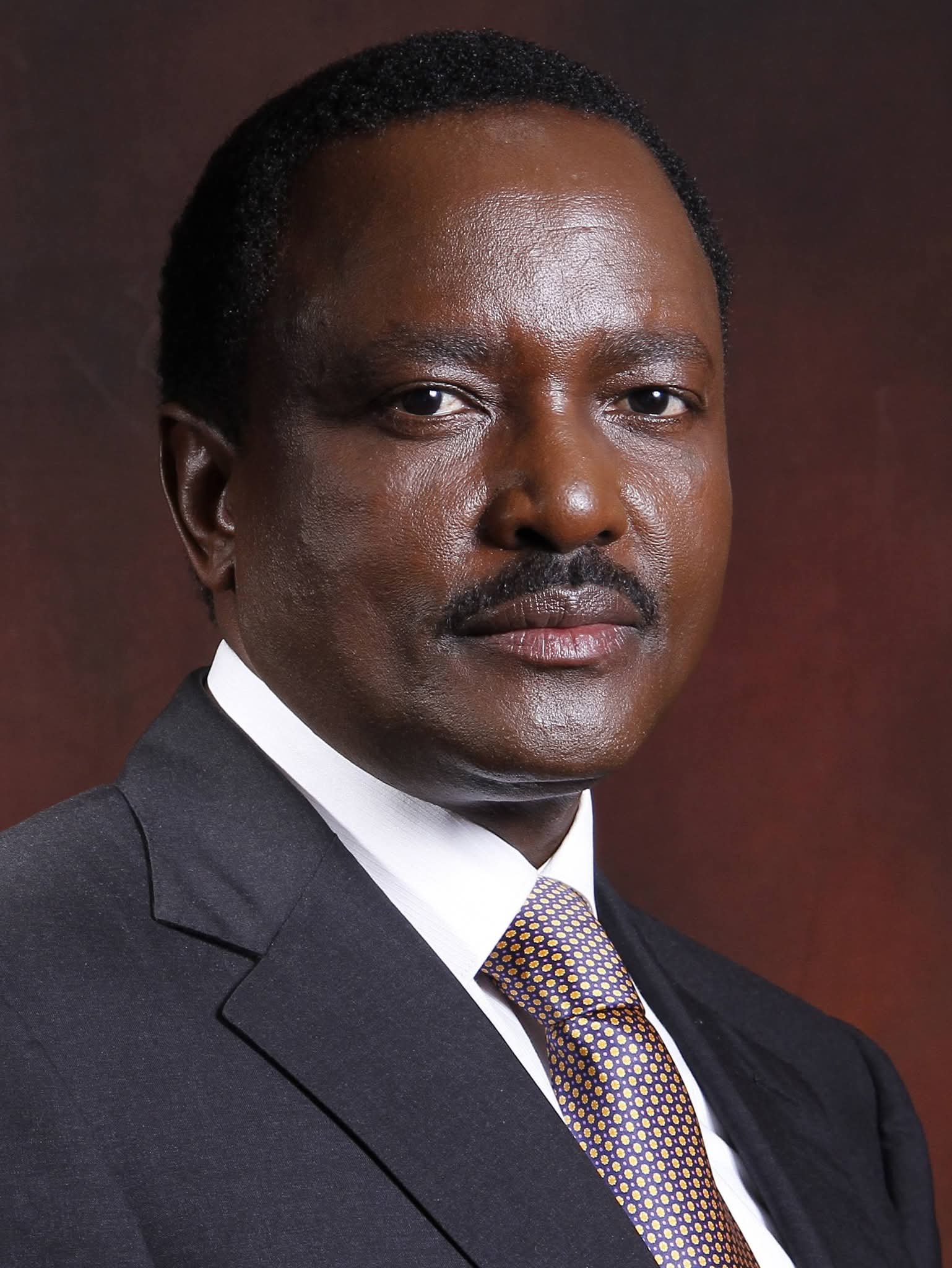
Kalonzo Musyoka was born on December 24, 1953, in Tseikuru, Kitui County, in Kenya’s Eastern region. He was raised in a rural setting within the Akamba (Kamba) community, in a family that valued faith, discipline, and education. His father, Peter Musyoka, was a small-scale farmer and a devout Christian catechist who played an active role in the local church. He was known in the community for his firm principles and commitment to moral uprightness. His mother, Regina Syombua, was also deeply religious and managed the home while supporting the family’s farming activities. She was known for being nurturing but strict about discipline and respect.
Kalonzo grew up in a relatively large family, surrounded by siblings in a traditional African household where responsibilities were shared. Like many children in rural Kenya during that period, he participated in daily chores such as herding livestock, fetching water, and working on the farm. The family environment emphasized obedience, humility, and community values. His parents consistently encouraged education as the key to opportunity, often making sacrifices to ensure their children remained in school.
For his early education, Kalonzo attended Tseikuru Full Primary School. As a young pupil, he was described as quiet, respectful, and thoughtful. Teachers reportedly noticed his seriousness and disciplined nature early on. He was not known to be disruptive; instead, he preferred listening carefully and speaking only when necessary. He performed well academically and showed particular interest in subjects that required reasoning and discussion, such as history and civics.
After completing primary school, he joined Kitui High School for his secondary education. At Kitui High, he developed into a confident debater and leader. He became actively involved in student leadership and religious activities, reflecting the Christian values instilled in him at home. He was known among peers as calm and measured, rarely quick to anger. His teachers often described him as persuasive in speech and diplomatic when resolving disagreements among fellow students. These early signs of negotiation and dialogue would later become hallmarks of his political career.
Beyond academics, Kalonzo demonstrated talent in public speaking and debate. He had a natural ability to articulate arguments clearly and convincingly. He participated in school debates and was drawn to discussions on governance, justice, and society. While he was not widely known as a sports star, he took part in regular school activities and maintained balanced participation in co-curricular life. His strongest visible talent during his youth was communication — the ability to address groups with composure and clarity.
After secondary school, he proceeded to the University of Nairobi to study law. There, he deepened his interest in constitutional matters, governance, and diplomacy. University life further refined his confidence and broadened his worldview. He interacted with students from different ethnic and social backgrounds, which strengthened his belief in national unity and dialogue across communities.
Political Career (1985 to Present)
Kalonzo Musyoka formally entered national politics in 1985 when he was elected Member of Parliament for Kitui North Constituency in a by-election under the then ruling party, KANU, during the presidency of Daniel arap Moi. His election marked the beginning of a long and active parliamentary career. As a young MP, he quickly gained attention for his articulate speeches and disciplined approach to debate.
During the late 1980s and 1990s, he served in various government roles, including Assistant Minister and later full Cabinet Minister. He was appointed Deputy Speaker of the National Assembly, where he gained deeper experience in parliamentary procedure and legislative management. As Kenya transitioned to multiparty democracy in the early 1990s, Kalonzo remained within KANU but positioned himself as part of a reform-minded group within the party.
He served several terms as Minister for Foreign Affairs, representing Kenya in regional and international diplomatic engagements. In this role, he participated in peace initiatives in Africa and strengthened Kenya’s foreign relations. His calm and diplomatic style became more visible during this period, reinforcing his image as a negotiator rather than a confrontational politician.
In 2002, political changes reshaped Kenya’s landscape. After internal disagreements within KANU, Kalonzo joined other leaders in forming a coalition that supported Mwai Kibaki under the National Rainbow Coalition (NARC). The 2002 general election ended nearly four decades of KANU rule. Under President Kibaki’s administration, Kalonzo again served as Minister for Foreign Affairs.
As the 2007 general election approached, Kalonzo ran for president under the Orange Democratic Movement–Kenya (ODM–K) after divisions split the broader opposition movement. He finished third in the presidential race. Following the disputed election results and the violence that followed, he was appointed Vice President in January 2008 under President Kibaki. Later, after a power-sharing agreement created a coalition government between Kibaki and Raila Odinga, Kalonzo retained his position as Vice President from 2008 to 2013.
During his tenure as Vice President, Kenya adopted the 2010 Constitution, which introduced major reforms including devolution and restructuring of government institutions. Kalonzo supported the constitutional reform process and remained active in diplomatic and national unity efforts.
In the 2013 general election, he ran as Deputy President candidate alongside Raila Odinga under the Coalition for Reforms and Democracy (CORD). They were defeated, and Kalonzo moved into the opposition. In 2017, he again served as Raila Odinga’s running mate under the National Super Alliance (NASA). After the Supreme Court nullified the first presidential election results and ordered a repeat poll, political tensions intensified. Kalonzo remained one of the principal opposition leaders during this period.
Ahead of the 2022 general election, Kalonzo initially expressed interest in running for president but later joined Raila Odinga’s Azimio la Umoja coalition as a principal leader. After the election, which was won by William Ruto, Kalonzo and other coalition leaders challenged the results at the Supreme Court, but the court upheld the outcome. He continues to serve as a senior opposition figure, advocating for electoral reforms, national dialogue, and constitutional governance.
Personal Character and Family Life
In terms of personal behavior and character, Kalonzo has consistently cultivated an image of composure and restraint. He is widely regarded as soft-spoken and polite, often choosing negotiation over confrontation. In political circles, he has been described as patient and strategic, sometimes criticized for being overly cautious. Supporters view his calm temperament as a strength, particularly in moments of national crisis when tensions run high. His religious faith has remained central in shaping his public persona.
Kalonzo married Pauline Musyoka, who has maintained a relatively low public profile. Their marriage has been characterized publicly as stable and grounded in shared Christian faith. Together, they have children who largely maintain private lives despite their father’s public position. As a father, Kalonzo emphasizes discipline, education, and faith — values that reflect his own upbringing.
Throughout his life, he has balanced family, faith, and politics. From his childhood in Tseikuru to his service as Vice President and long-standing role in Kenya’s political landscape, his journey reflects persistence, diplomacy, and a steady presence in national affairs from 1985 to the present day.
 IEBC Latest Salary for Presiding Officers, Clerks and Other Poll Officials
 Rigathi Gachagua, alias Riggy G’s Early Life, Education, Occupation and Family
 Fred Matiang’i Early Life, Education and Family